
The alarm went off at 4am.
On a Saturday.
At a time when most sensible people were asleep and most football supporters were probably dreaming about the World Cup.
Instead, I was making an iced coffee and preparing to watch SFIDA Setagaya play AS Harima Albion.
To some people this probably sounds ridiculous.
They’re probably right.
But I’d rather watch this.
The World Cup has the spectacle. The marketing. The endless noise.
SFIDA has something else.
A goalkeeper who might be working a normal job during the week.
Supporters who know the players by name.
A club facing the final league match of its independent existence before becoming FC Tokyo Sfida next year.
Football has become increasingly obsessed with scale.
Bigger stadiums.
Bigger audiences.
Bigger transfer fees.
Yet here I was, before sunrise in Britain, emotionally invested in a match being played on the other side of the world because it felt real.
Because Misuzu Uchida had scored on her 200th league appearance.
Because Nana Watanabe had once again been magnificent.
Because Komazawa was ready for a celebration.
And because football had other ideas.
something worthy of the occasion.
Misuzu Uchida Gets Her Moment
One thing Japanese football often does better than English football is remembering that players are people.
Before kick-off, Misuzu Uchida was presented with flowers and commemorative gifts to mark her 200th league appearance.
Her family were there.
Photos were taken.
People applauded.
Nobody seemed in a hurry.
It was nice.
Football spends so much time racing towards the next fixture that it sometimes forgets to appreciate the people who carried it there.
Then, somehow, the afternoon became even more fitting.
Because the milestone player scored.
The milestone player scored on her milestone day.
Against her former club.
You could not have written it much better.
For a while.
And of course mentioned in the preview, it was the Go Green festivities.
Nana Watanabe Is Ridiculously Good At Football
I write about Nana Watanabe almost every week.
Partly because she deserves it.
Partly because she keeps giving me material.
Watching Watanabe defend is a bit like watching somebody who has already read tomorrow’s newspaper.
Problems appear and somehow she is already there.
Clearing danger.
Winning headers.
Stepping into midfield.
Covering teammates.
Tidying up situations before they become situations.
One moment summed her up perfectly during the first half.
Harima’s Saya Kawasaki slipped heavily off the ball and went down awkwardly.
Before anybody else reacted, Watanabe was checking she was alright.
Footballer first.
Human being first, actually.
Some things are bigger than football.
As a defender, she was immense again.
As a person, she quietly reminded everybody why people respect her.
The Match Slowly Came To Life
For long periods this felt destined to finish 0-0.
Neither side seemed especially interested in creating chaos.
Possession moved around at a leisurely pace.
Half chances appeared and disappeared.
The goalkeepers were involved mostly because somebody had to be.
Then SFIDA finally found some rhythm.
Misuzu Uchida fed Saaya Kato.
Kato drove forward and delivered an excellent cross.
Mitsuki Horie met it with a header.
1-0.
The goal felt deserved rather than spectacular.
SFIDA had gradually become the better side.
Harima had very few answers.
At half-time there was a growing sense that this might become a memorable afternoon for all the right reasons.
Yunoka Arakawa Refused To Let The Ball Die
The second goal was the best moment of the afternoon.
Not because of the finish.
Because of everything that happened beforehand.
The ball looked destined to drift out of play.
Most players would have accepted reality.
Yunoka Arakawa had other ideas.
Having only recently entered the match, she chased it down, rescued it, danced through challenges and somehow transformed a dead attack into a living one.
Watching her work felt like watching a master clockmaker in Ginza carefully resetting a mechanism that everybody else thought had stopped.
The move eventually found Misuzu Uchida.
Bang.
2-0.
Komazawa erupted.
The crowd celebrated.
The players celebrated.
The script was complete.
Or so we thought.
The Problem With Thinking A Match Is Finished
Football has an unfortunate habit of punishing complacency.
I don’t know if SFIDA became complacent.
But something changed.
Harima suddenly started playing longer.
More direct.
More aggressively.
The looping deliveries into the penalty area became increasingly frequent.
And SFIDA never really found an answer.
Manager Takashi Hamada has spoken previously about game management and maturity.
About understanding moments.
About not panicking.
The frustrating thing is that his warnings felt prophetic.
The game began slipping away.
Not dramatically.
Gradually.
The kind of shift you only fully recognise once it is too late.
Sonoko Chiba And The Return Of Old Nightmares
For most of the afternoon, Sonoko Chiba had been well contained.
Then she wasn’t.
Her first goal arrived in the 83rd minute.
A good touch.
A composed finish.
2-1.
Annoying.
Manageable.
The problem was what happened next.
You could feel belief flooding through the Harima players.
Suddenly their red shirts seemed everywhere.
The long balls kept coming.
The momentum kept building.
The nerves kept growing.
Then came stoppage time.
Then came the throw-in.
Then came Chiba.
Again.
2-2.
Honestly, it felt awful.
Not because Harima had dominated.
They hadn’t.
Not because SFIDA had been second best.
They weren’t.
It felt awful because the result had been there.
The win was in our hands.
And somehow it escaped.
Still, remember when we used to concede and lose games in added time?
Goodbye Komazawa
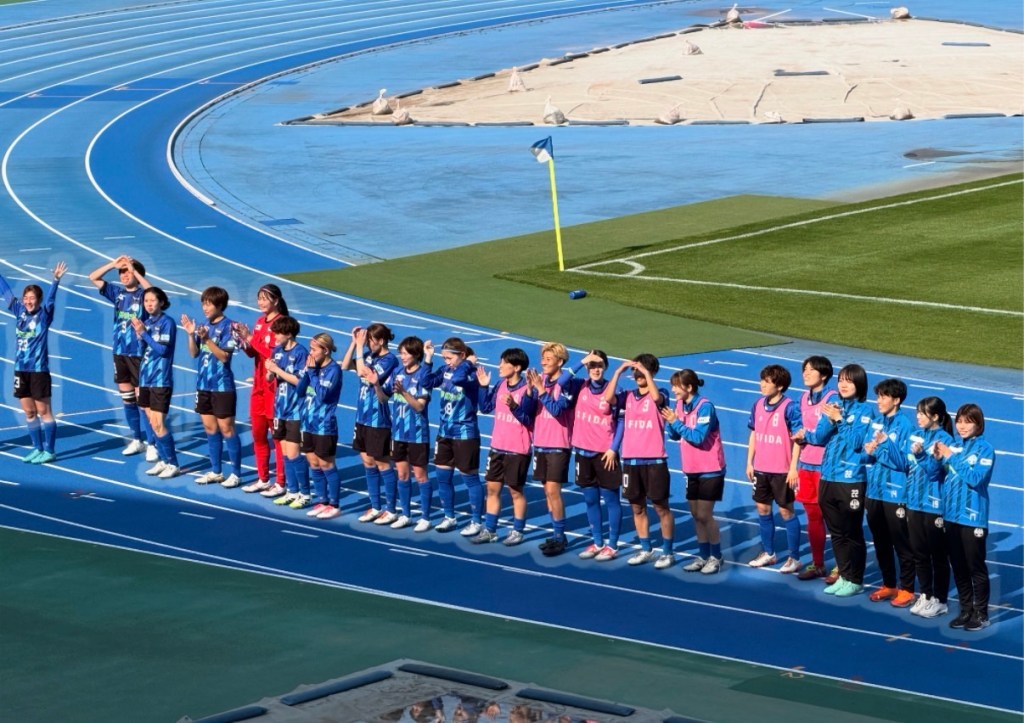
The final whistle eventually arrived.
The players rushed through the handshakes.
The celebrations that had seemed inevitable never arrived.
Instead there was reflection.
Frustration.
A strange sadness.
The final independent SFIDA league match at Komazawa ended as a draw.
Yet it felt much closer to a defeat.
Still, perhaps there was something fitting about it.
This club stands between two identities.
One foot in the community-driven semi-professional world that built it.
One foot in the professional future that FC Tokyo promises.
Not quite one thing.
Not quite another.
The future arrives next year.
Komazawa belongs to memory now.
And the final chapter contained flowers, a milestone goal, a record crowd, a brilliant fightback from the opposition and a result that nobody wanted.
Beautiful in parts.
Frustrating at the end.
Which, in truth, feels like a very football way to say goodbye.





One response to “SFIDA Setagaya 2-2 AS Harima Albion: The Cruellest Draw of All”
[…] Then Harima scored. Then they scored again. […]
LikeLike