
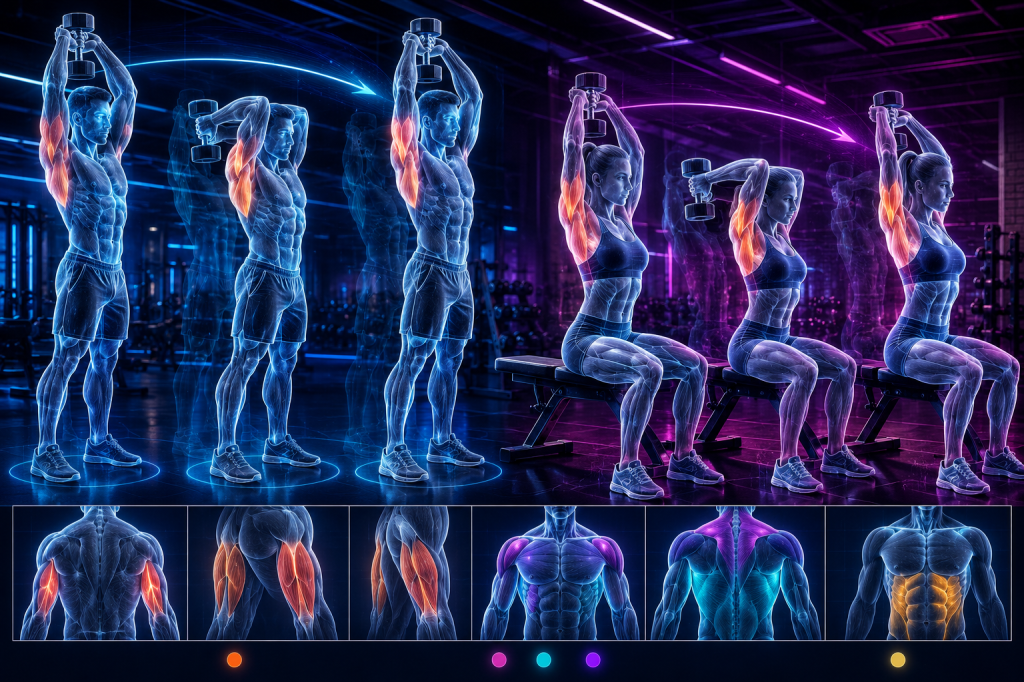
If bigger arms are on your agenda, the overhead dumbbell tricep extension deserves a place in your training plan.
This classic isolation exercise targets the triceps through a deep stretch, helping build strength, muscle mass, and that coveted horseshoe shape on the back of the upper arm. Whether you’re a beginner learning the basics or an experienced lifter chasing extra arm size, the overhead extension remains one of the most effective tricep exercises available.
Muscles Worked
Primary Muscle
- Triceps Brachii (Long Head, Lateral Head, Medial Head)
The overhead position places the long head of the triceps under significant stretch, making this variation especially effective for overall arm development.
Secondary Muscles
- Anterior Deltoids
- Latissimus Dorsi
- Pectorals
- Trapezius
- Anconeus
- Forearm Flexors
Stabilising Muscles
When performed standing, the core plays a major role:
- Rectus Abdominis
- Obliques
- Lower Back Muscles
- Glutes
Why This Exercise Is Good
The triceps make up roughly two-thirds of your upper arm size. If you want bigger arms, stronger lockouts, or improved pressing power, you need strong triceps.
The overhead dumbbell tricep extension excels because it trains the triceps in a lengthened position. Research suggests exercises that load muscles during a deep stretch can stimulate superior muscle growth compared to shortened-position movements.
Benefits include:
- Increased arm size
- Improved bench press lockout strength
- Better overhead pressing performance
- Enhanced throwing and sporting power
- Improved posture and core engagement
For pure tricep hypertrophy, this is one of the best exercises in the gym.
Technique Breakdown
Starting Position
- Stand with feet shoulder-width apart or sit on a bench.
- Hold a dumbbell with both hands underneath the top plate.
- Press the dumbbell overhead until your arms are extended.
- Brace your core and keep your ribs down.
Execution
- Slowly bend your elbows.
- Lower the dumbbell behind your head.
- Keep your upper arms close to your ears.
- Lower until you feel a deep tricep stretch.
- Extend your elbows and return to the starting position.
- Squeeze your triceps at the top.
Breathing
- Inhale while lowering the weight.
- Exhale while pressing the weight upward.
Coaching Cues
- “Keep your elbows tucked.”
- “Only your forearms move.”
- “Keep your ribs down.”
- “Stay tall through the neck.”
Common Mistakes
Flaring The Elbows
This is the most common mistake.
When the elbows drift outward, tension leaves the triceps and shifts to the shoulders.
Fix: Reduce the weight and actively keep your elbows close to your head.
Arching The Lower Back
Many lifters turn this into a standing backbend.
Fix: Brace your core, squeeze your glutes, and keep your ribs down.
Partial Repetitions
Cutting the range of motion short removes much of the stretch that makes this exercise so effective.
Fix: Lower the dumbbell fully under control and use a lighter weight if necessary.
Ego Lifting
The overhead extension rewards precision, not recklessness.
Fix: Focus on control and muscle tension rather than loading every plate in the gym.
Potential Drawbacks
No exercise is perfect.
The overhead dumbbell tricep extension requires good shoulder mobility and can aggravate existing elbow or shoulder issues if performed incorrectly.
Potential concerns include:
- Elbow tendon irritation
- Shoulder discomfort
- Difficulty maintaining proper positioning
- Risk of dropping the dumbbell when setting up
If overhead movements cause pain, cable extensions or pushdowns may be a better choice.
Equipment Needed
Standard Setup
- Dumbbell
- Optional bench
Alternatives
- Cable machine
- EZ Curl Bar
- Kettlebell
- Resistance bands
Bodyweight Alternatives
- Diamond Push-Ups
- Bench Dips
Variations
Easier Version
Seated Overhead Dumbbell Extension
Provides more support and reduces core demands.
Harder Version
Single-Arm Overhead Extension
Requires additional shoulder stability and highlights side-to-side imbalances.
Alternative Exercises
- Skullcrushers
- Cable Overhead Extensions
- Cable Pushdowns
- Tricep Kickbacks
- Close-Grip Bench Press
Who Should Use This Exercise?
Beginners
Excellent for learning tricep isolation and building foundational arm strength.
Intermediate Lifters
A fantastic tool for adding arm mass and improving pressing strength.
Advanced Athletes
Ideal as a hypertrophy-focused accessory after heavy pressing movements.
Bodybuilders
One of the best long-head tricep builders available.
General Fitness Enthusiasts
Perfect for improving arm definition and upper-body strength.
Sport Athletes
Useful for sports involving throwing, striking, pushing, or overhead movements.
The overhead dumbbell tricep extension is one of the most effective isolation exercises for building bigger, stronger arms. The deep stretch on the long head creates a powerful muscle-building stimulus that many other tricep exercises simply cannot match. Master the technique, leave your ego at the door, and your sleeves will eventually start feeling a little tighter.
Dragon’s Hoard 🐉
If your elbows constantly flare during overhead extensions, spend a couple of minutes stretching your lats before training. Tight lats often pull the arms out of position and sabotage an otherwise excellent exercise.
Frequently Asked Questions
Is the overhead dumbbell tricep extension good for beginners?
Yes. Start with a light dumbbell and focus on mastering the range of motion before increasing weight.
Is it better than tricep pushdowns?
For muscle growth, many lifters find overhead extensions superior because they place the long head under a greater stretch.
Should I perform it seated or standing?
Both work well. Standing challenges the core more, while seated variations provide extra stability.
How many sets and reps should I do?
For muscle growth, perform 3-5 sets of 8-15 repetitions.
Can this exercise build bigger arms?
Absolutely. Since the triceps make up most of your upper arm size, developing them is one of the fastest ways to increase arm measurements.
Disclaimer
This article is intended for informational purposes only and does not constitute medical, physiotherapy, coaching, or professional training advice. Always consult a qualified healthcare or fitness professional before beginning a new exercise programme. Complete all workouts and exercises at your own risk.