
Avispa Fukuoka finished 19th.
That is the simplest way to tell the story.
The final standings of the 2026 J1 Centenary Concept League show a club that finished last in the WEST group, lost its placement playoff against JEF United Chiba and ended the tournament with one of the weakest records in the competition.
On paper, it was a disaster.
Yet numbers alone do not explain what happened to Avispa Fukuoka during one of the strangest and most important seasons in the club’s history.
This was not simply a football team losing matches.
This was an organisation trying to rebuild itself while the season was already underway.
The Hornets entered their 30th anniversary year carrying far more baggage than most clubs would ever want. A compliance scandal involving the previous managerial regime had damaged the club’s reputation and resulted in disciplinary action from the J.League. Trust had been broken internally. Confidence was fragile externally.
The challenge was no longer just about winning football matches.
It was about convincing people the club still knew what it wanted to be.
A City Deserving Better
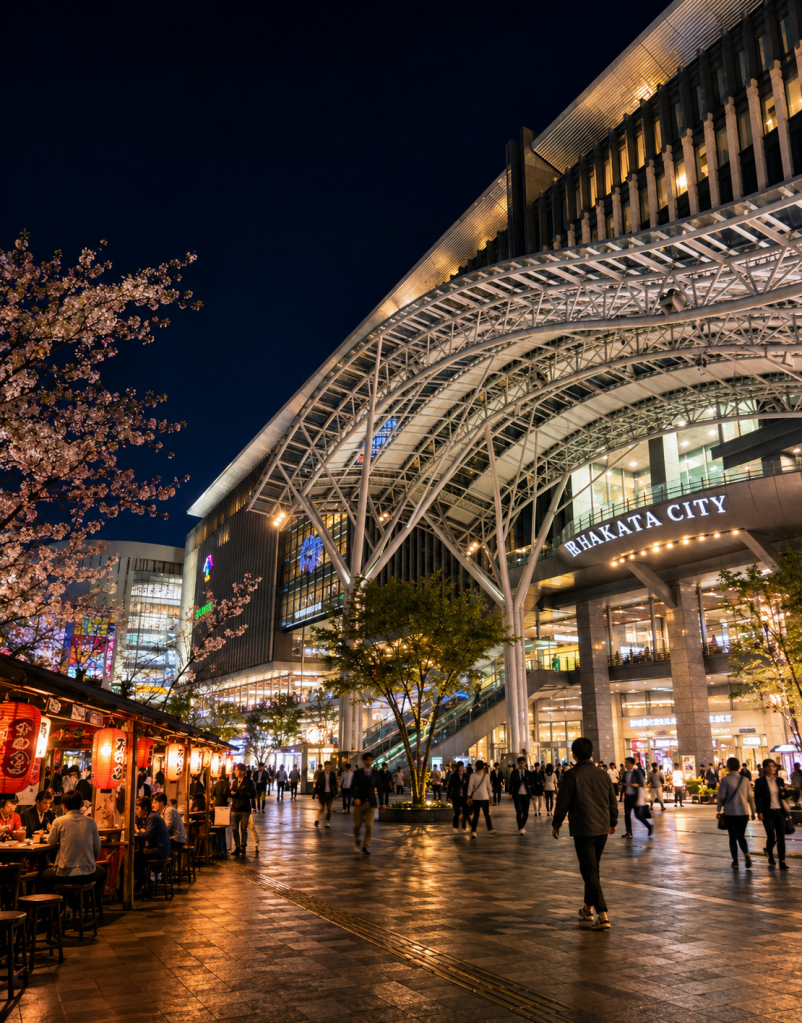
Fukuoka is not a city that should settle for irrelevance.
It is one of Japan’s most vibrant places. Modern, ambitious and increasingly international, it combines economic growth with a strong local identity. Visitors fall in love with the food. Residents speak proudly about the lifestyle. Businesses continue to invest.
There is an energy to Fukuoka that feels distinctly forward-looking.
For much of 2026, Avispa did not reflect that energy.
While the city pushed forward, the football club spent months looking over its shoulder.
The contrast became difficult to ignore.
Supporters watched a team that struggled to score, struggled to win and frequently struggled simply to impose itself on opponents. The atmosphere around the club often felt less like a celebration of a 30th anniversary and more like an extended recovery operation.
Yet perhaps that is why supporters deserve credit.
Many fanbases would have drifted away.
Fukuoka’s did not.
The Poisoned Chalice
When Shinya Tsukahara stepped into the dugout, he inherited something close to a nightmare.
Results were poor.
Confidence was lower.
Questions about the club’s culture dominated discussion.
An eight-match winless run immediately placed enormous pressure on the new coach.
Then came the humiliation.
A 5-1 home defeat against Nagoya Grampus exposed every weakness in the squad. Defensive mistakes multiplied. Structure disappeared. Confidence evaporated.
Many managers lose dressing rooms after results like that.
Tsukahara did not.
Instead, he changed course.
The expansive ideas disappeared.
Pragmatism arrived.
Avispa became harder to break down. More cautious. More stubborn.
The football was rarely beautiful, but beauty was not the priority.
Survival was.
“It was never an easy path,” Tsukahara admitted later.
“In the early stages, results didn’t come, and it was painful, but in April we gathered points, and in May we continued to fight without losing. I feel that the players and staff united and built a foundation.
“We are not a completed team yet. That is why there is room to grow.”
The quote feels revealing.
Tsukahara rarely spoke like a manager celebrating achievement.
He sounded more like a builder inspecting foundations.
Learning How To Compete Again
The breakthrough arrived against Sanfrecce Hiroshima.
Away from home.
Underdogs.
Little expectation.
A single Yu Hashimoto header secured a 1-0 victory that finally gave the squad something it had desperately lacked.
Proof.
Proof that the tactical changes could work.
Proof that defensive organisation could compensate for attacking limitations.
Proof that the season did not have to be a complete write-off.
From that point onward Avispa developed a new personality.
They became difficult to beat.
Not exciting.
Not dominant.
But difficult.
Like Bowser refusing to move from the middle of the road, they simply became stubborn obstacles that opponents increasingly struggled to remove.
Draws accumulated.
Penalty shootouts became familiar territory.
The team discovered an identity built on resistance rather than expression.
It was hardly glamorous.
But it kept the season alive.
The Goals Never Came
Unfortunately, resilience can only carry a football team so far.
Eventually someone has to score.
That became Avispa’s biggest problem.
Iranian forward Shahab Zahedi arrived carrying expectations after previous success with the club.
Instead, his campaign never ignited.
One goal.
Seven league appearances.
Then a mutual termination and a return home.
Veteran striker Nassim Ben Khalifa also departed without scoring.
Suddenly a team already struggling for attacking quality found itself losing its experienced forwards altogether.
The numbers were unforgiving.
Matches became wars of attrition.
One mistake often decided everything.
One goal frequently felt impossible to recover from.
It left enormous pressure on younger players to provide solutions.
The Faces of the Future
Not every story from 2026 was negative.
Seiya Usui emerged as one of the brightest developments of the campaign.
In a season where goals felt scarce, he provided moments supporters could actually remember.
His thunderous strike against Cerezo Osaka won Goal of the Month and instantly became one of the defining images of the campaign.
The ball crashed off the underside of the crossbar and into the net.
For a brief moment, all the frustration surrounding the season disappeared.
Usui later reflected on the goal with characteristic humility.
“That goal wasn’t just my own power, but born from the support of my teammates and those who support me daily.”
That attitude mirrors much of what Avispa are trying to become.
A collective club.
A community club.
A club rebuilding itself together.
Elsewhere, the future continues to emerge through the academy.
Yuma Tsujioka earned recognition at league level.
Hanan Sani Brown received national-team attention.
Torazo Fujikawa progressed through youth international football.
These are not solutions today.
But they might become solutions tomorrow.
The Cruel Reality
The final playoff defeat against JEF United Chiba confirmed a 19th-place finish.
Nobody celebrated.
Nobody pretended otherwise.
The campaign had been difficult, painful and frequently frustrating.
Yet there was also a strange sense of perspective.
The club that reached the finish line looked healthier than the club that started the race.
That matters.
Football history is filled with organisations that ignored deeper problems while chasing short-term success.
Avispa chose a different path.
They accepted embarrassment.
They accepted suffering.
They accepted the possibility that rebuilding would temporarily make them look worse.
The question now is whether that sacrifice was worth it.
What Comes Next
The autumn-spring era begins soon.
The first challenge is immediate.
The opening fixture comes against reigning champions Vissel Kobe.
It is difficult to imagine a clearer measuring stick.
One club arrives as the benchmark of modern Japanese football.
The other arrives carrying the scars of a transitional season that exposed every weakness in its structure.
Avispa supporters have shown remarkable patience.
But patience is not endless.
The goodwill created through projects such as TRUE NAVY PROJECT and the club’s community outreach cannot replace results forever.
The Centenary League revealed three uncomfortable truths.
Avispa need goals.
Avispa need squad depth.
Avispa need quality capable of matching the ambition of the city they represent.
Fukuoka deserves a football club that reflects its energy, confidence and potential.
For much of 2026, Avispa fell short of that standard.
The challenge for Tsukahara is no longer stopping the decline.
He has already done that.
The challenge now is proving that 19th place was the bottom of the climb rather than the beginning of a permanent slide.
Because if the Hornets can transform pain into progress, the darkest season of their 30-year history may eventually be remembered as the moment everything finally changed.