

Saturday morning, 8am UK time. I’ll be sitting somewhere in Leeds with a coffee that probably isn’t strong enough, watching SFIDA Setagaya play Nippatsu Yokohama FC Seagulls while the rest of the city slowly wakes up.
The forecast says another warm day. England has spent the past week pretending it’s southern Europe. We’ve had temperatures brushing 30°C, which is enough for half the country to start discussing air conditioning and the other half to insist this is perfectly normal.
It isn’t.
Earlier this week I went for a lunchtime walk and regretted the decision about three minutes in.
Meanwhile, over in Tokyo, they’ll be dealing with their own version of summer. Different humidity. Different sunshine. Same feeling of wondering why you’ve voluntarily put yourself through this.
Which, now I think about it, is also quite a good description of supporting football teams.
SFIDA Need a Reaction
SFIDA arrive needing a reaction.
The 2-0 defeat against Okayama Yunogo Belle last weekend was one of those matches that disappear from your memory while you’re still watching it. I had a more memorable sushi lunch before kick-off. The tuna was thin, slightly disappointing and lacking substance.
A bit like our attack.
The danger with dull defeats is that they linger longer than spectacular ones. A 4-3 thriller gets romanticised. A dreary 2-0 loss sits in the corner of your brain like an unpaid parking ticket.
So here we are.
SFIDA versus Seagulls.
Seventh versus ninth.
Sixteen points versus fifteen.
One point separates them.
The sort of league position where everybody starts talking about “momentum” because saying “nobody really knows what’s going to happen” sounds less professional.
Why This Fixture Always Feels Strange
The funny thing is that I have a complicated relationship with this fixture.
I used to live in Yokohama.
I support Marinos.
Unfortunately, Marinos do not possess a women’s team.
That left me with alternatives.
One of those alternatives was Yokohama FC Seagulls.
The problem was their connection to Yokohama FC.
Now, I should be careful here.
The Seagulls themselves seem perfectly pleasant.
Yokohama FC, however, remain one of those football clubs that somehow manage to combine mediocrity with a surprising sense of self-importance. Not an offence by itself, yet they are incredible rude and distasteful. See here.
The Seagulls deserve better than being associated with them.
Which is unfortunate because, as I’ve discovered recently while manually entering Nadeshiko League players into a custom Football Manager 2026 database, I’m currently spending a ridiculous amount of time looking at Seagulls players anyway.
Life occasionally develops a sense of humour.
Players I Think Will Dominate This Match
Whenever I write these sections, I always end up regretting it.
Football has a habit of making fools of people who confidently predict things. The player you spend 500 words praising gets substituted after 35 minutes. The one you completely ignore scores a 25-yard winner and gets player of the match.
Still, looking at this fixture, there are four players I keep coming back to.
Not necessarily the best players on the pitch.
Just the ones who feel like they’re lurking around the story.
Misuzu Uchida (SFIDA Setagaya)
If I’m being asked to name one player who could decide this game, I’m starting with Misuzu Uchida.
Partly because she’s scored nine goals this season.
Partly because she’s one of SFIDA’s most important players.
But mostly because football loves a former club storyline.
Uchida used to play for the Seagulls. Now she’s leading the line for SFIDA and arrives facing familiar colours once again. The thing I like most about her isn’t necessarily the goals. It’s how economical she is. She doesn’t seem to need much involvement before suddenly becoming the most important person on the pitch.
Some forwards need six chances.
Uchida often feels like she only needs one.
As somebody who has watched SFIDA struggle for consistency at times this year, she’s the player I trust most when the match becomes tense.
Mitsuki Horie (SFIDA Setagaya)
I always enjoy watching Horie against Yokohama.
Not because she’s guaranteed to score.
Because she always seems to cause problems.
The evidence is fairly convincing too. She scored twice against the Seagulls earlier this season and has made a habit of finding goals against them over the last couple of years.
If Uchida is precision, Horie is disruption.
Defenders rarely seem comfortable around her. She’s physical, direct and forces centre-backs into decisions they’d rather avoid making.
Watching Yokohama’s recent run, I keep coming back to the same thought: if their defence starts wobbling, Horie is exactly the sort of player who will notice first.
Mao Murakami (Nippatsu Yokohama FC Seagulls)
This is where football gets wonderfully petty.
Uchida used to play for Yokohama.
Murakami used to play for SFIDA.
The symmetry is almost too perfect.
Whenever players face former clubs, everybody insists it doesn’t matter.
Then they score and celebrate like they’ve just won the World Cup.
Murakami knows SFIDA. She knows the club, the environment and probably a few of the people she’ll be facing.
That knowledge doesn’t guarantee anything, but it does make me nervous.
I’ve watched enough football to know that former players have an irritating tendency to appear exactly when you’d rather they didn’t.
Coco Muroi (Nippatsu Yokohama FC Seagulls)
If I were a Yokohama supporter, Coco Muroi would probably be the player I’d be most excited about watching.
Everything seems to run through her.
Every time I watch the Seagulls, she feels like the player trying to make something happen rather than waiting for something to happen.
That’s an important difference.
She carries the ball aggressively, shoots regularly and generally plays football as though somebody has forgotten to tell her that caution exists.
For SFIDA, stopping Muroi feels absolutely crucial.
If she’s receiving the ball facing forward, Yokohama become dangerous very quickly.
If she’s frustrated and isolated, the Seagulls tend to look a lot less threatening.
The Day My iPhone Gave Up
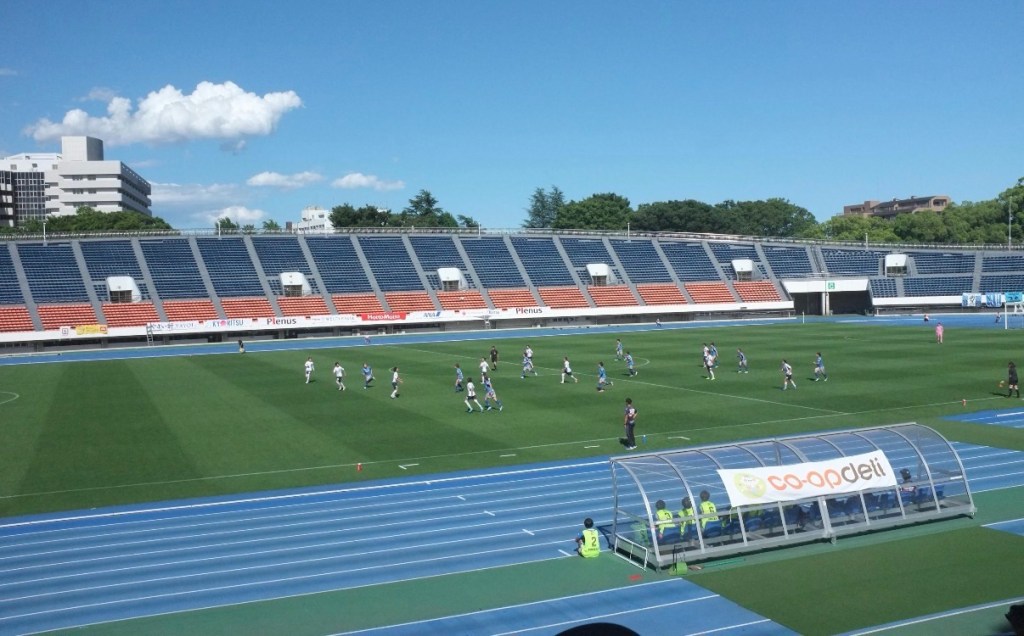
My first ever SFIDA match was actually against the Seagulls back in 2019.
Komazawa Stadium.
An absolutely roasting afternoon.
The sort of heat where your phone displays a warning message saying it’s too hot and needs to be removed from direct sunlight.
I remember drinking a Y’s Market craft beer.
I remember sweating.
I remember wondering why I’d voluntarily travelled across Tokyo in that weather.
And I remember SFIDA losing 2-0.
It was a small disappointment.
Those are often the ones that survive longest.
Now, seven years later, we’re doing it all again.
Different players.
Different managers.
Same fixture.
Football is essentially organised nostalgia with league tables.
The Summer Heat and the Search for a Home Win
One thing SFIDA desperately need is a home win.
Even saying “home” feels slightly strange because AGF Field has become a temporary residence rather than a true home ground. Komazawa remains absent. The nomadic existence continues.
No wins there all season.
Perhaps Saturday is the day.
The Seagulls haven’t exactly arrived in great shape either. Five matches without victory have drained much of the optimism generated by their early-season form.
Confidence is a fragile thing.
Footballers spend months building it and ninety minutes destroying it.
The tactical battle is interesting too.
Yokohama’s creativity tends to flow through Coco Muroi. SFIDA’s hopes inevitably point towards Uchida and Mitsuki Horie, whose partnership has produced sixteen league goals between them.
The reverse fixture ended 3-2.
The winner arrived in the 94th minute. For Yokohama.
Nobody involved has forgotten that.
Nobody ever does.
No Predictions, Just Hope
As for predictions, I’ve learned not to bother.
The head-to-head record is full of draws, one-goal games and general irritation.
Every meeting seems to finish with somebody wishing they’d managed the final ten minutes differently.
So I’ll be there at 8am on Saturday morning.
Coffee in hand.
Probably still complaining about the weather.
Watching two semi-professional teams trying to solve problems that spreadsheets, tactical diagrams and league tables can’t fully explain.
Which feels considerably more authentic than another discussion about World Cup group permutations.
Summer heat lingers
Old rivals meet once again
Coffee before