
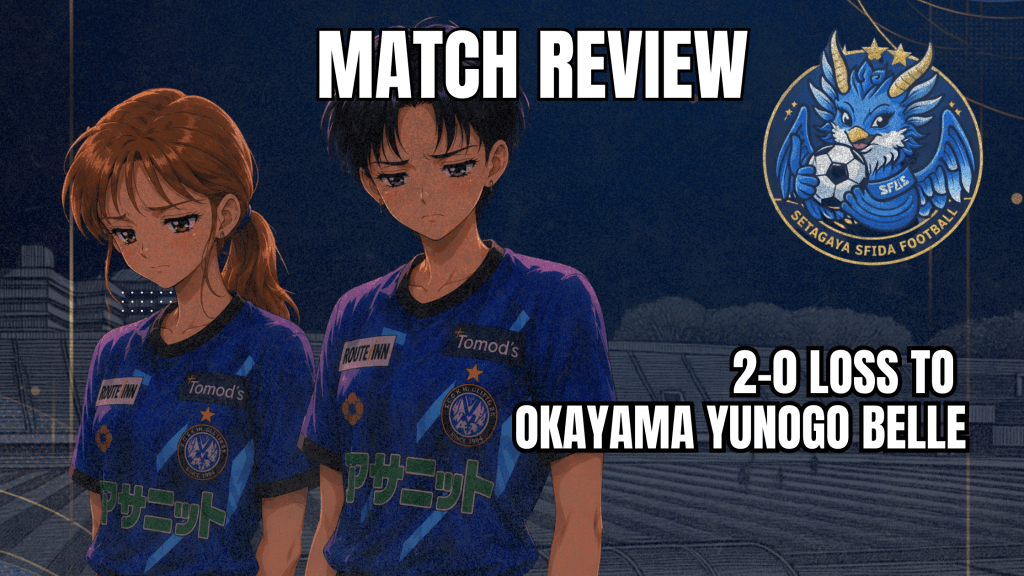
Some football matches justify getting up at 5 am. This wasn’t one of them.
The day eventually improved around 12 pm in Leeds city centre when I bought a box of sushi for lunch.
It wasn’t exceptional sushi.
The box contained two salmon nigiri, two tuna nigiri, a handful of maki and various bits that nobody ever remembers the names of afterwards.
The salmon was decent. The tuna was not. Thin. Slightly disappointing. Economical in a way that suggested somebody in the supply chain had become extremely interested in profit margins.
By the end of the afternoon, the tuna felt strangely familiar.
Like SFIDA’s shooting.
Present. Technically.
But not really doing enough.
Mimasaka and the Art of Looking Beautiful
One thing Okayama undeniably won was the scenery contest.
The Mimasaka Rugby and Soccer Field sits among mountains and greenery, making many professional stadiums look like giant industrial warehouses accidentally repurposed for football.
There were cheerleaders.
There were floral presentations.
Runa Shiotani received recognition for her 100th league appearance.
Chiaki Minamiyama received flowers ahead of her upcoming retirement.
For a few minutes it felt less like a football match and more like a local summer festival that happened to include football.
The Ghost of 5-0
The backdrop to all of this was impossible to ignore.
Back in Matchday 3, SFIDA beat Okayama 5-0.
Not edged past them. Not narrowly outclassed them.
Five.
Nil.
The sort of result that lingers in dressing rooms.
Okayama manager Wataru Watada admitted his side had developed a sense of weakness against SFIDA after that defeat.
The response was obvious. Stop doing the thing that caused the problem.
Back then Okayama repeatedly attempted to play through SFIDA’s press and repeatedly got punished for it.
This time they arrived with a completely different approach.
More direct. More physical.
Less interested in aesthetics.
Much more interested in winning.
The Encouraging Start
The annoying thing is that SFIDA actually started well.
For twenty minutes they looked the better side.
They controlled possession.
Forced set pieces.
Spent most of the game in Okayama territory. At one point I found myself asking whether Okayama knew how to attack.
That observation aged poorly.
Because possession and control are not the same thing.
SFIDA had one. Okayama had the other.
Risa Ueno and the Magnet Theory
By the halfway point of the first half another pattern had emerged.
Every meaningful SFIDA attack ended in the same way.
Cross. Claimed.
Header. Claimed.
Shot. Claimed.
Risa Ueno was excellent. I even replied to Okayama’s message about her getting a clean sheet.
Calm.
Positionally perfect.
Comfortable dealing with everything.
Eventually I developed a joke that magnets had somehow been installed inside both the football and her gloves.
I accept there are flaws in the science.
The Goal That Tilted Everything
The breakthrough came after 26 minutes.
A smart run from Shiotani dragged defenders away.
Hitomi Konno found space.
One finish later and Okayama led 1-0.
The goal felt significant immediately. Not because SFIDA had been poor.
Because they had spent most of the opening half-hour being slightly better without actually threatening much.
The same problem would follow them all afternoon.
Lots of territory.
Very little damage.
Like the tuna nigiri.
Hydration Breaks and Corporate Football
One of my favourite moments came midway through the first half.
The hydration break.
The temperature sat around 27 degrees.
Players grabbed water.
A coach said a few words.
Everyone returned to playing football.
Done.
Compare that with the recent World Cup.
Their hydration breaks increasingly resemble shareholder meetings. Television cameras rush in. Sponsors receive exposure.
Analysts explain the concept of warm weather.
Managers deliver tactical TED Talks.
Everyone behaves as though drinking water has only recently been invented. In Mimasaka it lasted about thirty seconds.
The players were thirsty. Then they weren’t. Football continued. A revolutionary concept.
Nana Watanabe’s Fight
If SFIDA had a symbol for the afternoon it was probably Nana Watanabe.
She spent most of the game battling.
Winning duels.
Recovering possession.
Trying to keep things together.
At 71 minutes she collided with Chiaki Minamiyama.
Nothing malicious.
Just football.
She got up.
Carried on.
But she clearly wasn’t moving comfortably.
Three minutes later, Okayama attacked.
Ayu Okita broke forward. The space opened. The finish arrived.
2-0. The match was effectively over.
Not Angry. Just Disappointed.
The frustrating thing is that there wasn’t a single obvious villain.
No catastrophic mistake.
No referee conspiracy.
No individual collapse.
SFIDA were simply below their usual standard.
Collectively.
Okayama deserved the victory.
Collectively.
Some days you lose because football happens.
This was one of those days.
Credit should go to the travelling SFIDA supporters who made the long journey from Setagaya to rural Okayama and remained visible behind the goal throughout.
Final Thoughts
Okayama got the three points.
The 5-0 victory from March now feels a long time ago.
The rematch belonged entirely to Belle.
As for me, I spent the morning watching my team struggle to create meaningful chances, witnessed a goalkeeper apparently powered by magnetism, and then reflected that the most satisfying attacking performance of the day came from a slightly overpriced sushi box in Leeds city centre.
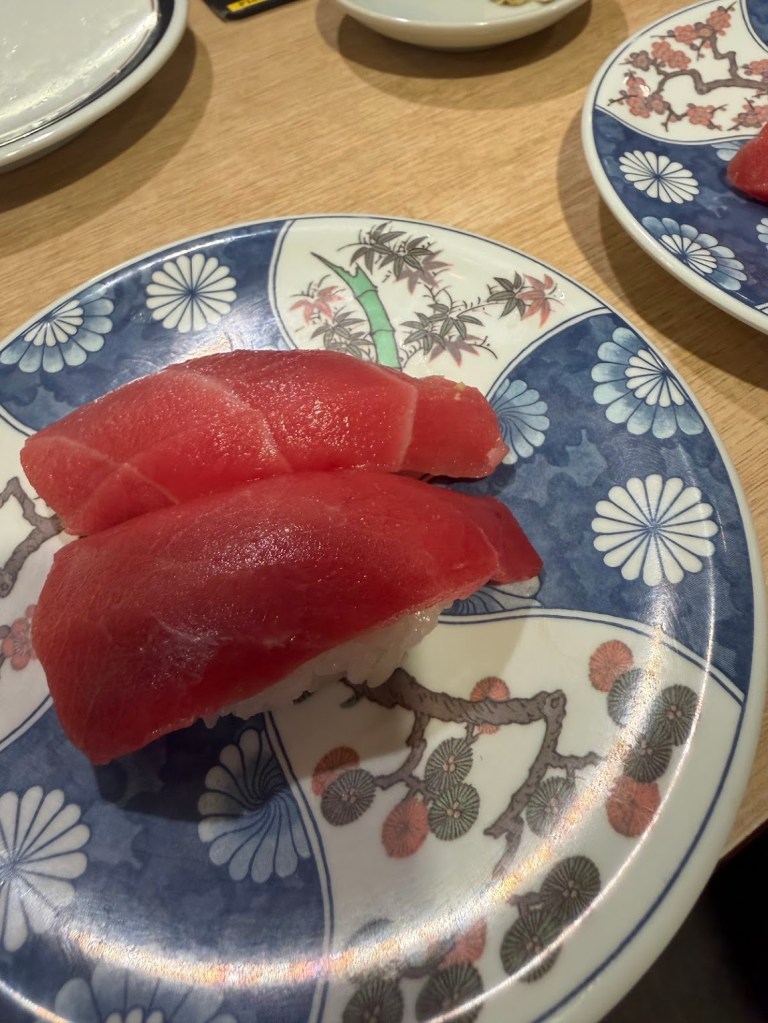
That sushi was certainly not as good as that great sushi I had in Hakata train station earlier this year, however. Picture above.
The salmon did enough.
The tuna didn’t.




 doragon sports
2 responses to “Okayama Yunogo Belle 2-0 SFIDA Setagaya: The Mountains Were Lovely, The Sushi Was Fine, The Football Less So”
[…] 2-0 defeat against Okayama Yunogo Belle last weekend was one of those matches that disappear from your memory while you’re still watching […]
LikeLike
[…] 先週の岡山湯郷Belle戦の0-2敗戦は、観ている途中から記憶が薄れていくような試合だった。正直、キックオフ前に食べた寿司のほうが印象に残っている。マグロは薄くて、少し物足りなくて、中身も軽かった。 […]
LikeLike