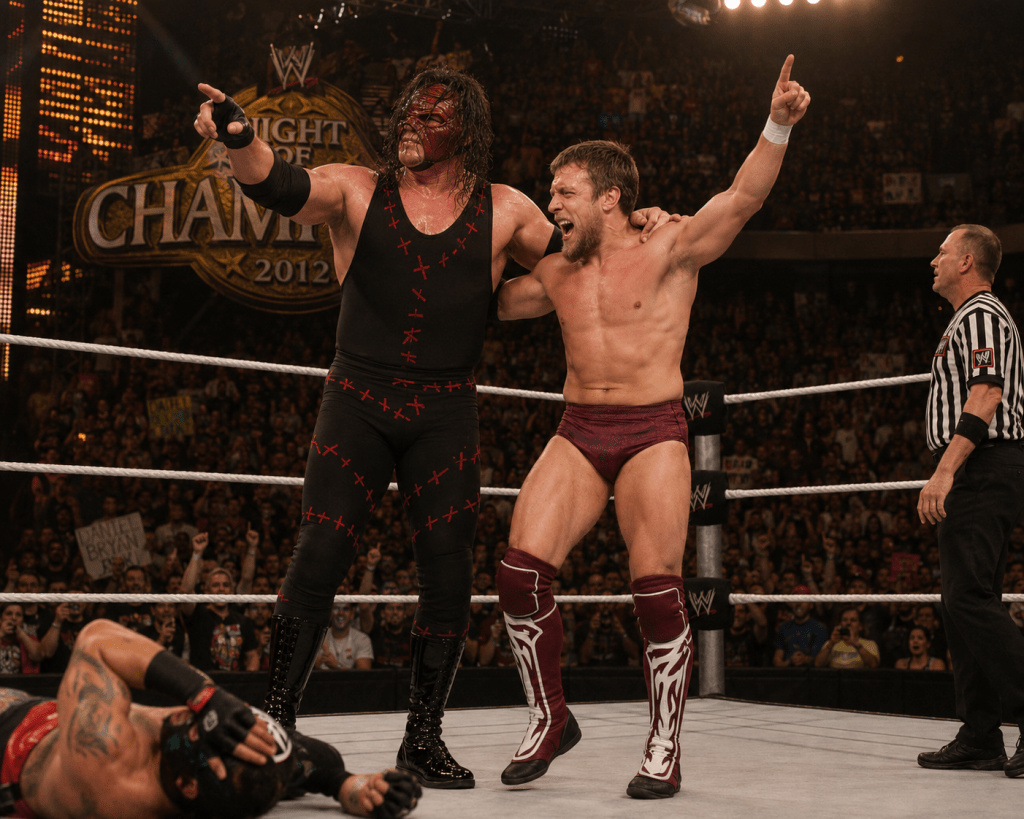
The hug got one of the biggest reactions of the match.
Not the title change.
Not Kane flattening people.
Not Daniel Bryan flying through the air.
The hug.
Thirty seconds earlier, Kane and Bryan had been arguing again, threatening to implode in exactly the way everyone expected. Then came the embrace. The Boston crowd erupted. Two men who had spent months trying to ruin each other’s lives were suddenly cooperating because a fictional therapist had told them it might be healthy.
Professional wrestling is a strange business.
That was especially true of WWE in 2012.
Night of Champions Needed This Match
Night of Champions arrived during a slightly awkward period for WWE.
The company still had stars. Plenty of them.
John Cena was there. CM Punk was WWE Champion. Sheamus was World Heavyweight Champion. Brock Lesnar was even kicking about when he wanted to. The main event scene was healthy enough.
The tag division was another story.
For years WWE had treated tag team wrestling as something that happened in the gaps between more important things. Genuine teams existed, but very few felt essential. Championships changed hands without much fanfare. Teams formed and disappeared with alarming regularity.
Kofi Kingston and R-Truth had done admirable work as champions. They were athletic, entertaining and reliable. The problem was that the division underneath them felt thin.
Very thin. The Prime Time players wern’t particularly over. Nor were Primo and Epico.
When a division reaches that point, wrestling promotions often reach for the emergency toolbox.
Put two singles wrestlers together.
Hope chemistry appears.
The Match Was Better Than It Had Any Right To Be
The brilliance of the Night of Champions match was that it never forgot the story.
Kingston and Truth wrestled like an actual team. They cut the ring in half. They used quick tags. They moved with the confidence of people who understood each other.
Kane and Bryan wrestled like two men sharing a lift after an argument with Human Resources.
Every exchange felt unstable.
Bryan repeatedly refused help.
Kane became increasingly irritated.
Arguments broke out in the middle of the match.
At one stage it felt as though they were more interested in fighting each other than winning the championships.
Which was exactly what made it work.
The crowd became invested not because they desperately wanted new champions, but because they wanted to see whether Team Hell No could survive themselves.
The Match That Created Team Hell No
People sometimes remember this title win as the culmination of Team Hell No.
It wasn’t.
It was the beginning.
Before Night of Champions, Kane and Bryan were a funny storyline.
After Night of Champions, they became an actual act.
The match gave them a framework.
Bryan’s frantic energy.
Kane’s deadpan menace.
The constant threat of collapse.
A bizarre combination of elite wrestling and sitcom writing.
When Bryan finally offered the hug to calm things down, the audience reacted like they had just witnessed a finishing move. It sounds ridiculous written down. It was ridiculous.
Yet it worked because WWE had spent weeks carefully building towards that exact moment.
A Mechagodzilla Built From Spare Parts
Looking back now, Team Hell No feels a little like Mechagodzilla.
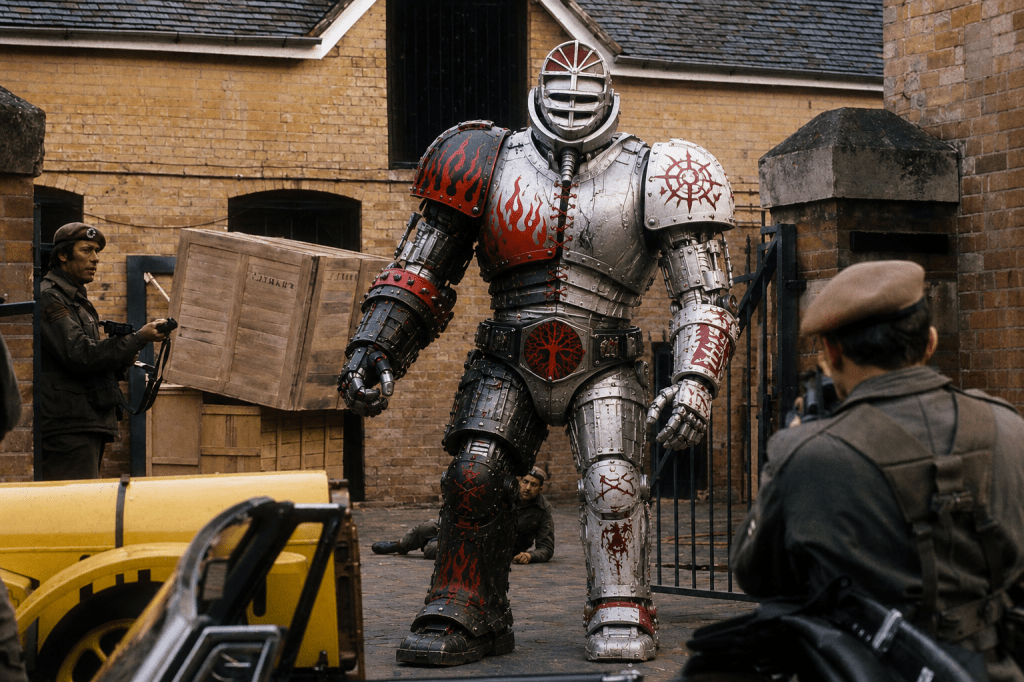
Or that Robotic villain from Doctor Who, the one in Tom Baker’s first episode.
Not the sleek version designed from the start.
The version assembled in a panic after somebody realised the original plan wasn’t working.
Different pieces bolted together.
Systems that shouldn’t really be compatible.
Warning lights flashing constantly.
Yet somehow the thing ends up being more entertaining than anyone expected.
WWE did not set out in 2012 with a master plan to revolutionise tag team wrestling.
It stumbled into one of the most popular teams of the decade because two world-class performers committed completely to a ridiculous premise.
The Night WWE Accidentally Fixed Its Tag Division
The title change itself was relatively simple.
Kane grabbed Bryan and essentially launched him onto the champions for the winning fall.
A finish that perfectly captured everything Team Hell No represented.
Chaotic.
Unconventional.
Slightly stupid.
Completely effective.
The bigger achievement was what happened afterwards.
For the first time in years, WWE had a tag team people genuinely cared about following week to week.
Not because the division was thriving.
Not because there were endless great teams waiting in the wings.
Because Kane and Daniel Bryan had become impossible to ignore.
Night of Champions 2012 did not solve every problem WWE’s tag division had.
But for one evening in Boston, it disguised them brilliantly.
And sometimes that is enough.