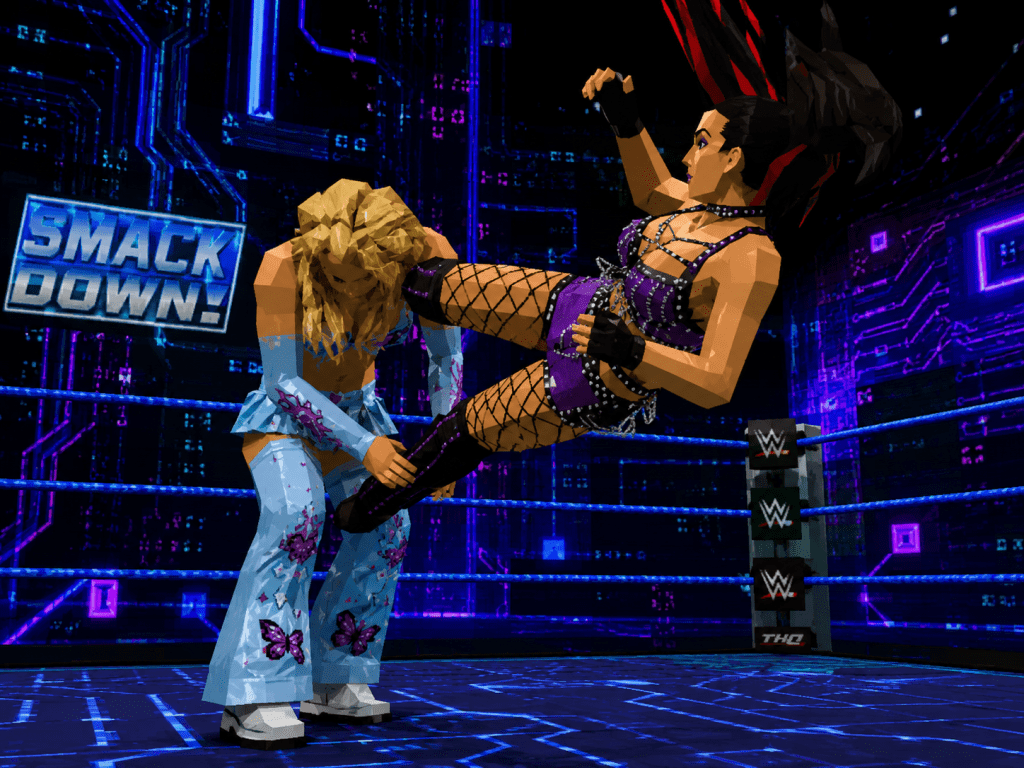
Tiffany Stratton defeated Jacy Jayne on the 17 July edition of SmackDown, qualifying for the five-woman ladder match that will determine the interim WWE Women’s Champion.
It was a clean victory.
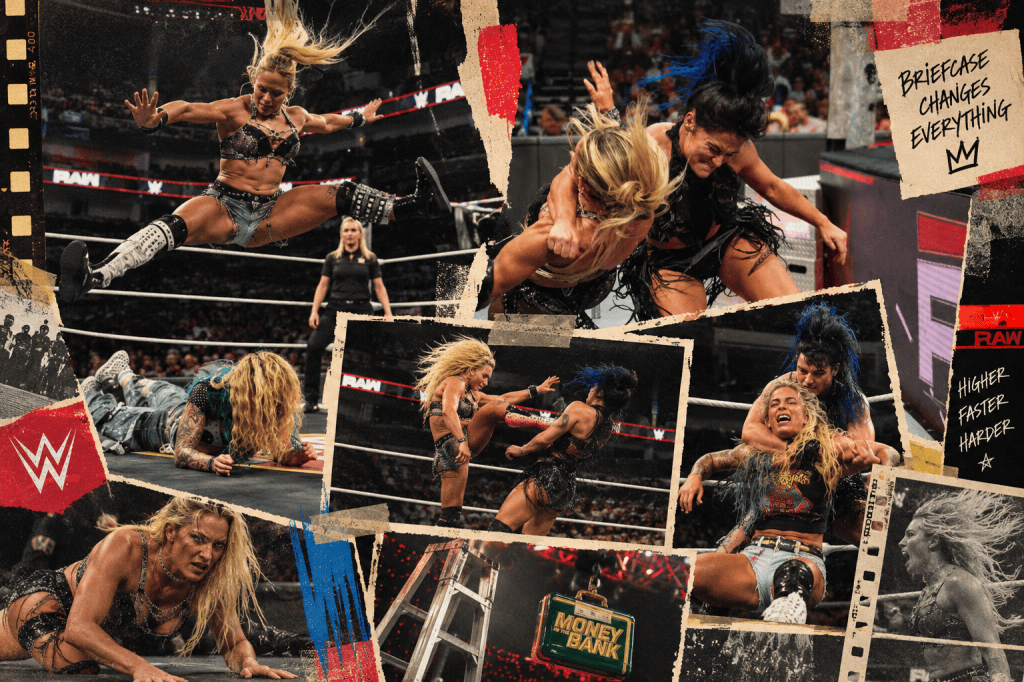
Stratton avoided the Rolling Encore, connected with the rolling senton and climbed to the top rope for the Prettiest Moonsault Ever. Three seconds later, she had her place at SummerSlam.
That is what happened.
The more interesting question is why WWE decided that Jacy Jayne needed to lose quite so definitively.
As you can probably tell from today’s date and the episode I am writing about, I am still behind.
Being behind with wrestling television creates a strange form of self-inflicted dramatic irony. I already know Jayne is not in the ladder match. I know she appears in a different match instead. Somewhere between watching the shows, checking results and existing on the internet, I managed to ruin the outcome for myself.
That did not make the manner of the defeat any less surprising.
Jayne did not merely lose her opportunity. She was beaten cleanly, in the middle of the ring, after spending much of the match demonstrating precisely why she should be treated as more than the supporting mechanism of Fatal Influence.
Jacy Jayne Looked Like a Main-Roster Star
Before anything else, Jacy Jayne looked fabulous.
Properly good.
Her purple gear felt sharper and more deliberate than the AC/DC tribute-act presentation from the previous week. That look had made her resemble somebody who might spend the evening leaning against the wall during a classic-rock night, occasionally nodding when “Back in Black” came on.
This was different.
The purple gave her a more elevated presence. Less borrowed rock-star costume, more wrestler who understood she had arrived for a significant singles match.
That matters more than wrestling sometimes admits.
Presentation is not merely decorative. It tells the audience how seriously somebody should be taken before they have thrown a strike. Jayne looked like a woman arriving for an interim championship qualifier, rather than somebody waiting for Fallon Henley and Lainey Reid to create a distraction.
Naturally, Fatal Influence still tried to create one.
Before the bell had even rung, Jayne orchestrated a three-on-one attack on Tiffany Stratton. It was uncomplicated, shameless heel work. No elaborate justification. No pretence that Jayne wanted an honourable contest.
She wanted the advantage.
That is what heels are supposed to do, despite modern wrestling’s occasional determination to turn every villain into a misunderstood lifestyle brand.
Jayne directed the attack. Henley and Reid followed. Stratton was overwhelmed before Paige and Brie Bella arrived to restore the balance, removing Jayne’s allies from ringside and leaving the Fatal Influence leader alone.
It may have been one of the few times we have seen Jacy Jayne wrestle on SmackDown without Fatal Influence physically beside her.
That should have been revealing.
It was.
Fatal Influence Cannot Become WWE’s Version of The Shield Through Aesthetic Alone
There has already been plenty of discussion surrounding the Jacy Jayne Fatal Influence Shield comparison.
It is easy to see how that comparison develops.
Three wrestlers arrive together. They operate through numbers. Their entrances are designed to create the impression that they are not merely individuals but a single, coordinated threat. One member can challenge for singles honours while the others patrol the perimeter.
The Shield, however, were not protected because they wore coordinated clothing and walked through crowds.
They were protected because defeating them mattered.
Roman Reigns, Seth Rollins and Dean Ambrose could lose matches, of course. They could be outmanoeuvred. They could be overwhelmed. What they could not do repeatedly was absorb clean defeats without consequence and remain a credible invading force.
Fatal Influence face a similar problem.
The more pressing issue is whether WWE actually wants Fatal Influence to become important.
Importance cannot be announced. It has to accumulate.
Jayne’s defeat to Stratton chipped away at that accumulation.
Jacy Jayne Wrestled Better Once She Was Alone
Once Henley and Reid had been removed, Jayne adapted.
She did not wrestle like somebody who had suddenly lost the entire point of her character. She wrestled like an experienced heel who knew how to control a match without constant interference.
There were stiff strikes. There was groundwork. There was goading.
Jayne slowed Stratton down and prevented the match from immediately turning into a showcase of gymnastics. Stratton’s primary advantage is obvious: she can produce explosive athletic moments that very few wrestlers can replicate.
Jayne’s task was to deny her the space required to create them.
That is the value Jayne offers. She understands that heel wrestling is not simply performing the same moves as the babyface while occasionally shouting at the audience. She controls tempo. She makes an opponent work towards the comeback. She knows when to pause long enough for the crowd to dislike her.
Her taunt during this match was particularly interesting.
Jayne gestured towards the crowd with something resembling an early Hulk Hogan air-guitar routine. It was exaggerated, ridiculous and knowingly obnoxious. The crowd booed.
Good.
That is what a taunt is supposed to achieve.
Not every gesture needs to become a GIF designed to make the wrestler look cool. Sometimes the correct response is simply irritation.
Jayne understands that.
Tiffany Stratton’s Offence Remains Spectacular
None of this should become an argument against Tiffany Stratton.
Her Alabama Slam was superbly executed. There was real snap to it, the sort of movement that briefly makes the opponent appear as though gravity has become personally offended.
Later, after Jayne knocked her from the top rope and connected with a neckbreaker for a two-count, Stratton’s comeback was equally sharp.
Jayne attempted the Rolling Encore.
She missed.
Stratton dropped her with the rolling senton, climbed the ropes and delivered the Prettiest Moonsault Ever.
It remains one of WWE’s finest finishing moves.
There is something almost unfair about how naturally Stratton can perform it. Plenty of wrestlers can execute a moonsault. Stratton’s version has shape. It has height. It creates the impression that the entire match has been waiting for her to reach that top rope.
The victory itself was credible.
Stratton is the United States Champion. She is being presented as one of the major contemporary names in WWE’s women’s division. SummerSlam is taking place in Minnesota, her home state, and the possibility of “Tiffy Two Belts” provides WWE with a simple promotional story.
There is a case to be made that she should have won.
There is a stronger case that Jayne did not need to lose cleanly.
Those are not contradictory positions.
Tiffany Stratton’s Gear Raised Several Questions
Her wrestling was easier to understand than her attire.
The butterfly vest top made sense. It fitted the exaggerated, hyper-feminine Tiffany Stratton presentation. The butterfly patterns made sense too.
The mini-skirt was slightly more baffling.
It was extremely short, paired with long socks and covered in the same butterfly print. The whole thing occupied a peculiar space between gymnastics gear, a festival outfit and something designed by somebody who had been given the word “butterfly” but no further instructions.
Perhaps that is the point.
Stratton’s appearance is supposed to feel excessive. She does not dress like a conventional professional wrestler because her entire character is built around being seen. Every item is chosen to catch the light, create movement or remind the audience that Tiffy Time has arrived.
Jacy Jayne SmackDown 2026 Cannot Become a Story of Respectable Defeats
The concern surrounding Jacy Jayne SmackDown 2026 is not that she lost one qualifying match.
Wrestlers lose.
The concern is that WWE may settle into a pattern in which Jayne is allowed to look competitive, create heat, and guide an opponent through a strong television match before losing to someone the company considers more established.
That role has value.
It can also become a trap.
Jayne dominated significant portions of the contest. She controlled the pace. She produced one of the match’s most memorable character moments. She wrestled without Fatal Influence beside her and proved that she did not require constant interference to remain interesting.
Then Stratton hit her finishing sequence and won without complication.
No distraction.
No mistimed interference.
No disputed pin.
No protection.
The finish told the audience that, on this night, Tiffany Stratton was simply better.
Perhaps WWE believes that is an acceptable message because Stratton is already a champion and clearly positioned for greater things.
She is unquestionably a future star.
Perhaps she already is one.
The more important distinction is that Stratton represents present-day WWE talent. She is not a returning legend taking a qualifying position because of an old entrance theme and a successful career from another era.
That makes the result easier to accept.
It does not make the clean defeat necessary.
A Good Match With the Wrong Kind of Ending
This was a good television match.
Jayne’s heel work gave it structure. Stratton’s athletic offence gave it an obvious climax. The Alabama Slam looked excellent, the top-rope neckbreaker created a convincing near fall and the Prettiest Moonsault Ever provided a decisive conclusion.
The disagreement is not with Tiffany Stratton advancing.
It is with the method.
A protected defeat would have allowed Stratton to reach the ladder match without quietly reducing Jayne’s threat. Fatal Influence could have attempted another intervention. Paige or Brie could have caused an accidental distraction. Henley and Reid’s ringside chaos could have returned at the decisive moment. Or whatever.
 doragon sports
One response to “Jacy Jayne Did Not Need This Clean Loss to Tiffany Stratton | SmackDown Review”
[…] Jacy Jayne climbed onto the […]
LikeLike