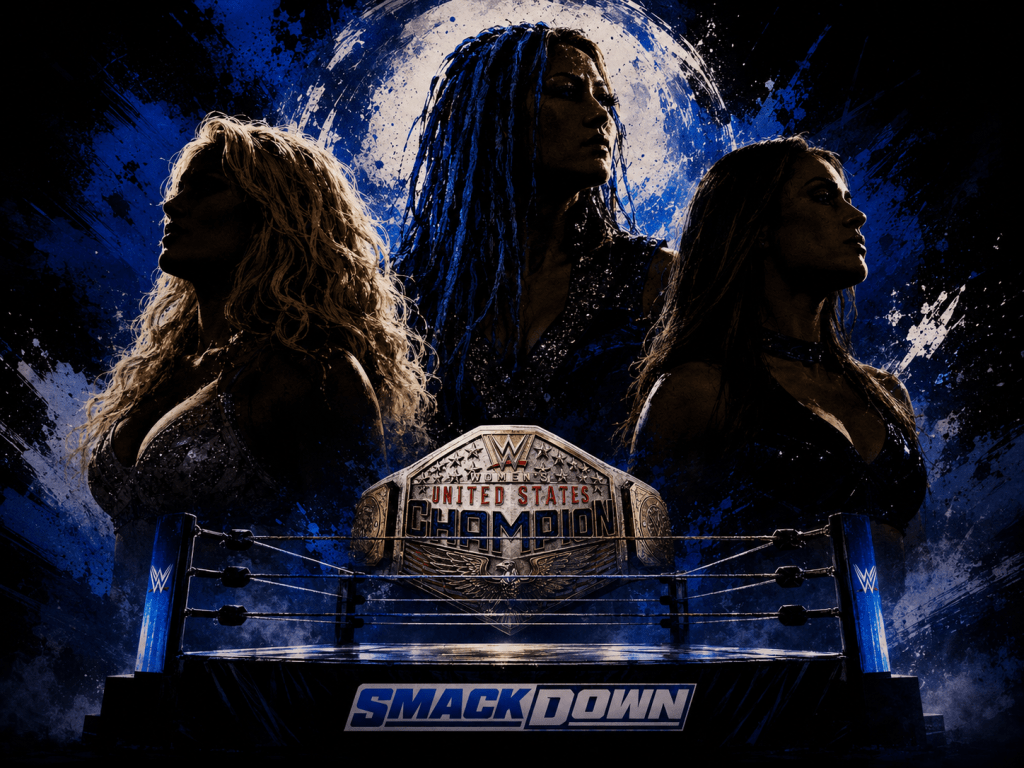
The strange thing about Friday’s WWE SmackDown title match is not that Kiana James is challenging for the WWE Women’s United States Championship.
It’s that Giulia isn’t.
That is the part nobody can quite square.
Wrestling fans are used to injustice. Entire promotions are essentially built upon selective memory, backstage politics, and pretending ladder matches don’t cause permanent spinal damage. But even within that ecosystem, this feels oddly dismissive toward Giulia.
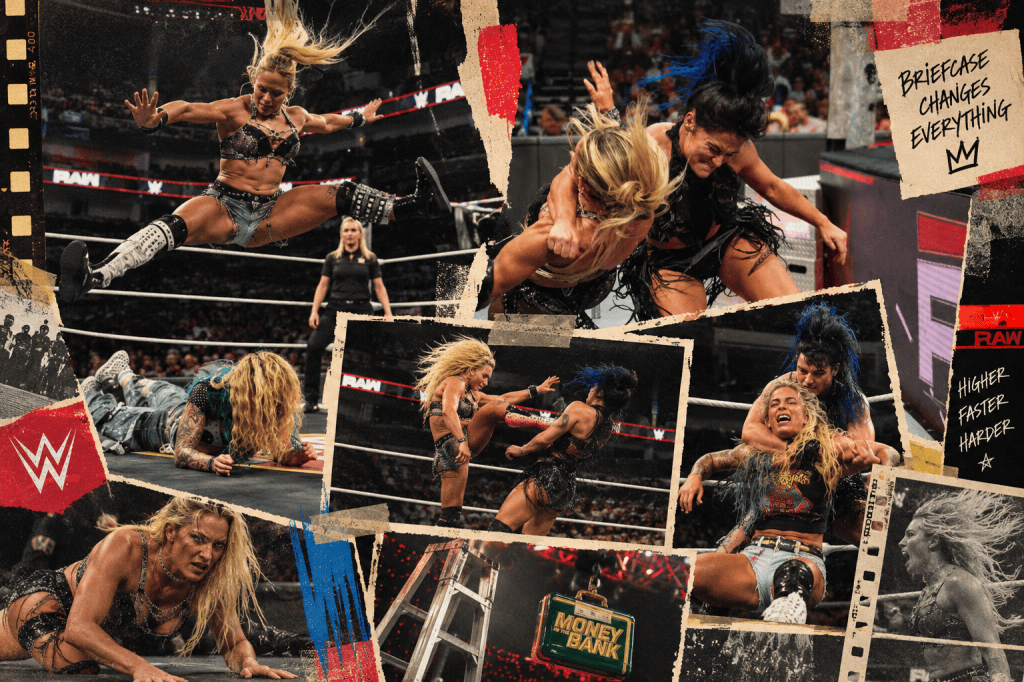
She loses the title in chaotic circumstances. Her own ally accidentally becomes part of the finish. The match ends with confusion rather than closure.
And then the rematch goes to somebody else.
Not an ally demanding revenge on her behalf. Not a faction representative carrying the banner.
Just… Kiana James stepping over the body of the story and helping herself to the spotlight.
Which, in storyline terms, is fascinating.
In booking terms, it feels like somebody in creative accidentally left Giulia in the loading bay while the rest of SmackDown boarded the train.
Kiana James Is Great. But This Still Feels Strange.
This is not an attack on Kiana James.
To be fair, she has been excellent.
Her timing is sharper. Her confidence is noticeably higher. The entire “corporate athlete” presentation has evolved from slightly forced NXT theatre into something colder and more believable. There are moments now where she carries herself like a woman halfway through a leveraged buyout of the division.
The problem is structural.
For months, James existed beside Giulia as facilitator, translator, handler, consigliere, financial advisor, emotional shock absorber, occasional ringside irritant. A very expensive side character.
That was the point.
She was not presented as the centrepiece. She was presented as the infrastructure around the centrepiece.
And now suddenly she is receiving the title opportunity while Giulia stands off to the side looking like somebody watching their own replacement being trained in real time.
It creates an accidental humiliation.
A subtle one. But wrestling fans notice these things with frightening clarity. This is an audience capable of remembering a referee’s facial expression from an undercard segment in 2004. Petty memory is the industry’s true championship belt.
The optics matter.
Because this does not feel like elevation for Kiana as much as it feels like demotion through omission for Giulia.
Tiffany Stratton’s Revival Still Feels Slightly Weightless
Then there is Tiffany Stratton herself.
Which is awkward, because on paper this should feel enormous.
Tiffany reclaimed relevance. She won the championship. She corrected the WrestleMania absence hanging over her like a storm cloud. WWE clearly wants “Tiffy Time” to feel like a major directional shift for the division.
Yet something about the revival still feels strangely thin.
Not bad. Just… incomplete.
Like creative decided the conclusion before fully constructing the emotional bridge toward it.
Stratton is still incredibly talented. Arguably one of the most naturally athletic performers WWE has developed in years. Her movement remains absurd in the best possible way, like gravity keeps briefly forgetting its responsibilities around her.
But the feud lacks proper emotional anchoring because the wrong person appears to be standing opposite her.
The real story is Giulia and her presence from Japanese wrestling, moreover, how it hasn’t translated to the main WWE roster.
Not the belt.
Not Jacksonville.
Not even Kiana James WWE discourse floating around social media alongside “Kiana James height” and “How tall is Tiffany Stratton” search trends like wrestling fans are assembling furniture specifications.
The emotional gravity remains with Giulia.
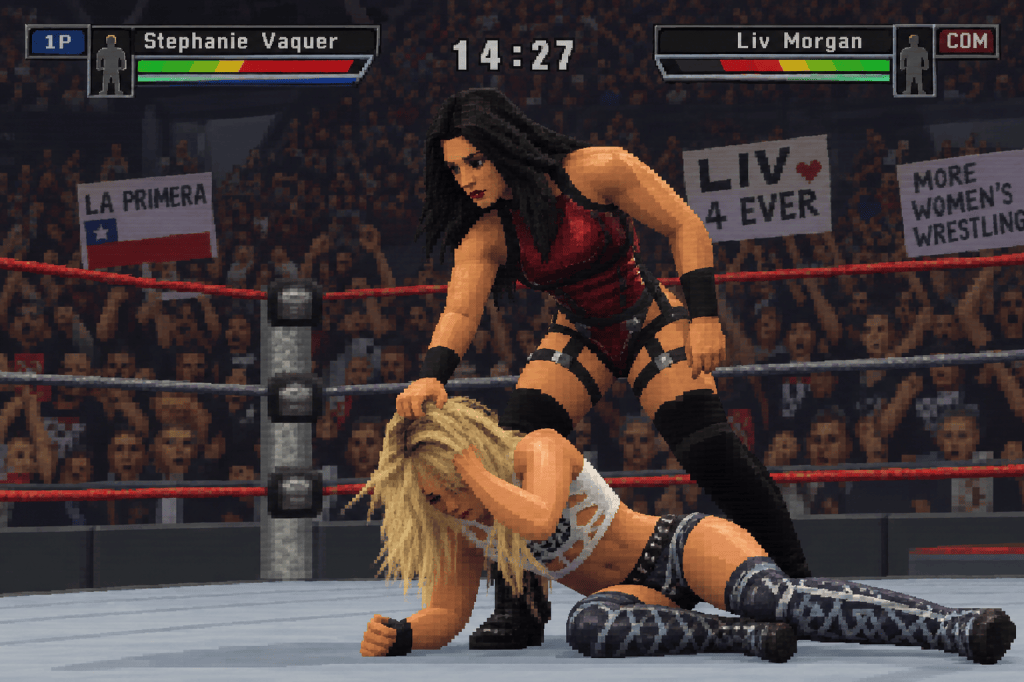
Which is why Stratton almost feels like she belongs elsewhere right now. RAW, frankly, makes more sense. A programme with Liv Morgan would probably feel hotter, nastier, and more chemically volatile.
SmackDown currently feels like Stratton wandered into the middle of another feud by accident.
The Real Story Might Be the Turn Coming Afterwards
And maybe that is intentional.
Because there is a version of this that suddenly becomes very clever.
Kiana James wins the title.
Not clean necessarily. Wrestling stopped believing in clean emotional transitions around the same time people started pretending cryptocurrency was a stable retirement plan.
But she wins.
And then the real fracture happens.
Giulia finally snaps.
Not as a babyface betrayed by management. Not as a noble warrior denied justice. Something colder. More poisonous. A complete inversion of the relationship.
Because the truth is the alliance has already started rotting.
Kiana speaks too much now. Moves too confidently. Inserts herself too centrally into every segment. She stopped acting like a manager months ago. She started acting like succession planning.
A double turn could genuinely save the entire structure here.
Kiana becoming the reluctant sympathetic champion while Giulia fully embraces bitterness and violence has texture to it. Suddenly all the strange omissions and sidelining become narrative fuel rather than booking confusion.
And Tiffany Stratton?
You bring her back through a triple threat later.
Cleaner. Bigger. Less trapped in the current emotional traffic jam.
Chelsea Green Might Be the Missing Ingredient
Oddly enough, the most interesting side effect may involve Chelsea Green.
Without the Secret Hervice orbiting around her anymore, Green suddenly has room to pivot again. The audience already wants to laugh with her rather than at her. WWE tends to resist that transition right until it becomes unavoidable.
A loose alliance with Tiffany Stratton actually makes sense. It was teased at last week. Why not push it?
Not a syrupy friendship. Nobody needs that. Wrestling friendships have the shelf life of supermarket sushi.
But aesthetically and tonally, they fit together.
Both understand vanity as performance art. Both weaponise presentation. Both operate with that particular kind of self-awareness modern WWE increasingly rewards.
And more importantly, it creates a genuinely fresh tag dynamic opposite Giulia and Kiana James.
Because then the entire division becomes less about championships and more about unstable relationships.
Which, historically, is when wrestling is usually at its best.
Not when it pretends to be sport.
When it behaves like succession drama performed by human fireworks.
 doragon sports