

Game Context & Stakes: One Step From Air, One Step From Dust
Friday night football at Elland Road does not whisper. It presses. It leans. It asks questions you cannot dodge.
Leeds United arrive here with 40 points and a pulse that still stutters when it looks down. Six points above the drop. Four games left. One more push and the lungs fill again. One more slip and the floor starts to tilt.
Across from them stand Burnley, already folded into the Championship’s gravity. Relegated. Confirmed. The verdict stamped after that thin, suffocating 1–0 loss to Manchester City. Twenty points across a season that never quite sparked, only flickered and died.
This is not balanced. This is contrast sharpened into something uncomfortable.
Leeds play for oxygen.
Burnley plays because the clock still demands it.
And that imbalance… it doesn’t calm a game. It distorts it.
The Wembley Hangover: The Kind That Sits in the Bones
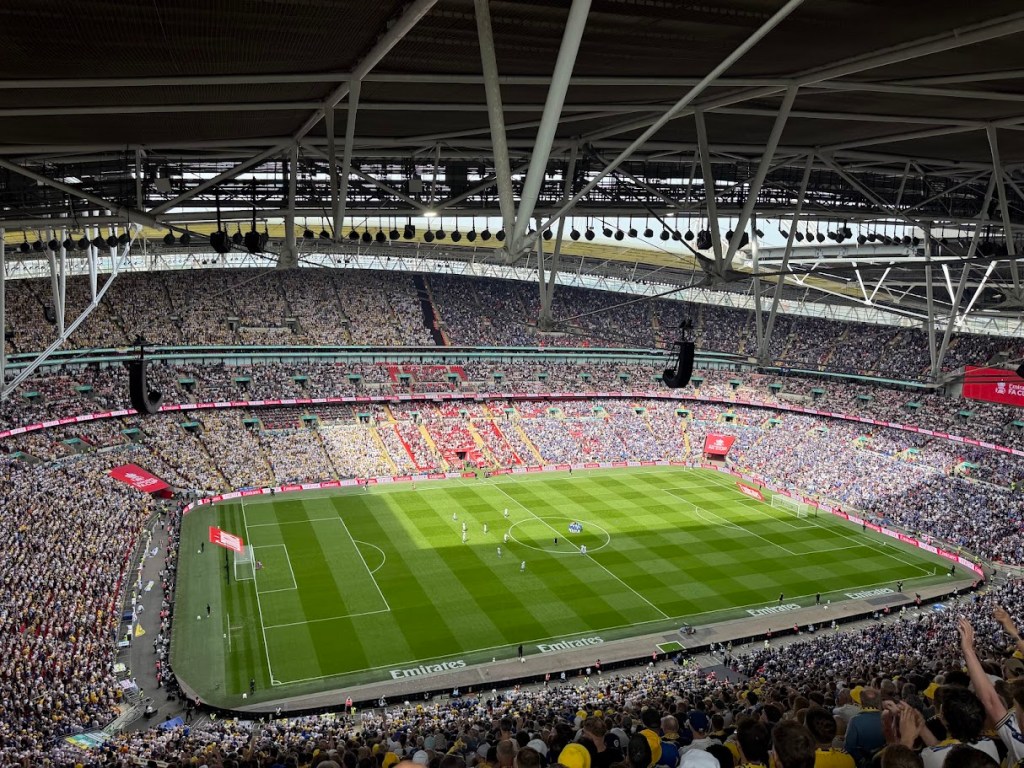
Before Burnley even enters the frame, there is Wembley Stadium. There is that loss. That thin, airless 1–0 defeat to Chelsea that didn’t explode… it drained.
Leeds didn’t collapse. That would have been easier to process. They lingered. Stay within reach. Felt the game breathing beside them. And then watched it drift away anyway.
That’s the cruel version. The one that doesn’t leave bruises. It leaves residue.
You saw it on the shoulders on the walk back. Not anger. Not even visible heartbreak. Just a quiet heaviness, like something internal had been sanded down.
And now, days later, they are expected to snap back into urgency.
That’s the hidden opponent tonight.
Not Burnley.
Not tactics.
The echo of almost.
If Leeds play with that still clinging to them, the game slows. Passes hesitate. Decisions blur. The sharpness dulls.
If they purge it, though… if they turn that frustration into something harder, something cleaner…
Then this becomes release.
Not just three points.
Relief with a roar behind it.
Farke vs Parker: Records That Refuse to Stay Quiet
Managers say history doesn’t matter. Football nods politely and keeps receipts anyway.
Daniel Farke has a wrinkle in his record that won’t iron itself out. As Leeds manager, Burnley remains unsolved. No wins. No clean break. Just a pattern that lingers like a line you can’t quite finish writing.
And that matters. Not tactically. Psychologically.
Because patterns become presence.
Then there’s Scott Parker, walking into this fixture with the oddest badge of honour imaginable. Relegated. Season broken. Future uncertain. Yet against Leeds, he has never lost as Burnley boss.
Two wins. One draw.
A small, stubborn island of control in an otherwise collapsing map.
It gives this game a strange pulse. Farke is pushing forward, trying to break something. Parker was standing there, quietly holding a thread he shouldn’t still have.
And behind Parker, the whispers grow louder.
Steven Gerrard. A name already circling Turf Moor. A possible successor. A signal that Burnley are already thinking about tomorrow while still playing through today.
Which reframes this completely.
This isn’t just a match for Parker.
It’s a closing argument.
A final, stubborn attempt to prove he is more than the table says he is.
The Players: Fragments of Control in a Shifting Game
Some matches hinge on moments. Others hinge on individuals holding their shape when everything else loosens.
Brenden Aaronson is becoming that quiet centre for Leeds. Not loud. Not theatrical. But constant. Always offering angles and always nudging the game forward. Two assists in three matches, yes… but more than that, he’s become the rhythm Leeds fall back on when things start to drift.
Then there is Anton Stach. The return that wasn’t scheduled. The body that said no, and the player that said yes anyway. His 45 minutes at Wembley felt less like a cameo and more like a statement. If he starts here, Leeds gain something dense. Something resistant. Something that doesn’t get brushed aside.
Across from him, Josh Cullen. Still ticking. Still reliable. One of the few Burnley players whose reputation hasn’t been swallowed whole by the season. He will press. He will disrupt. He will try to slow the game down so Burnley can live in it.
And then there’s Jayden Bogle.
Seven games against Burnley.
No wins.
Heavy defeats layered into that record like scars.
Football doesn’t officially recognise curses. But players do. Quietly. Internally. They carry them until they don’t.
Breaking that tonight, under these lights, would feel like more than a stat correction.
It would feel like a release.
The Ghost in the Machine: Ao Tanaka’s Reckoning
There is a version of Ao Tanaka that Leeds have not quite seen yet. Or maybe they have… in fragments. Flickers. Half-formed moments that promise something and then pull back just before it arrives. Wembley did not help. Wembley exposed him. Not cruelly, not unfairly, just… honestly. The lights were too bright, the rhythm too fast, the decisions a fraction too late—a free-kick wasted. A chance inside the box was mishandled and substituted before the story could correct itself. And now that performance hangs over him like a quiet accusation.
This is where Burnley becomes more than a fixture. It becomes a test of nerve.
Because Tanaka is not a broken player, he is a player caught between roles, between expectations, between what the system needs and what he naturally offers. With Ilia Gruev absent, Leeds lose control in tight spaces and the ability to sit on the ball when it belongs to them. Tanaka doesn’t replace that directly. He isn’t the lock. He’s the key that hasn’t quite found the right door yet.
So the question is simple, even if the answer isn’t.
Can he play without the shadow?
If Leeds score early, if Elland Road lifts instead of leans, if the game opens even slightly, Tanaka has the intelligence to drift into it. To find pockets. To connect play in a way that feels smoother, lighter, and less forced. But if the game tightens, if Burnley compresses the space, if the crowd grows impatient… that hesitation can return. That half-second pause that turns opportunity into regret.
This is the paradox of Tanaka right now.
He might not be the player to drag Leeds through this game.
But he could be the one who finally breathes once it starts to loosen.
And if he does… if he finds even a small rhythm here… then Wembley stops being a weight.
It becomes the moment before the correction.
Tactics: Structure Under Strain
Farke had found something. A system that gave Leeds the edge again. Three at the back. Wing-backs stretching space. Defensive lines that held instead of bending.
It wasn’t perfect. But it was stable.
Then Gabriel Gudmundsson went down.
And suddenly the structure looks fragile again.
Replace him directly, and the balance shifts. Force a right-footed solution into a left-sided rhythm, and the whole pattern stutters. Change the system, and you erase the progress that got you here.
It’s not a clean decision.
It’s a compromise, whichever way he turns.
Burnley, by contrast, doesn’t need invention. They need resistance.
A compact 5-4-1. Lines close. Space denied. The game slowed until it became uncomfortable for Leeds to inhabit.
They will not try to control.
They will try to suffocate.
And if Leeds arrive with even a trace of Wembley still in their legs, that suffocation can feel heavier than it should.
Form & Numbers: The Quiet Pressure of Expectation
Leeds is moving forward and not flying. Not flawless. But moving.
Wins over Manchester United and Wolves. Draws that didn’t collapse. A form line that suggests competence, if not dominance.
Burnley are unravelling. Six defeats in seven. Sixty-eight goals conceded. A defensive record that reads like a slow leak no one ever sealed.
And yet…
That’s where the danger sits.
Because expectation builds quietly.
Around a 62 per cent chance of a Leeds win. The numbers lean. The narrative leans. Everything leans.
And when everything leans one way, football has a habit of pushing back.
Not always.
But just often enough to make nights like this feel heavier than they should.
The Atmosphere: Noise That Carries Meaning
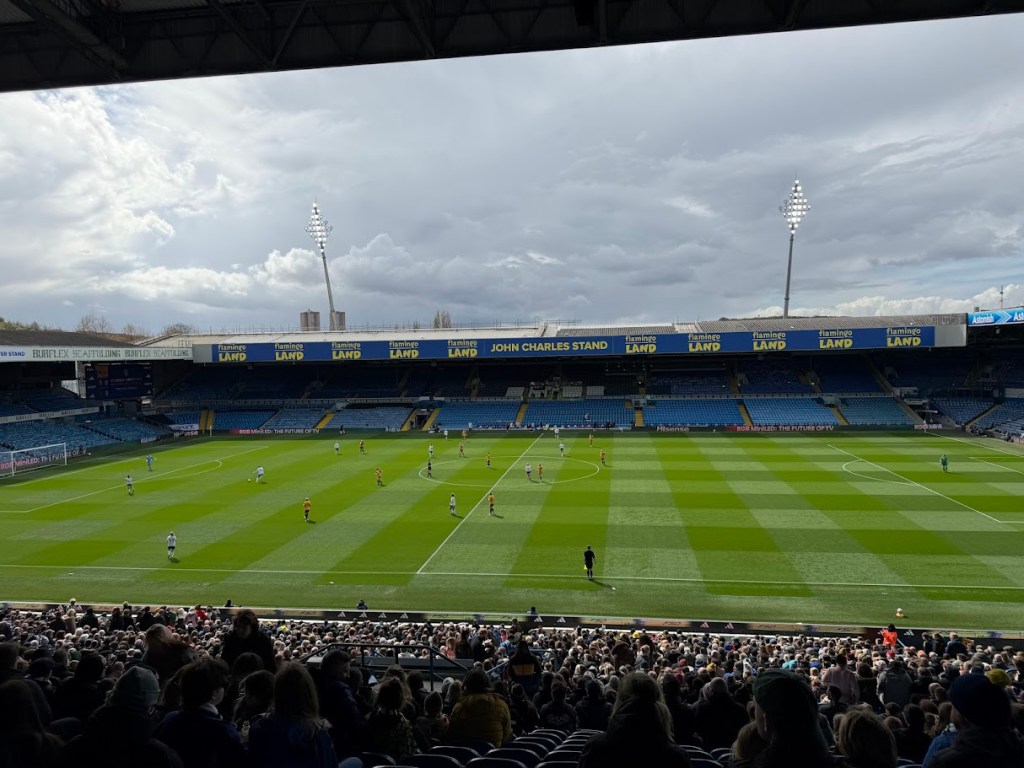
Elland Road doesn’t host matches. It amplifies them.
The sound arrives early. Before kickoff. Before the first pass. Marching On Together rising, not neatly, not perfectly, but with force. With intent.
Thirty-seven thousand voices pressing the same idea into the air.
Finish this.
End this.
Make it real.
And Leeds feel that. They always do.
Sometimes it lifts them.
Sometimes it weighs.
Tonight, it will do both.
Because the crowd understands what this is. Not just another fixture. Not just another ninety minutes.
This is closure waiting to happen.
Or tension waiting to stretch even tighter.
Burnley: Freedom in the Ruins
Relegation empties a team. But it can also loosen it.
Burnley arrive without consequence. Without expectation. Without anything left to protect.
That’s dangerous in its own way.
They can sit deeper. Play simpler. Disrupt without fear of failure because failure has already been processed.
There is also the human layer.
Contracts.
Careers.
Players are still trying to be seen and still trying to matter beyond a broken season.
And Parker, standing on the edge of whatever comes next.
He will not want this to end quietly.
Final Word: The Moment Before the Exhale
This should be simple.
Leeds win. Survival secured. Story completed.
But it doesn’t feel simple.
Too many threads are still hanging. Wembley’s shadow. Farke’s record. Bogle’s history. Parker’s final stand. Burnley’s strange, pressureless state.
It all gathers into something thicker than a routine Friday night.
And yet, the path is there.
Clear, if Leeds take it.
If Aaronson finds the spaces. If Stach holds the centre. Suppose the structure doesn’t crack if the crowd becomes light rather than heavy.
Then this becomes what it’s meant to be.
A release.
A night where the tension finally breaks.
Where survival stops being calculated and starts being felt.
And the noise at Elland Road… changes tone.
Not urgent.
Not anxious.
Certain.
Is Leeds United safe from relegation in 2026?
Leeds United are on the brink of Premier League survival. A win against Burnley could mathematically secure safety, depending on other results.
Why are Burnley already relegated in 2026?
Burnley’s relegation was confirmed after a 1-0 defeat to Manchester City, leaving them with just 20 points and one of the worst defensive records in the league.
What is Daniel Farke’s record vs Burnley?
Daniel Farke has struggled against Burnley as Leeds manager and is still searching for his first win against them.
Has Scott Parker beaten Leeds United before?
Yes. Scott Parker has never lost to Leeds as Burnley manager, with two wins and one draw.
Is Steven Gerrard going to manage Burnley?
Steven Gerrard has been linked with the Burnley job, with uncertainty surrounding Scott Parker’s future after relegation.
Where can I find the Leeds United players’ 2026 squad list?
Fans searching for Leeds United players 2026 can find updated squad lists on the official club website and major sports platforms.
Where can I buy Leeds United tickets?
Leeds United tickets are available via the official club website, with high demand for matches at Elland Road, especially for key Premier League fixtures.
Is Leeds United on Instagram?
Yes, fans can follow Leeds United on Instagram for match updates, behind-the-scenes content, and player features.






2 responses to “Leeds United vs Burnley: Friday Night, Survival Theatre at Elland Road”
[…] Rather read in English? […]
LikeLike
[…] wrote the original piece […]
LikeLike