
There are football clubs that become comfortable with their own history.
Then there is Gamba Osaka.
This is a club capable of producing some of the most exhilarating football Japan has ever seen, yet also one that somehow managed to score more goals than anyone else and still suffer relegation in 2012. A club that completed one of the greatest domestic trebles in Asian football history. A club that now stands alone as the first Japanese side to have conquered both the AFC Champions League and AFC Champions League Two. Success and chaos have often travelled together in blue and black.
That contradiction follows them into one of the most fascinating seasons in their modern history. The 2026/27 campaign is not simply another J.League season. It marks Japanese football’s historic transition from the traditional February-to-December calendar to an autumn-to-spring schedule aligned with much of Europe. Every club is adapting. Few are doing so after a summer as turbulent as Gamba’s.
Winning the 2025/26 AFC Champions League Two should have provided stability. Instead, it became the closing chapter of Jens Wissing’s brief but hugely influential reign before his departure to Al-Ittihad only weeks later. Suddenly, club legend Tomokazu Myojin finds himself rebuilding both confidence and tactical identity while inheriting a squad stretched by injuries.
Gamba Osaka Transfers
The biggest transfer did not involve a player.
It involved the dugout.
Losing Jens Wissing only weeks after lifting the AFC Champions League Two trophy fundamentally altered Gamba Osaka’s trajectory. His high-energy pressing system transformed the side into one of Japan’s most aggressive transition teams, but it also demanded extraordinary physical output from a relatively thin squad. By the time summer arrived, injuries had spread throughout the defensive unit, and continuity had disappeared with the manager himself.
Tomokazu Myojin inherits more than a football team.
He inherits a tactical crossroads.
Rather than attempting to imitate Wissing’s relentless Gegenpressing, every indication suggests Gamba will become more compact, more measured and considerably harder to counter-attack. For a club that once thrilled supporters through all-out attacking football, it represents a significant philosophical adjustment, but perhaps a necessary one considering the personnel currently available.
Among the arrivals, Eli Adams immediately attracts attention.
The Australian winger arrives with genuine pace, direct running and natural width down the right. His profile is quite different from many recent Gamba wide players, preferring to attack space quickly rather than constantly recycle possession. Under Myojin, that could become invaluable, particularly if Gamba spend longer periods defending before springing forward through transition.
His adaptation will matter enormously.
Replacing Harumi Minamino was never going to be straightforward.
Minamino’s breakout campaign gave Gamba another explosive pressing forward capable of playing across multiple attacking roles. His seven-goal contribution during the interim league made him one of the club’s brightest performers before his move to Urawa. Losing both his goals and his defensive work without adequate replacement would have left a sizeable tactical gap. Adams may not replicate Minamino’s numbers immediately, but he changes the attack in different ways by stretching defences horizontally and creating crossing opportunities for Hümmet.
Elsewhere, several younger midfielders have departed on loan, most notably Takato Yamamoto’s move to Borussia Dortmund II.
That transfer says almost as much about Gamba’s academy reputation as it does about the player himself. The club has spent decades producing technically gifted footballers capable of attracting European attention, and Yamamoto’s opportunity continues that tradition. It also leaves Myojin with a slightly smaller central midfield rotation heading into a season that could become physically demanding under the new calendar.
Key Players
Eli Adams
Every rebuild needs fresh energy.
Adams arrives carrying precisely that responsibility.
Fast, left-footed and comfortable attacking defenders directly, the Australian offers something Gamba increasingly lacked following Minamino’s departure. Rather than drifting inside at every opportunity, Adams naturally hugs the touchline before accelerating into dangerous areas, potentially giving Gamba a much-needed outlet whenever pressure builds.
Deniz Hümmet
Some forwards score goals.
Others shape entire tactical systems.
Hümmet belongs firmly in the second category.
Everything about Gamba’s attack increasingly revolves around his physical presence, intelligent movement and finishing ability. His winner against Al Nassr secured continental history, but perhaps more importantly demonstrated his ability to deliver during football’s biggest moments. He offers a reliable focal point whether Gamba dominate possession or defend deep before counter-attacking.
Under Myojin, his importance may grow even further.
Expectations for Gamba Osaka in 2026/27
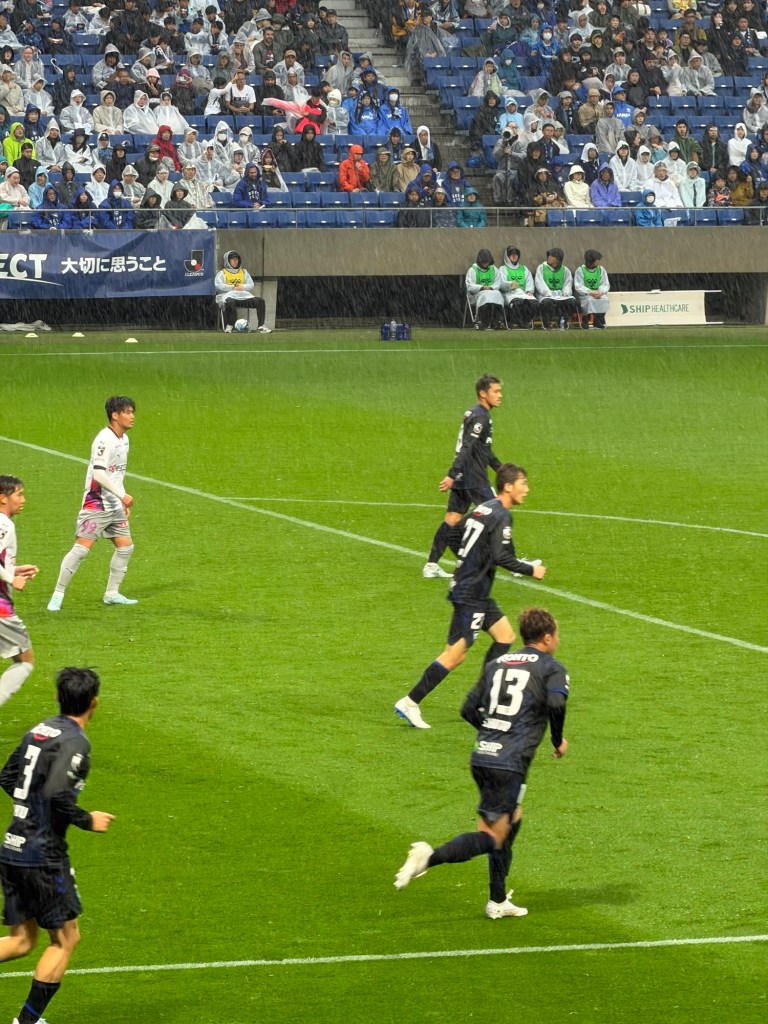
This season is likely to demand patience.
Not because Gamba Osaka lack quality.
Because very few clubs could lose a successful manager immediately after continental glory, suffer a defensive injury crisis and simultaneously adapt to Japanese football’s biggest structural change in more than three decades without experiencing some turbulence.
A top-six finish feels achievable.
Tomokazu Myojin’s first priority is unlikely to be producing spectacular football every weekend. It will be creating a side that is considerably harder to beat. Under Jens Wissing, Gamba overwhelmed opponents through relentless pressing and breathtaking transition speed, but those physical demands eventually became unsustainable as injuries accumulated. Myojin appears determined to trade a little excitement for considerably more control.
That could frustrate some supporters initially.
Gamba have always been associated with adventurous football. Their greatest teams attacked with confidence and often accepted defensive risk as part of the bargain. Watching the team retreat into a compact mid-block will feel unfamiliar.
It may also be exactly what this squad needs.
The biggest concern remains defensive depth.
With several senior defenders recovering from injury, captain Shinnosuke Nakatani and Genta Miura could find themselves carrying enormous workloads during the opening months. One further injury would significantly complicate Myojin’s plans before tactical ideas have fully settled.
How Important Will Panasonic Stadium Suita Be?
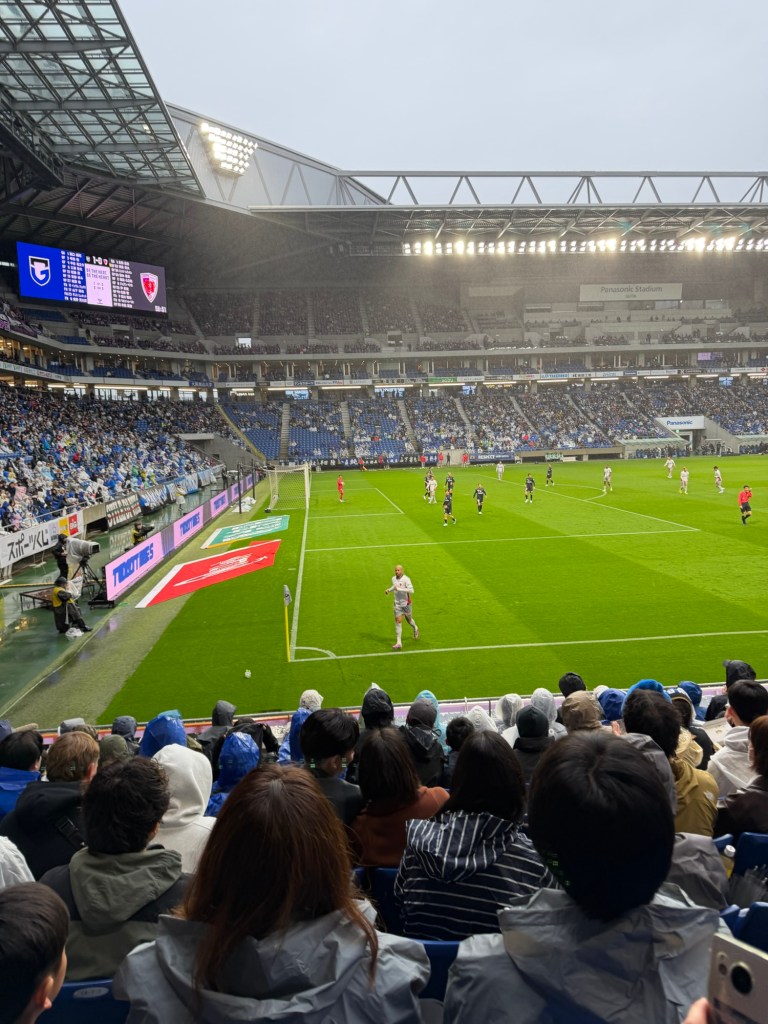
Some stadiums impress because of their size.
Panasonic Stadium Suita impresses because of its intimacy.
With just under 40,000 seats, the football-specific stadium places spectators almost directly on top of the action, creating one of the most immersive atmospheres in Japanese football. There is no running track separating players from supporters. Every tackle, every clearance and every mistake unfolds only metres away from thousands of passionate voices.
That closeness matters.
Especially for Gamba Osaka.
Supporters here have long embraced attacking football with an intensity that reflects the club’s identity. When the team presses high, the stadium seems to rise with them. When momentum builds, the Curva behind the goal becomes a constant wall of colour and noise, demanding that every player matches the energy flowing from the stands.
Away teams rarely receive an easy evening.
The Osaka Derby against Cerezo Osaka transforms the stadium into one of Japanese football’s defining occasions, while visits from Urawa Red Diamonds carry the weight of two modern giants colliding. Even outside those fixtures, Panasonic Stadium possesses an atmosphere that rewards commitment and quickly exposes hesitation.
The stadium itself reflects modern Japanese football.
Gamba Osaka J.League 100 Year Vision League Review
Ninth nationally.
Respectable on paper.
Much more complicated in reality.
Gamba finished fifth in the West Region before defeating Tokyo Verdy to secure ninth place overall in the unique 2026 J.League 100 Year Vision League, the transitional competition that bridged Japanese football’s move towards the new autumn-to-spring calendar. Their record perfectly reflected the campaign itself: balanced, competitive and frequently decided by penalty shootouts.
The biggest positive was impossible to ignore.
Continental confidence.
During the same period, Gamba conquered the AFC Champions League Two, defeating Al Nassr in Riyadh thanks to Deniz Hümmet’s decisive goal and Rui Araki’s unforgettable goalkeeping display. Domestically, Harumi Minamino enjoyed a breakout campaign with seven goals, while Hümmet himself established his credentials as one of the league’s most dangerous forwards.
How to Watch Gamba Osaka in 2026/27
Supporters inside Japan can once again watch Gamba Osaka throughout the season on DAZN, which remains the primary broadcaster for J.League football.
Internationally, following Japanese football has never been easier.
Selected matches continue to be streamed free on the official J.League YouTube channel, although fixtures vary by territory and the league’s weekly selections. For many overseas supporters, those broadcasts have become the gateway into one of world football’s most entertaining leagues.
Watch how Myojin reshapes a squad built for constant pressing into one capable of controlling matches through patience instead.
Watch whether Rui Araki’s remarkable rise continues.
And watch when Deniz Hümmet peels away from his defender just before a cross arrives, remember that some strikers always seem to know where football is travelling before everyone else does.



 doragon sports