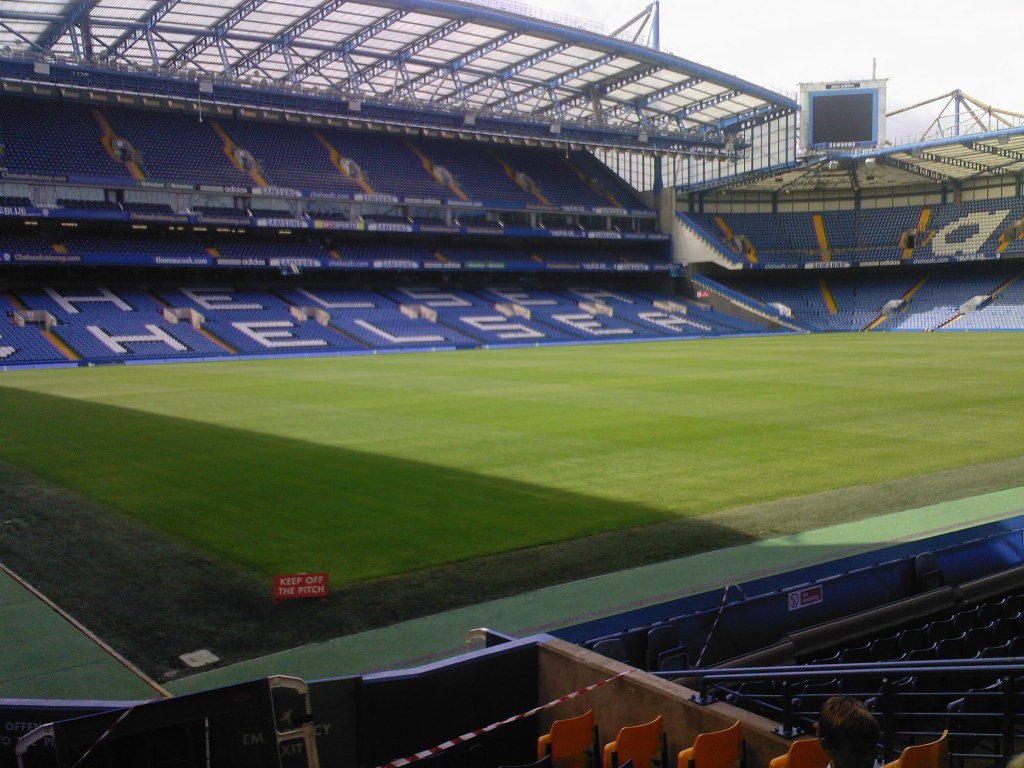
Under the lights at Stamford Bridge, football has a way of tightening its grip on the chest. Not quite panic, not quite anticipation, but something in between. The kind of feeling that tells you this is not just another game. This is a night with consequences.
On Wednesday, April 1, the UEFA Women’s Champions League returns to West London for a quarter-final second leg that feels heavier than most. Arsenal arrive carrying a 3–1 advantage, earned with precision and a touch of ruthlessness at the Emirates. Chelsea wait on their own turf, staring at the deficit like a locked door they are convinced they can still break through.
It is, on paper, a two-goal cushion. In reality, it is something far more fragile.
Chelsea Still Believe
Because Chelsea are not built for quiet exits. This is a team which has dominated the WSL for countless years, made incredibly deep runs into the UWCL.
They are a side that has made a habit of clawing back what looks lost. Just last season, they turned over a 2–0 first-leg deficit against Manchester City, bending momentum until it snapped their way. That memory lingers, not as comfort, but as expectation. Stamford Bridge does not host hope politely. It demands belief with teeth.
And yet, Arsenal arrive with something colder. Not arrogance. Not noise. Something steadier.
Can Arsenal Keep Control?
Renée Slegers has shaped this Arsenal side into something that doesn’t chase games recklessly. It waits. It studies. It strikes when the space opens. The first leg was a blueprint of that identity. Less possession, more incision. Fewer touches, greater consequence. Chelsea had the ball, Arsenal had the moments that mattered.
Slegers has been careful in her messaging, almost surgical in tone. It is only half-time, she insists. There is work to be done. No talk of defending a lead, only of playing their game again. It sounds simple, but there is a quiet menace in that simplicity. Arsenal are not coming to survive. They are coming to finish something.
Across the touchline, Sonia Bompastor carries a very different energy.
Frustration still simmers from the first leg, where a disallowed Veerle Buurman goal became the focal point of post-match anger. The sense of injustice has not faded. If anything, it has sharpened Chelsea’s mood. Bompastor has made it clear she felt the game, and perhaps the occasion, deserved better from those controlling it.
That frustration has spread outward. Into the squad. Into the crowd. Into the narrative.
This is no longer just a comeback attempt. It is a response.
The emotional weight of the tie is amplified by its place in history. The first all-English quarter-final in the modern UWCL era, a London derby with European consequences. Familiar opponents, unfamiliar stakes. There is no novelty in facing each other. Only escalation.
And within that, individual stories begin to flicker.
The Players Who Will Shape the 90
Alessia Russo moves through this moment like a player who has found alignment between confidence and form. Eight goals in the competition. A hat-trick at the weekend. A forward who no longer looks for chances but seems to attract them. There is a looseness to her play now, a sense that everything she touches might tilt the match.
She is not alone. Stina Blackstenius stretches defences in ways that create space Russo thrives in. Behind them, Arsenal’s structure hums quietly, rarely rushed, rarely out of position.
Chelsea, by contrast, feel more volatile.
Lauren James remains their most unpredictable weapon. When patterns break down, she is the player who redraws them. Her goal in the first leg, struck from distance with a kind of effortless violence, kept the tie alive. She will be central again, drifting into pockets, forcing Arsenal’s back line into uncomfortable decisions.
But the real question, the one that lingers over everything, is Sam Kerr.
Her season has been shaped by absence and recovery, by the long road back from injury. Now, as whispers grow louder about a possible move to the United States, each appearance carries an added layer of finality. This could be one of her last defining European nights in a Chelsea shirt.
And Chelsea need something defining.
In the first leg, they lacked a focal point. No true No. 9 presence to anchor attacks or convert pressure into goals. Kerr changes that equation instantly. Whether she starts or arrives from the bench, her presence bends defensive lines and sharpens every cross, every loose ball in the box.
If Chelsea are to rewrite this tie, it will likely run through her.
How the Game Will be Played
Tactically, the match sets up as a study in contrasts.
Arsenal’s 4-2-3-1 offers flexibility without chaos. It can stretch into a two-forward system, compress into a defensive block, or expand wide depending on the rhythm of the game. Their adaptability in the first leg, particularly the adjustment that saw Katie McCabe drop deeper to blunt Chelsea’s wide threat, showed a team comfortable solving problems mid-match.
Chelsea’s approach will be more aggressive. It has to be.
Whether through a 4-3-3 or a back three system, they will push numbers forward, funneling attacks through wide areas and looking to overwhelm early. The risk, of course, is exposure. Recent matches have shown a defensive line that can be unsettled, even fractured, under pressure.
And Arsenal do not need many invitations.
The numbers underline the tension. Arsenal arrive on an 11-game winning streak, scoring freely and conceding rarely. Chelsea, while still dangerous, have shown signs of instability, conceding goals in situations they once controlled with ease.
How Stamford Bridge is More than the Venue
But numbers, on nights like this, often sit quietly in the background.
What matters is the atmosphere.
Stamford Bridge will not ease into this game. It will erupt into it. Every tackle, every interception, every forward pass will be met with noise that demands urgency. The crowd remembers last season’s comeback. It believes in repetition, in narrative looping back on itself.
For Arsenal, the challenge is not just tactical. It is emotional. To absorb that noise without letting it dictate their decisions. To remain composed when the game threatens to tilt into chaos.
Because chaos is where Chelsea thrive.
And yet, there is a sense that this Arsenal side is built to resist exactly that. Not by silencing it completely, but by stepping around it. By choosing their moments carefully, by trusting their structure, by letting the game come to them before striking again.
This is where the tie will likely be decided.
Not in a single moment, but in the accumulation of small ones. A defensive line holding its shape. A midfielder choosing patience over panic. A forward taking the one chance that truly matters.
Chelsea will believe until the final whistle. They always do.
Arsenal will believe they have already shown enough to control what comes next.
Somewhere between those two certainties lies the truth of the night.
A comeback that either gathers pace or slowly unravels. A lead that either holds firm or begins to crack under pressure. A London rivalry that, for ninety minutes, becomes something larger than itself.
And when it ends, one of these teams will walk away not just as a semi-finalist, but as the side that bent the story to their will.
When is Chelsea vs Arsenal UWCL quarter-final second leg?
Wednesday, April 1, 2026, with a 20:00 UK kickoff at Stamford Bridge.
What is the aggregate score?
Arsenal lead 3–1 from the first leg.
Can Chelsea still qualify?
Yes. Chelsea need at least a two-goal win to force extra time, or a three-goal margin to win outright.
Who are the key players to watch?
Alessia Russo (Arsenal), Lauren James (Chelsea), and Sam Kerr (Chelsea) are expected to be decisive figures.
What makes this match historic?
It is the first all-English UEFA Women’s Champions League quarter-final, adding extra intensity to an already fierce London rivalry.
 doragon sports