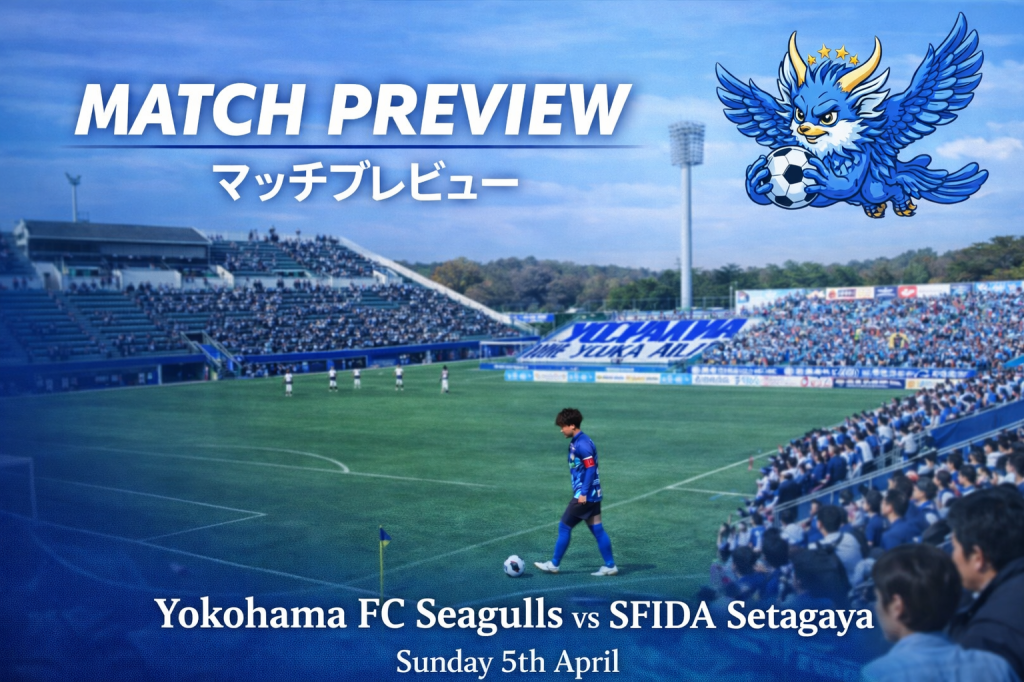
Spring football in Japan carries a certain electricity. The air feels lighter, the pitches sharper, the stakes somehow louder. And on April 5, at Nippatsu Mitsuzawa Stadium, that energy finds a focal point.
Matchday 4 of the 2026 Plenus Nadeshiko League Division 1 isn’t just another fixture on the calendar. It’s a collision between momentum and meaning.
Sfida Setagaya arrive with wind in their sails and something deeper in their chest. Yokohama FC Seagulls wait at home, bruised but breathing fire.
This isn’t just about three points. It rarely is in this league.
Momentum Meets Memory
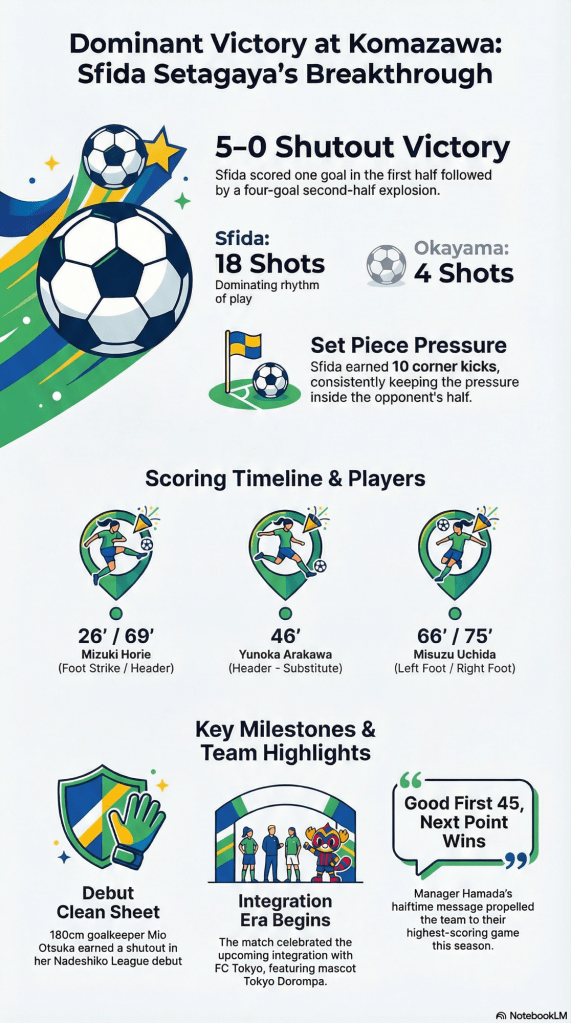
Sfida’s 5-0 dismantling of Okayama Yunogo Belle last time out wasn’t just a win. It was a declaration. A team that had looked fragmented suddenly snapped into alignment, like a machine remembering its purpose.
Remember you can watch the full game here! On the legaue’s YouTube!
Four goals involving Misuzu Uchida. A brace from Mizuki Horie. Width, tempo, aggression. It all clicked.
And now comes the interesting part. Doing it again. Away. Against a side that just found its own rhythm.
Yokohama’s 3-1 victory over Orca Kamogawa FC breathed life into their season after two early setbacks. You could see it in the body language. Shoulders lifted. Passes played with intent instead of hesitation.
But there’s a shadow hanging over that dressing room.
Defender Kotono Kamiduru’s season-ending injury has shifted the emotional axis. This is no longer just about form. It’s about response. About carrying something heavier than tactics.
That edge makes Yokohama dangerous.
But it also walks them straight into a Sfida side that thrives on emotional intensity.
And that’s where things get volatile.
The Last Dance, Loud and Unapologetic
Let’s not dance around it. Every Sfida match this season is loaded with meaning.
The club, as it currently exists, is heading toward transformation. A merger. A new name. A new identity. “FC Tokyo Sfida” awaits in 2027.
Which means this version of Sfida is playing with a ticking clock. Not toward extinction but evolution, or revolution- whichever ever way you look at it.
And when teams know the clock is ticking, they either shrink… or they play like every moment matters.
There’s a rawness to them. A willingness to press higher, run harder, commit bodies forward. Manager Gyo Hamada isn’t building a cautious side. He’s building one that suffocates you, lives in your half, and turns your mistakes into repeated punishment.
His philosophy is simple in theory, brutal in execution. Keep the ball high. Win it back instantly. Attack again before the opponent can breathe.
Against Okayama, it looked devastating.
Against Yokohama, it will be tested.
Because Yokohama don’t want to be suffocated. They want to play.
Philosophies Collide
This game has a fascinating tactical tension running through it.
On one side, Sfida’s aggressive 4-3-3. High line. Immediate press. Waves of attack.
On the other, Yokohama’s attempt to build something fluid, something expressive, something that doesn’t panic under pressure.
Manager Emi Yamamoto has spoken about creating “fun and interesting” football. It sounds light, almost playful. But underneath that is a serious idea. Control through composure. Build from the back. Trust the system.
That philosophy only works if you can survive the storm.
And Sfida are the storm.
If Yokohama can play through that press, they’ll find space. Huge space. Because Hamada’s system always leaves something behind. It has to. You can’t commit that many bodies forward without exposing the back line.
Which brings us neatly to the key battle that might decide everything.
Key Matchup: Space vs Structure
Momoka Oka is licking her lips.
Two goals last time out. Confidence rising. And most importantly, a clear understanding of where the damage can be done.
Behind the line.
Sfida’s defensive shape is brave. Some might say reckless. It squeezes the pitch, but it also dares opponents to beat them in one moment.
Oka is built for those moments.
Her movement isn’t just fast. It’s intelligent. Timed runs. Curved angles. A constant threat hovering on the shoulder of the last defender.
If Yokohama can release her early, she becomes a problem that no system can fully contain.
But here’s the twist.
Sfida know this.
And they’ll likely respond by making sure Yokohama never has the time to look up and play that pass.
Which means the midfield battle becomes everything.
The Midfield Engine Room
Takako Gonno sits at the heart of Yokohama’s build-up. Calm, composed, capable of holding the ball under pressure and linking phases together.
She’s the hinge. If she turns, Yokohama can breathe. If she’s pressed into mistakes, the entire structure collapses.
And that’s where Sfida will focus.
Expect relentless pressure in central areas. Expect closing angles. Expect no easy touches.
On the other side, Sfida’s midfield will look to recycle possession quickly and keep the tempo high. They don’t want slow control. They want chaos that they control.
And if they succeed, Yokohama’s defensive line will be dragged into uncomfortable territory.
Which brings us to the individual battles that could tip the balance.
Key Players to Watch
Misuzu Uchida (Sfida Setagaya)
There’s always a storyline that writes itself. This one practically screams.
A former Seagulls player returning to Mitsuzawa in red-hot form. Two goals, four involvements last match. Confidence flowing.
Uchida isn’t just dangerous because of her finishing. It’s her unpredictability. She drifts wide, cuts inside, arrives late in the box. Defenders don’t get a clean read on her.
And emotionally, this is her stage.
If she scores, expect no muted celebrations. This feels like a moment waiting to happen.
Mizuki Horie (Sfida Setagaya)
The focal point. The reference. The problem.
Horie’s presence up front gives Sfida something priceless. A target. Someone who can hold the ball, bring others into play, and dominate aerially.
She’s already found her scoring touch this season, and her physicality will test Yokohama’s back line all afternoon.
If Sfida start delivering early crosses and second balls into the box, Horie becomes unavoidable.
Momoka Oka (Yokohama FC Seagulls)
The counterpunch.
Oka’s role is simple but devastating. Find space. Attack space. Finish chances.
Against a high defensive line, she’s the one player who can flip the entire game in seconds.
If Yokohama score, there’s a strong chance she’s involved.
Rio Matsui (Yokohama FC Seagulls)
Every team needs a moment-stealer. Matsui might be that between the sticks for the Seagulls.
Her debut performance was packed with big saves, and she carries a quiet confidence. Not flashy. Not theatrical. Just effective.
Against a Sfida side that will generate volume, she’ll be busy.
If she stands tall, Yokohama stay in the game. If she cracks, things could unravel quickly.
The Emotional Undercurrent
Football rarely exists in a vacuum.
Yokohama are playing with something personal after Kamiduru’s injury. That kind of emotional charge can lift a team beyond its tactical limits.
Extra tackles. Extra sprints. Extra belief.
But it can also lead to overcommitment. To moments of rash decision-making.
Sfida, meanwhile, are playing for something bigger than a single result. A season that feels like a farewell tour often produces teams that refuse to fade quietly.
There’s pride in every action. Urgency in every press.
When those two emotional forces meet, the game rarely settles into calm patterns.
It spikes. It swings. It becomes unpredictable.
What Each Team Must Do
Sfida Setagaya
- Maintain pressing intensity without losing defensive shape
- Exploit width early and often to stretch Yokohama’s back line
- Feed Horie quickly before Yokohama can reset
- Stay alert to runs in behind, especially from Oka
Yokohama FC Seagulls
- Survive the first 20 minutes of pressure
- Play through midfield with composure, not panic
- Release Oka early into space behind the defense
- Rely on Matsui to keep them alive during heavy spells
The Stadium Factor
Mitsuzawa isn’t a neutral space. It’s intimate. Tight. Loud in a way that seeps into the pitch.
Fans are close enough to feel like participants. Drums echo. Chants roll.
If Yokohama get on top early, that energy becomes a wave.
If Sfida silence the crowd, it flips into tension.
And in a game this finely balanced, that emotional swing matters.
Who has the historic advantage?
History leans SFIDA, but only just.
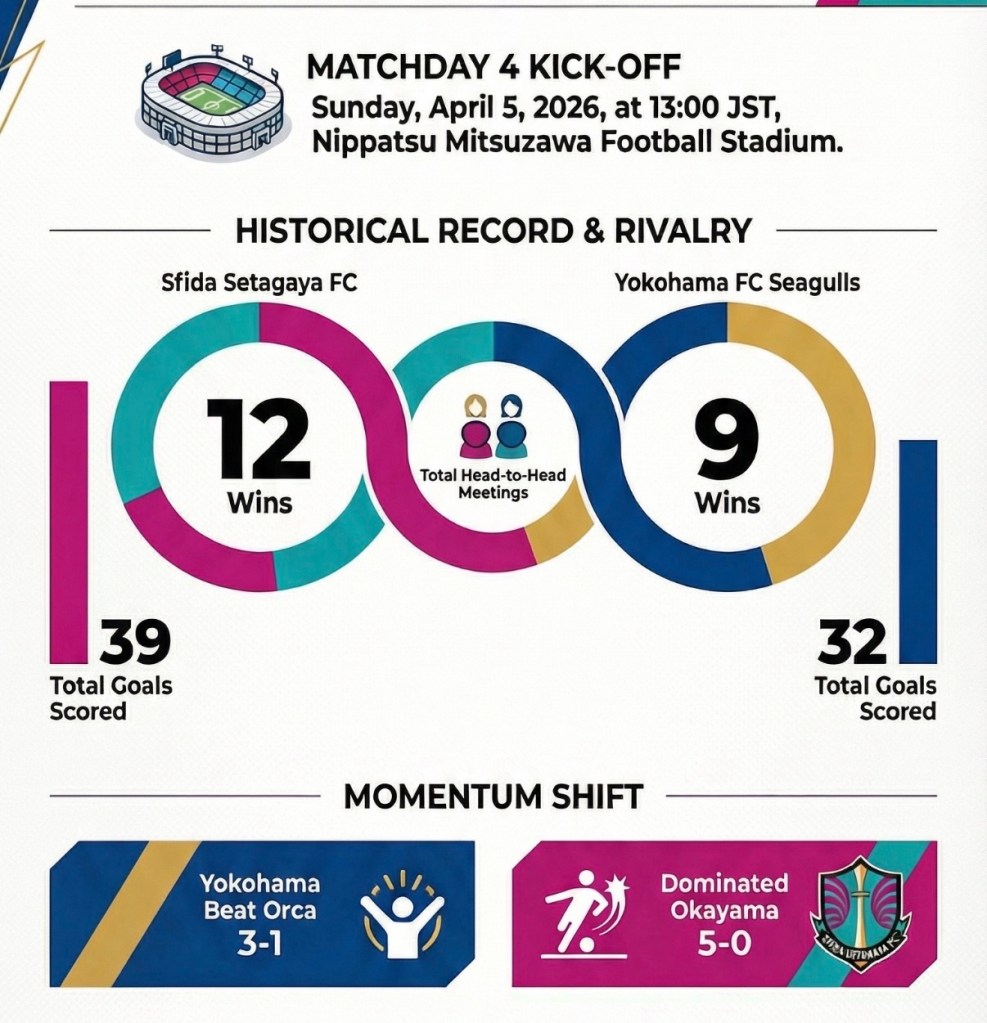
Setagaya Sfida FC carry the edge in this fixture, with 12 wins to Yokohama’s 9 across 29 meetings, alongside 8 draws, and a 39–32 advantage in goals scored. It paints a picture of a rivalry where Sfida have consistently found a way to stay one step ahead without ever truly pulling away. And that’s the key detail.
This isn’t dominance. It’s persistence. Because zoom in on recent history and the gap almost disappears entirely. The last four league meetings between these sides across 2024 and 2025 all ended level, a sequence of stalemates that suggests two teams locked in tactical arm-wrestling rather than one overpowering the other.
The last time either side actually broke through and landed a decisive blow was Sfida’s emphatic 5-1 win in the 2023 Empress’s Cup, though even that sits in contrast to Yokohama’s league double over them earlier that same year. In other words, the past says Sfida lead the rivalry. The present says it’s balanced on a knife edge.
Prediction
This has all the ingredients of a match that refuses to behave.
Sfida have the sharper edge right now. Their attacking patterns are clicking, their key players are in form, and their identity feels clear.
Yokohama have belief, but they’re still building. Still searching for consistency.
And against a team that presses like Sfida, inconsistency is punished.
Expect moments where Yokohama threaten. Expect Oka to find space at least once. But over 90 minutes, Sfida’s intensity should tilt the balance.
Prediction: Yokohama FC Seagulls 1-3 Sfida Setagaya
When is Yokohama FC Seagulls vs Sfida Setagaya?
The match takes place on Sunday, April 5, 2026, with a 13:00 kickoff at Nippatsu Mitsuzawa Stadium.
Why is this match important for Sfida Setagaya?
Sfida are in a transitional season before their 2027 rebrand, making every match part of a broader legacy push.
Who are the key players to watch?
Misuzu Uchida and Mizuki Horie for Sfida, and Momoka Oka and Rio Matsui for Yokohama are expected to have major impacts.
What is the tactical battle in this match?
Sfida’s high pressing system will clash with Yokohama’s attempt to build from the back and exploit space behind the defensive line.
What is the recent form of both teams?
Sfida are coming off a 5-0 win over Okayama Yunogo Belle, while Yokohama secured a 3-1 victory against Orca Kamogawa FC.
 doragon sports