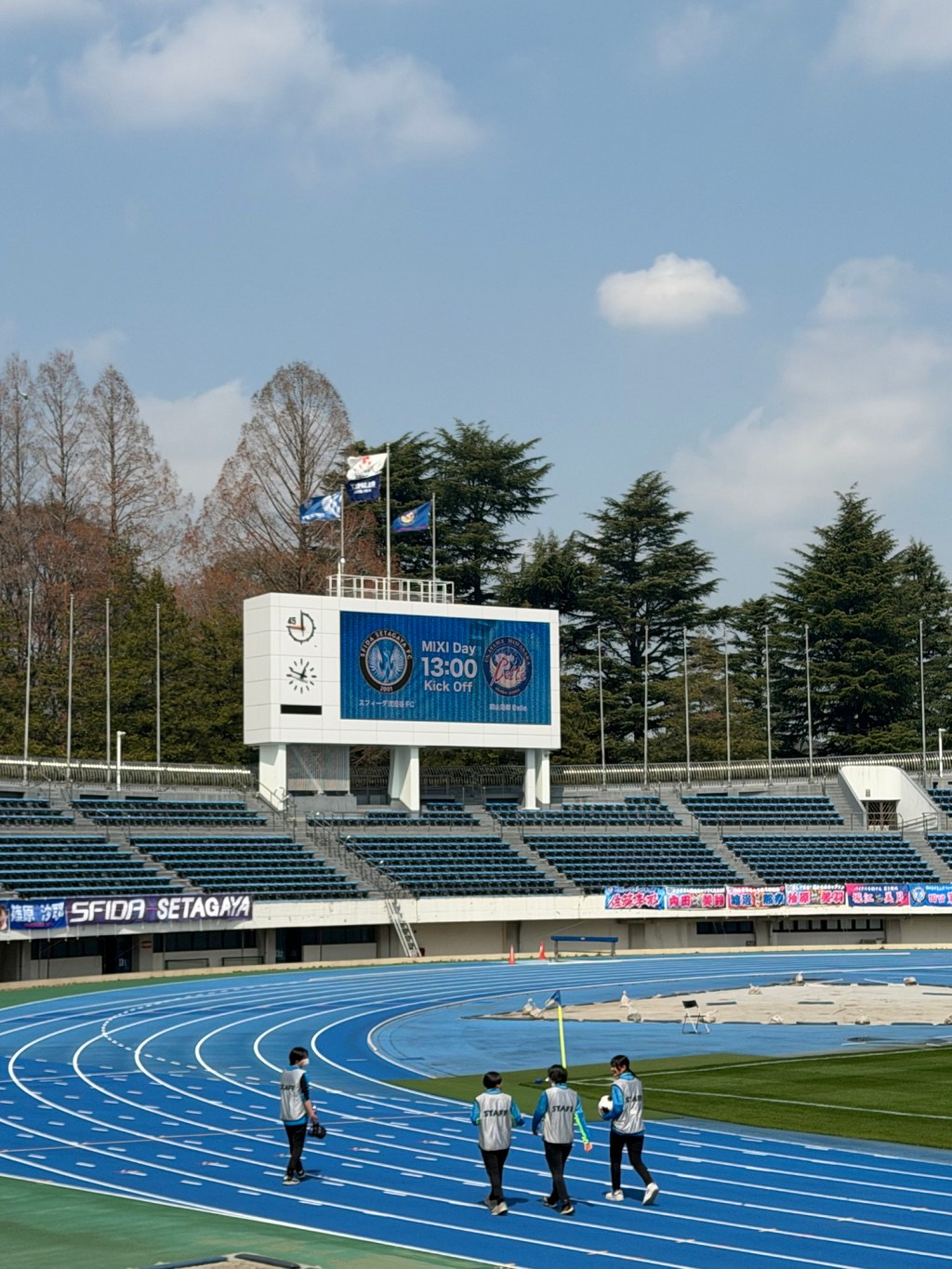
Under a soft Tokyo sun, with cherry blossoms flirting at the edges of Komazawa, something shifted.
Not just a result. Not just three points.
This felt like a team remembering who they are… just as they prepare to become something else entirely.
Sfida Setagaya didn’t just beat Okayama Yunogo Belle. They dismantled them. 5–0. Ruthless. Relentless. A performance that crackled with urgency, like a club aware the clock is ticking on its current identity and determined to leave scorch marks before the curtain falls.
Because this season is different.
This is the final chapter of Sfida Setagaya as we know it in Japanese football.
And if this was a statement, it wasn’t subtle.
The Stakes: A Fragile Identity Meets a Flying Force
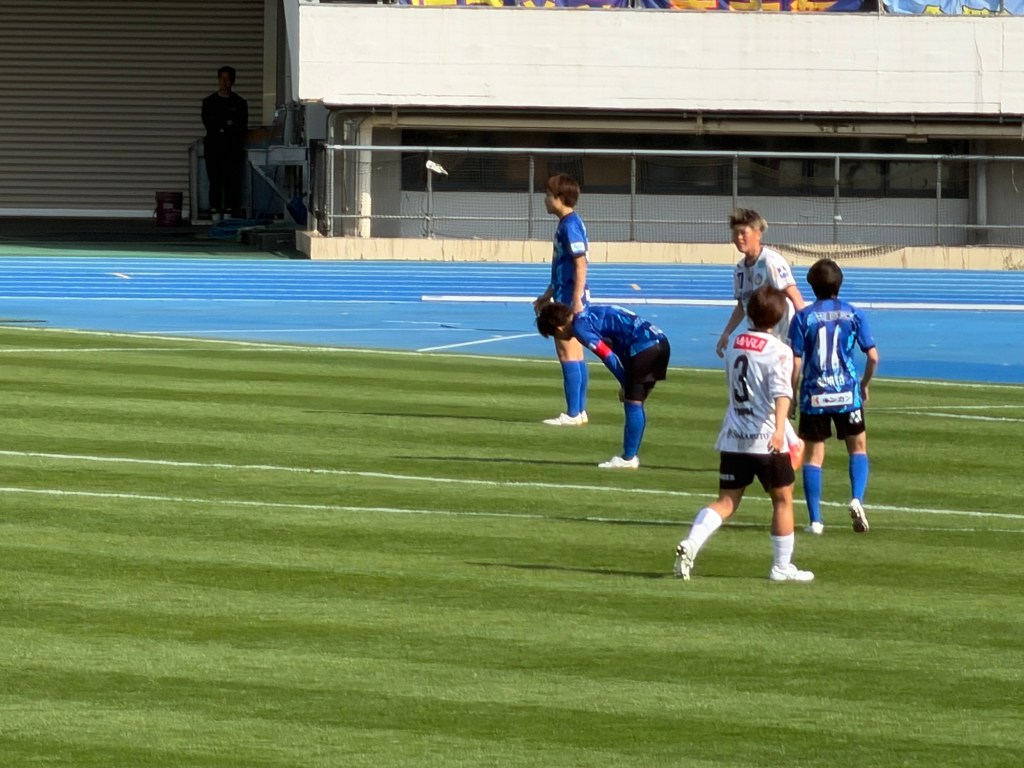
Coming into this clash, the contrast was almost theatrical.
Okayama Yunogo Belle arrived unbeaten, sitting second, carrying the quiet arrogance of a side that had forgotten what losing feels like. Two games, two wins, clean sheets, goals flowing. A machine humming nicely.
Sfida? Ninth. Bruised. A -5 goal difference hanging around their neck after an opening day humiliation. One draw. One loss. Questions everywhere.
But statistics can be deceptive things. They don’t measure hunger. Or pride. Or the strange emotional electricity that builds when a club knows its name, its badge, its very identity is about to dissolve into something bigger.
This wasn’t just about points.
This was about legacy.
A Managerial Duel Wrapped in Respect… Then Torn Apart
There was poetry in the dugouts.
Takashi Hamada vs Mitsutoshi Watada. Two products of Tsukuba University. Two philosophies cut from similar cloth, now clashing under very different pressures.
Watada, turning 50, spoke before kickoff with humility. He wanted to “borrow the chest” of his more experienced counterpart. A phrase that carried weight. Respect. Deference.
Ninety minutes later, that respect had been violently repaid.
Hamada didn’t just win the tactical battle. He ripped it open.
The First Crack: Mizuki Horie Sets the Tone
The opening goal didn’t arrive with chaos. It arrived with clarity.
Mizuki Horie, wearing #9 like it meant something personal, stepped into space and struck with her right foot in the 26th minute. Clean. Controlled. Clinical.
This mattered.
Because Horie has built a reputation as a specialist of the air. Headers, dominance, presence. But this season, she made a promise. More variation. More dimensions.
And here it was.
A forward evolving in real time.
Then, just to remind everyone of her roots, she added a second later. A header, of course. Trademark. Almost inevitable.
Senior to junior, too. Facing former high school rival Hitomi Konno, Horie didn’t just win. She asserted hierarchy.
The Moment That Broke Okayama
Halftime arrived with Okayama already wobbling.
Then came the dagger.
Yunoka Arakawa entered the pitch… and within a minute, she scored. A header. A burst of instinct. A grin that spread across her face like sunlight itself.
That goal didn’t just make it 2–0.
It shattered something.
Okayama had been a side built on control. Structure. Confidence. But suddenly they were chasing shadows, their rhythm gone, their composure leaking out of the game.
Inside the dressing room, frustration boiled.
By full-time, one of their own would admit it plainly. Panic. Loss of control. Ninety minutes where nothing felt like theirs.
The Midfield Storm and the Rise of Misuzu Uchida
If Horie lit the fire, Misuzu Uchida turned it into an inferno.
Operating as a roaming number 10, Uchida was everywhere and nowhere at once. Drifting between lines, finding pockets, then striking with ruthless timing.
Two goals. 66th minute. 75th minute.
But the numbers only tell half the story.
Her movement was the real weapon. Okayama’s midfield couldn’t track her. Their defensive line hesitated just enough. And that hesitation, at this level, is fatal.
Three games. Three goals.
Momentum isn’t building. It’s already here.
Kitagawa: Chaos on the Left, Elegance Off It
Then there was Shoko Kitagawa.
Every team has a player who doesn’t just follow the game plan. They bend it.
Kitagawa on the left flank was electric. Driving forward, slicing into space, forcing defenders into decisions they didn’t want to make.
Fans couldn’t stop talking about her.
Not just the performance. The contrast.
On the pitch, she moved like a blade. Off it, she spoke softly, carried herself with elegance, almost delicate.
That duality? That’s what makes players unforgettable.
The Silence of a Star: Kuniyoshi Erased
Kariano Kuniyoshi came into this game as one of the league’s most dangerous forwards. Three goals in two games. A terrifying 75 percent conversion rate.
In Komazawa, she vanished.
This wasn’t luck. It was design.
Sfida’s press cut off supply lines before they could even form. Midfield pressure suffocated transitions. And behind it all stood Mio Otsuka.
Nineteen years old. Making her debut. Wearing the number 1 shirt.
A shirt heavy with history.
At first, you could see the nerves. Small hesitations. Moments of tension. But as the game unfolded, something settled.
By the final whistle, she had a clean sheet.
Not just survival. Growth.
Tactical Violence: Press First, Ask Questions Later
Sfida didn’t play cautiously.
They hunted.
A 4-2-3-1 that functioned less like a structure and more like a swarm. Pressing high. Pressing aggressively. Pressing with intent.
Okayama wanted to build from the back. To control possession. To dictate tempo.
Sfida said no.
Every pass was contested. Every second ball fought for. Every attempt to breathe met with pressure.
When Okayama switched to a back three in desperation, it only made things worse. Spaces opened. Gaps widened.
Sfida didn’t hesitate, and that’s everything in women’s footballers .
They exploited everything.
Komazawa: Sunlight, Beer, and a Roar of Belonging
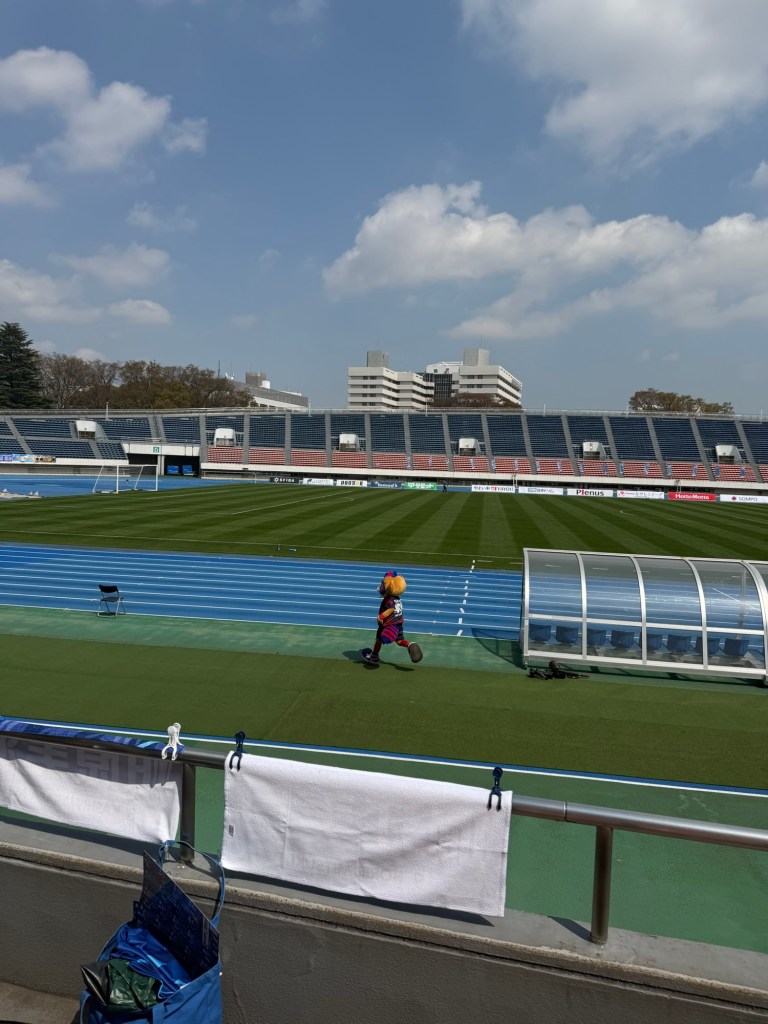
This wasn’t just a football match. It was a scene.
21 degrees. Clear skies. Cherry blossoms hanging like soft confetti in the background.
1,010 fans gathered. Some long-time Sfida supporters. Others drawn in by the looming integration with FC Tokyo.
Blue and red began to mix into the terraces. A symbolic shift already underway.
Mascots walked the pitch together. Old identity. New future.
And yet, the atmosphere stayed grounded.
Warm. Local. Human.
Fans sipping cold beers. Applauding both teams. Even in defeat, Okayama were respected.
It felt like a community. Not a spectacle.
That matters.
What This Result Really Means
On paper, this wipes away a -5 goal difference.
In reality, it does something bigger.
It resets belief.
Sfida didn’t just win. They rediscovered themselves. Their aggression. Their identity. Their voice.
For Okayama, this is a warning.
Momentum can disappear faster than it arrives.
The Final Word: A Team Writing Its Own Goodbye
There’s something quietly powerful about a team playing its final season under a name.
Every match becomes a memory in the making.
Every goal, a marker in history.
Sfida Setagaya didn’t fade here.
They roared.
What was the final score between Sfida Setagaya and Okayama Yunogo Belle?
Sfida Setagaya defeated Okayama Yunogo Belle 5–0 in Round 3 of the 2026 Nadeshiko League Division 1.
Who were the standout players in the match?
Mizuki Horie scored twice and dominated physically, while Misuzu Uchida added a brilliant brace from midfield. Shoko Kitagawa impressed with her attacking runs, and goalkeeper Mio Otsuka kept a clean sheet on her debut.
Why was this match significant for Sfida Setagaya?
This season marks Sfida Setagaya’s final campaign before integrating with FC Tokyo, making every performance part of their legacy as an independent club.
How did Sfida tactically beat Okayama?
Sfida used aggressive high pressing in a 4-2-3-1 system, disrupting Okayama’s build-up play and forcing turnovers. They exploited defensive gaps, especially after Okayama switched to a back three.
What went wrong for Okayama Yunogo Belle?
Okayama struggled to handle Sfida’s pressing intensity, lost control of midfield, and failed to establish their usual possession-based rhythm, leading to defensive collapse.
 doragon sports