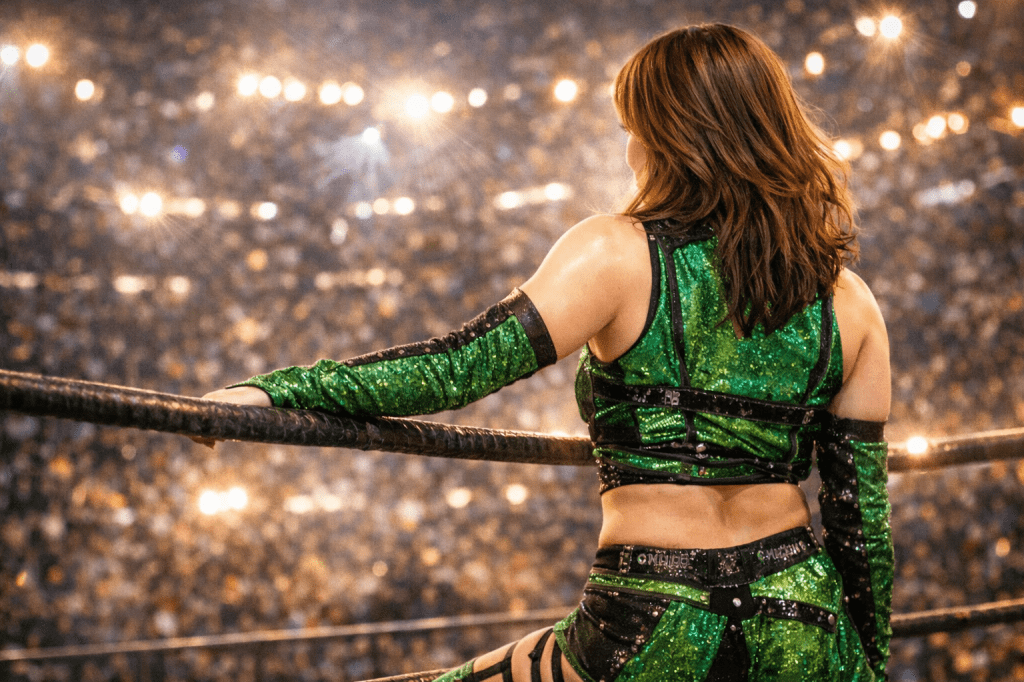
On March 20, when the lights snap to black and the opening chords slice through the Amista arena air, there will be a particular electricity humming beneath the canvas.
Because when Yumi Ohka walks through the curtain, she is not simply another competitor on the card.
She is the promotion’s living blueprint.
The founder who still laces the boots.
The executive who still throws the axe-kick like a judge’s gavel.
This forthcoming Pro Wrestling WAVE event promises mystery in its match announcements, yet one thing is already carved into stone. When Ohka is involved, the stakes feel heavier, the history louder, the consequences sharper.
From Athtress Dream to Battle-Forged Leader
Long before she became a cornerstone of joshi wrestling, Yumiko Abe was chasing a very different spotlight. Acting, voice work, media presence. A future shaped by microphones rather than ring ropes.
Fate had other ideas.
Her entry into JDStar’s pioneering “Athtress” program placed her at the crossroads of idol charisma and athletic combat. Trained by legends Jaguar Yokota and Toshie Uematsu, Ohka debuted in August 2001 with the poised determination of someone stepping into unfamiliar fire and deciding to stay there.
The early years were colourful but demanding. When she graduated from the program, the glittering veneer gave way to a harder edge. Tag team wars alongside the fearsome Bloody revealed a competitor unafraid to absorb punishment if it meant proving legitimacy.
By 2005, she had become JDStar’s reluctant ace.
Then the body betrayed her.
A devastating ACL and meniscus injury did more than halt momentum. It forced reflection, reshaping both the athlete and the person behind the persona. JDStar’s eventual collapse could have ended her journey entirely. Instead, it planted the seed of something far more ambitious.
Building WAVE, Then Riding It
When Ohka co-founded Pro Wrestling WAVE in 2007, she did not merely join a Japanese promotion. She helped invent one.
Her return match that year felt symbolic. Not just a comeback, but a declaration that joshi wrestling still had room for innovation, resilience, and audacity.
Dominance followed in the years ahead.
She captured the inaugural Catch the WAVE tournament in 2009, then etched her name into the company’s mythology by becoming the first Regina di WAVE Champion in 2013, defeating Kana, now globally known as Asuka.
But Ohka’s influence would eventually stretch far beyond championship belts.
Her ascent to President and Representative Director in 2019 transformed her from locker room leader to industry strategist. Through the suffocating uncertainty of the COVID-19 era, she guided WAVE with transparency and creativity. Merchandise pivots, digital engagement, and open communication with fans were not simply business tactics. They were survival mechanisms crafted by someone who understood both the emotional and financial fragility of wrestling promotions.
That duality still defines her today.
She is simultaneously the storm and the lighthouse.
A Career Without Borders
Ohka’s legacy is not confined to one ring.
Her heel turn in OZ Academy, aligning with Mayumi Ozaki’s ruthless faction, revealed a performer capable of reinvention. Villainy sharpened her instincts, adding psychological nuance to her offense. Tag gold followed.
Across the Pacific, tours with SHIMMER Women Athletes introduced North American audiences to her brand of disciplined ferocity. Opponents like Sara Del Rey, Mia Yim, and Athena discovered that Ohka wrestled with a tempo that blended classical joshi pacing with sudden explosive strikes.
She did not just compete abroad.
She exported credibility.
Strength Beyond the Ring
Perhaps the most fascinating chapter of Ohka’s story unfolds away from the spotlight.
Her qualification as a Mental Care Psychologist reflects a philosophy that professional wrestling is as much internal warfare as physical spectacle. Injuries, leadership burdens, and the relentless grind of performance shaped her belief that mental resilience deserves structured training.
Through counselling and coaching initiatives, she has created pathways for athletes and everyday clients to confront pressure with purpose.
This dimension adds new texture to her in-ring persona.
Every Sakura Drop now feels like a metaphorical release.
Every Angel Lock like a demonstration of controlled chaos.
Style Snapshot: The Sakura Arsenal
Yumi Ohka’s wrestling style is rooted in leverage, timing, and psychological intimidation. Taller than many of her joshi contemporaries, she weaponises reach with clinical precision.
Key techniques expected to feature at the March 20 event include:
- Big Boot / Axe Kick: A sudden vertical strike that disrupts rhythm and confidence.
- Sakura Drop: A springboard diving back elbow, often deployed as a momentum-swinging crescendo.
- Sakura Otoshi: A crushing back-to-belly piledriver that tests an opponent’s structural limits.
- Sakura Clutch: A deceptively elegant jackknife bridge pin capable of ending matches in a heartbeat.
- Angel Lock: A grounded submission that blends flexibility with suffocating control.
Her matches tend to unfold like layered theatre. Early exchanges establish tempo. Mid-match adversity invites tactical recalibration. The closing stretch erupts into decisive violence wrapped in technical finesse.
What March 20 Could Mean
This forthcoming WAVE show carries an intriguing aura.
Mystery cards. Sudden reveals. A title match already confirmed to anchor the narrative.
For Ohka, participation alone is symbolic.
Each appearance now feels like a passing of wisdom through action. Younger wrestlers test themselves against her experience. Fans witness a living chronicle still being written in real time.
Victory would reinforce her evergreen relevance.
Defeat could still deepen her legend, framing her as the resilient founder who continues to stand in the firing line rather than watch from a distance.
Either outcome enriches the mythology of WAVE.
Final Bell Thoughts
Yumi Ohka represents a rare archetype in modern wrestling.
Not just a champion or veteran.
An ecosystem unto herself.
She has survived institutional collapse, catastrophic injury, shifting industry landscapes, and the silent battles fought in the mind. She has worn the crowns of athlete, villain, mentor, executive, and healer.
On March 20, when the music hits and the crowd leans forward in anticipation, her entrance will carry more than competitive intent.
It will carry twenty-plus years of evolution.
A lifetime of sakura petals scattered across the ring canvas.
And the unmistakable sense that, in joshi wrestling, some forces are not merely participants.
They are seasons. 🌸🔥
 doragon sports