A Statement Match, an Absentee Champion, and the Collision Course to WrestleMania 42
The bell rang in London, but the real noise came after.
On January 16, 2026, inside a packed OVO Arena Wembley, Jordynne Grace did not simply defeat Chelsea Green on SmackDown. She announced herself. Not with excess time. Not with indulgent choreography. With force, efficiency, and something far rarer in WWE’s modern women’s division: intent.
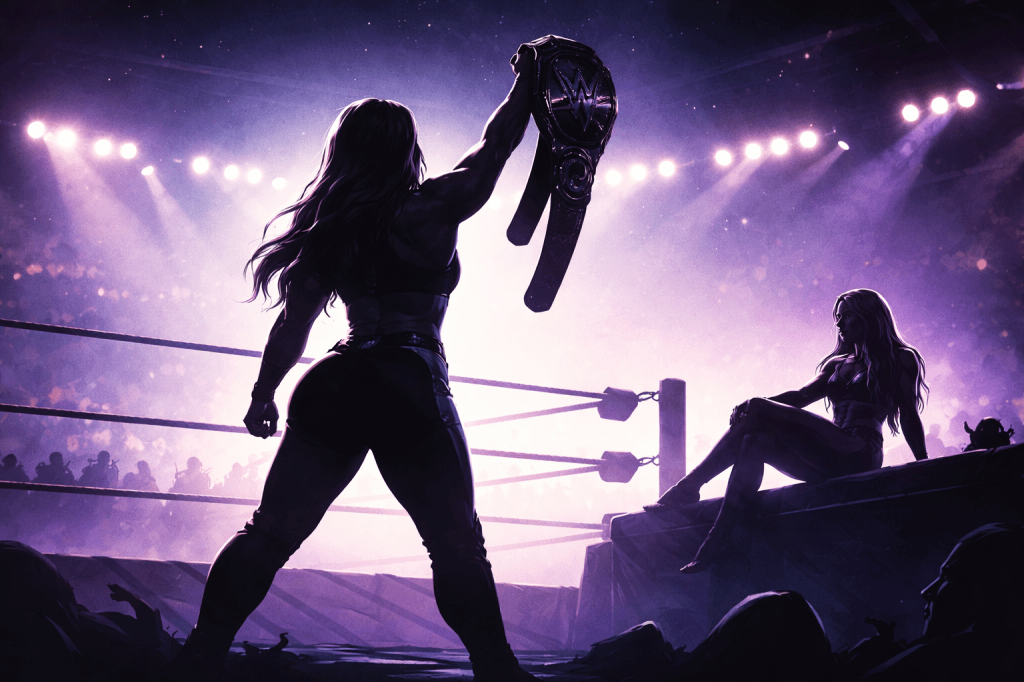
At ringside, Jade Cargill sat and watched. Champion. Storm. Centrepiece. Untouched.
By the end of the segment, Grace had pinned Green in under three minutes, stared through the champion, lifted her title, and tossed it back at her feet like an object that had lost its gravity.
This was not an upset. This was an accusation.
A Match That Lasted Minutes and Changed the Room
Chelsea Green entered the ring doing what Chelsea Green does best. She slapped. She smirked. She tried to turn discomfort into oxygen. The “Karen” character, weaponised again, aimed at provoking a reaction rather than surviving one.
Grace absorbed it.
The opening slap landed. The response was immediate and volcanic. One return strike, louder than the building, reset the tone. This was not going to be a dance.
A vertical suplex followed, hung high enough to feel demonstrative rather than necessary. Grace was not rushing. She was showing. Every lift was a reminder that power does not need theatrics when it is real.
Alba Fyre’s interference gave Green a breath, a cheap kick while the referee’s vision flickered elsewhere. It was a familiar beat. A gatekeeper moment. Green’s brief surge came and went like borrowed time.
Grace weathered it. A backbreaker folded Green in half. Forearms followed. A fisherwoman suplex landed with the weight of inevitability. Then the finish.
The Direct Effect. Pumphandle. Cartwheel. Driver. Pin.
Two minutes and thirty-six seconds. Clean.
For a debut statement, it was brutally concise.
The Moment That Mattered Came After the Bell
The pinfall barely registered before the camera shifted.
Grace rose. Jade Cargill stood. The champion clapped slowly, sarcastically, the kind of applause meant to belittle rather than acknowledge.
Grace didn’t blink.
She took the microphone and spoke the line that snapped the night into place:
“If you’re finally tired of babysitting that title, then step into the ring. Right here. Right now.”
Cargill stepped onto the apron. The tension sharpened. Chelsea Green, desperate to matter again, charged from behind.
Grace sidestepped.
Green collided with Cargill. The champion fell to the floor.
In that instant, the narrative flipped. Grace picked up the WWE Women’s Championship, raised it, held it just long enough for the image to burn, then dropped it back down at Cargill’s feet.
Not stolen. Not chased. Returned.
The message was devastatingly simple: this belt means more to me than it does to you.
Aesthetic Power vs Functional Power
This rivalry works because it is not cosmetic. It is ideological.
Jade Cargill represents aesthetic power. She is statuesque. Five foot ten. Built like a superhero rendered in marble and spotlight. WWE has presented her as an attraction, protected her aura, limited her exposure, and framed her dominance as visual certainty.
Jordynne Grace represents functional power. Five foot one. Compact. Dense. A former powerlifter with verifiable numbers and fourteen years of grind etched into her ring pacing. Grace’s strength is not posed. It is applied.
Cargill explodes. Grace sustains.
Cargill dazzles. Grace erodes.
Cargill looks unstoppable. Grace keeps proving she is.
This is not big versus small. It is presentation versus process.
The Absentee Champion Problem
The core accusation at the heart of this feud is not personal. It is statistical.
Jade Cargill defeated Tiffany Stratton on November 1, 2025. By mid-January 2026, her reign had crossed 75 days without a single televised title defense. As Royal Rumble season approached, that number will have crept beyond 80.
Cargill’s character defense is status. She claims she only wrestles “competition.” That challengers must earn her time.
Grace’s rebuttal is laborious and pretty pathetic.
In her first two weeks on SmackDown, Grace wrestled more matches than Cargill had appearances in months. The line Grace never quite said but made unavoidable was brutal: a champion who does not defend is not dominant. She is curated.
That tension matters deeply as WWE begins its annual build toward WWE WrestleMania 42, when questions like WrestleMania when and WrestleMania tickets start circulating long before the card is set. Champions are supposed to anchor that road. Not orbit it.
Why Chelsea Green Was the Perfect Gate
Chelsea Green’s role in this story was not filler. It was calibration.
Grace and Green share history from TNA. They feuded. They tested each other. They know how to make the other look real. Green’s ability to sell power without losing heat made her the ideal measuring stick.
By running through Green decisively, Grace did not just win a match. She cleared a narrative threshold. She passed the gatekeeper without hesitation.
And crucially, she did it in front of the champion.
Social Media, Body Politics, and Worked Reality
The feud did not stop on Friday night.
Online, the shots escalated. Cargill mocked Grace’s physique. Grace attacked Cargill’s wrestling résumé and absence. The “Model vs Wrestler” discourse bubbled again, ugly and unavoidable.
WWE has leaned into this ambiguity. Are the shots real? Are they worked? The answer does not matter. What matters is that they feel personal enough to cut and controlled enough to market.
In the modern WWE ecosystem, this kind of tension is oxygen, especially as attention turns toward Royal Rumble 2026, its start time, and its match card. Every Rumble collision is a teaser. Every stare-down is a promise.
The Royal Rumble Collision That Feels Inevitable
Both Grace and Cargill are expected entrants in Royal Rumble 2026. The scenario writes itself.
The ring clears. Music cuts. They meet in the centre. Power collides. Neither woman yields. Eliminations fail. Tempers snap.
A double elimination. Security. Chaos.
It would not end the feud. It would formalise it.
From Montreal to WrestleMania 42
Saturday Night’s Main Event XLIII in Montreal looms as the next pressure point. A confrontation. A forced signature. A match made official.
From there, the road stretches toward WrestleMania 42. Whether Grace wins the title at Elimination Chamber or pushes Cargill to her limit on the grandest stage, the endgame feels larger than a singles match.
Bianca Belair waits in the margins, injured but relevant. The potential of a Triple Threat, a true battle of modern power archetypes, is too rich to ignore.
As fans search for WrestleMania 2026, debate WrestleMania tickets, and speculate on WrestleMania when, this rivalry has the rare quality of feeling earned rather than engineered.
The Thing This Feud Understands
Jordynne Grace did not arrive asking for permission. She arrived asking a question that cannot be dodged forever.
What is a champion who does not fight?
On January 16, in London, she posed it clearly, violently, and without apology.
Jade Cargill is still champion. Still protected. Still a storm.
But storms, eventually, have to make landfall.
And Jordynne Grace is already standing there, feet planted, waiting.
 doragon sports