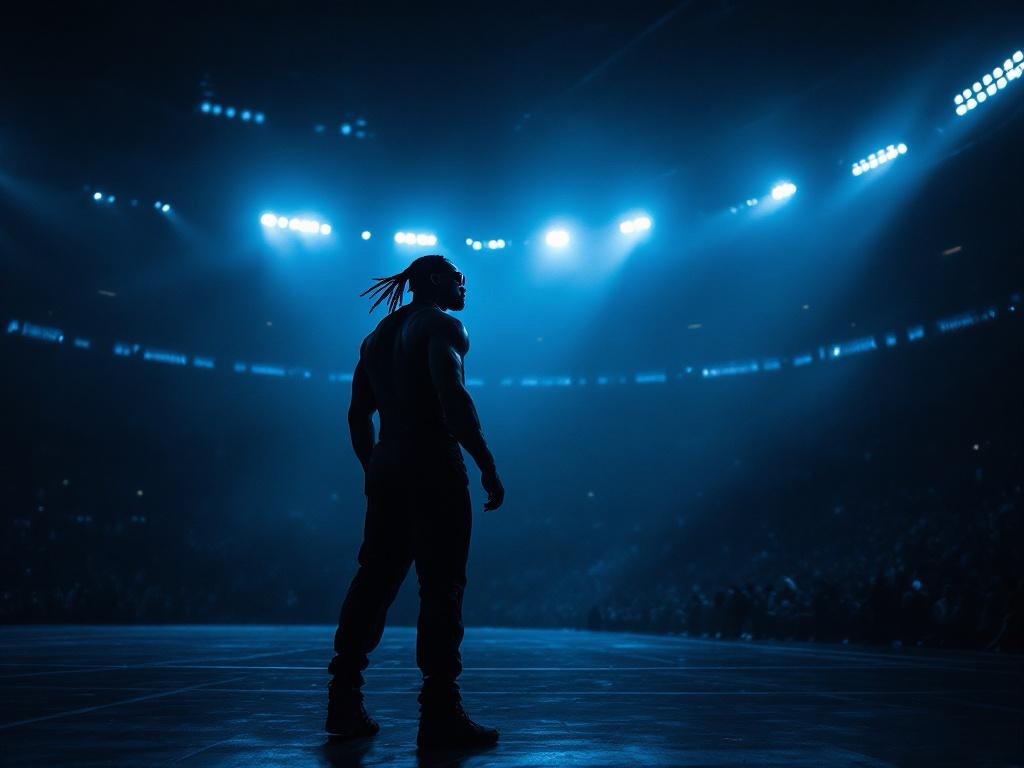
There are debuts that feel manufactured.
There are debuts that feel protected.
And then there are debuts that feel real.
Trick Williams’ arrival on WWE SmackDown did not feel like a corporate rollout. It felt like a man stepping into a bigger room and not shrinking. No overproduced spectacle. No desperate overstatement. Just presence, timing, and a calm understanding of who he is.
In an era where NXT call-ups are often treated like software updates, Williams arrived like a personality. Not a project. Not a gamble. A person.
And that distinction matters.
Because this, quietly, was close to the perfect debut.
From Hype Man to Headliner
To understand why this worked, you have to understand where Trick Williams came from.
For three years in NXT, he lived in someone else’s orbit. The voice. The energy. The pulse behind Carmelo Hayes. The man who talked so Melo didn’t have to. The Trick Melo Gang was chemistry. Natural, easy, rhythmic.
But chemistry is a dangerous thing. It can keep you warm or keep you small.
When the split came, and when the rivalry followed, something changed. Williams didn’t just step out. He expanded. He won gold. He won Iron Survivor. He won the NXT Championship. Twice. He crossed into TNA and made history. He stopped being the guy next to the star and became the guy in the light.
By the time he declared free agency in December 2025, he was not a prospect.
He was a product.
So when WWE SmackDown became his destination, the question was never “can he hang?”
The question was “how will he choose to stand?”
The Orton Moment and the Reality Check
The answer came quickly.
Interrupting Randy Orton is not a safe play. It is not a soft launch. It is a stress test. Orton is not just a legend, he is a mood. A presence. A man whose silence is louder than most people’s promos.
Trick walked into that.
And he did not blink.
The promo was not perfect. That is important. It was not polished in a way that felt rehearsed. It felt like a debutant speaking to a giant. Which is exactly what it was.
There was edge. There was confidence. There was that beautiful, dangerous line about it being 2026, not 2006. A line that landed with a smile and a sting. A line that made Orton smirk and the audience lean in.
It felt authentic.
Not “I am here to save the show.”
Not “I am the future.”
Just “I am not afraid of you.”
That is the energy you want from a debut.
And Orton, to his credit, did what great veterans do. He gave him space. He gave him gravity. He then gave him the draping DDT and reminded him that confidence does not cancel consequence.
It was mentorship disguised as violence.
That is wrestling at its best. How quick will it be until he’s in Hell in a Cell style matches?
The Rey Fenix Match: Trust in Motion
Then came the match.
Rey Fenix is not a welcome mat. He is not a soft introduction. He is chaos in boots. He is speed, risk, and rhythm. If you cannot move, he exposes you. If you cannot think, he outruns you.
Trick Williams went eleven minutes with him.
Eleven.
Not a squash. Not a showcase. A match.
And that tells you everything.
WWE trusted him. Fenix trusted him. The crowd trusted him. And the camera did not need to hide him.
Williams moved well. He paced well. He sold. He fed. He did not rush. He did not panic. He looked at home.
And yes, the finish was cheeky. A little tights. A little edge. A little reminder that he is not here to be polite.
But both men got over.
That is the key. This was not a win that took something. It was a win that shared something.
In 2026, that is rare.
The Entrance and the Language of Confidence
There is something to be said about a Trick Williams entrance.
It is not extravagant. It is not theatrical. It is rhythm. It is timing. It is shoulders loose, head up, eyes forward. It is a man who knows he belongs where he is standing.
“Whoop That Trick” is not just a chant. It is a conversation. It is call and response. It is community.
That matters on the main roster. Because entrances are introductions. And his introduction feels natural. Not forced. Not overexplained.
He walks like he expects the camera.
And the camera, politely, agrees.
Why This Felt Different
A lot of NXT call-ups feel like they are asking permission.
Williams did not ask.
He arrived. He spoke. He wrestled. He left.
No apology. No overcompensation. No panic.
That is rare.
Because most debuts are built around protection. This one was built around belief.
Belief in his voice.
Belief in his timing.
Belief in his ability to exist next to legends without shrinking.
And that belief showed.
Looking Ahead: Matt Cardona and the Perfect Next Test
Next week, the road continues. And the next stop is fascinating.
Matt Cardona.
On paper, it is just a match. In reality, it is a masterclass waiting to happen.
Cardona is not the Zack Ryder of old. He is leaner. Sharper. Meaner. More complete. He has been everywhere. He has wrestled everyone. He has reinvented himself in public.
He is also one of the most underrated ring generals in modern American wrestling.
Which makes him perfect for Trick Williams.
Because this is not about carrying. This is about calibrating.
Cardona will not slow down for him. He will not overprotect him. He will not hide him.
He will test him.
And that is exactly what Williams needs.
If the Fenix match was about movement, this one will be about structure. About pacing. About positioning. About control.
It has the potential to be electric.
Not flashy. Not viral. Just good.
And sometimes, good is the most important thing you can be.
The Royal Rumble Question
With WWE Royal Rumble 2026 on the horizon, the timing is interesting.
Williams is not being rushed. He is not being thrown into title scenes. He is being placed.
And placement is power.
A strong showing in the Rumble, a few eliminations, a moment with a name, and suddenly the conversation changes. Suddenly he is not “new.” He is “noticed.”
That is the lane.
Not explosion.
Not overexposure.
Progression.
Let the audience learn him. Let the audience feel him. Let the audience grow with him.
Because his ceiling is high. But his floor is already solid.
And that is a good place to start.
Why This Debut Worked
It worked because it was human.
He was not perfect. He was not overproduced. He was not overpraised. He was not shielded from consequence.
He spoke. He got checked. He wrestled. He won.
That is wrestling.
And in a time where so much is scripted to the millimetre, there was something refreshing about a debut that felt like a person walking into a room and saying, “Alright. Let’s see.”
No theatrics. No safety net.
 doragon sports