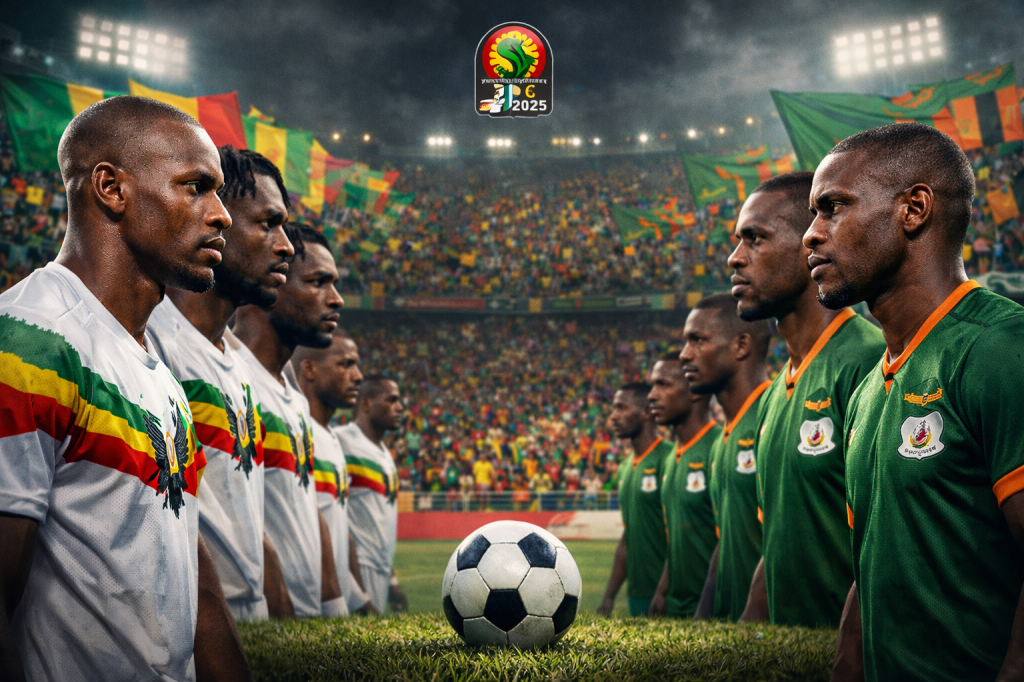
The Africa Cup of Nations rarely waits politely. It arrives with context already attached, with memory already humming beneath the surface. When Mali meet Zambia in Group A at AFCON 2025, this is not simply the second match of the tournament. It is the first real test of balance in a group shaped by hierarchy, history, and pressure.
The match takes place on Monday, December 22, 2025, kicking off at 15:00 CET at the Stade Mohammed V in Casablanca, one of African football’s most storied grounds. Morocco, the host nation and overwhelming favourite, have already cast their shadow across Group A. What remains is the race behind them, and this fixture sits directly at the centre of it.
For both teams, this is a game about positioning. For Mali, it is about control. For Zambia, it is about memory and response.
Why Mali vs Zambia Matters in Group A
Group A is defined by asymmetry. Morocco, ranked 11th in the world, are expected to progress with authority. Comoros, ranked outside the top 100, are widely viewed as outsiders. That leaves Mali (FIFA #54) and Zambia (FIFA #90) in a direct contest for the second automatic qualification place, or at the very least, the points total that typically secures progression as one of the best third-placed teams.
Historically, four points is often the minimum threshold. That reality sharpens the importance of Matchday 1. A draw keeps both alive. A win gives one side early leverage, not just on the table, but psychologically within the group.
This is why the opening afternoon kickoff matters. There is no chance to read the room. No chance to wait and see how the group settles. Mali and Zambia are asked to define themselves immediately.
A Stadium That Carries Its Own Weight
The Stade Mohammed V, known locally as Donor, does not dilute occasions. Renovated and stripped of its athletics track, it now places supporters closer to the pitch, compressing sound and expectation into the playing space. With a capacity of over 67,000, it has hosted Morocco’s most significant footballing moments and countless continental fixtures.
This match enters that setting without home support of its own. That neutrality can sharpen focus or expose nerves. In early afternoon heat, with humidity rising and pressing legs tiring quickly, the stadium becomes a test of composure as much as ambition.
Mali: Control, Pressure, and the Weight of Expectation
Mali arrive at AFCON 2025 with quiet authority. Their qualification campaign was defined by structure rather than spectacle. Six matches, just one goal conceded, matching Senegal for the best defensive record in Africa. It was a campaign built on spacing, midfield security, and patience.
Coach Tom Saintfiet has been clear about ambition. Quarter-final exits are no longer enough. The federation wants progression into the final weekend of the tournament, and Saintfiet has spoken openly about semi-finals and beyond.
Mali’s shape reflects that intent. A likely 4-3-3, possession-based, centred around central control rather than wing chaos. Their midfield depth allows them to dictate tempo, recycle pressure, and compress opponents into low blocks.
At the centre of that plan sits Yves Bissouma.
The Bissouma Question
Bissouma’s inclusion is one of the tournament’s most interesting selection calls. The Tottenham midfielder returns after a long ankle injury that required surgery. He has not played competitive international football since August. And yet, he is here, likely to start, and central to Mali’s structure.
Saintfiet has framed the decision around experience and tactical intelligence. Bissouma’s ability to read danger, shield space, and slow the game when needed raises Mali’s technical ceiling. It also introduces risk. Match fitness is not theoretical at AFCON. It is tested immediately, especially in early afternoon heat.
How Mali manage Bissouma’s minutes, and how Zambia choose to target him, may quietly decide the match.
Alongside him, Kamory Doumbia represents Mali’s forward momentum. At 22, he has become their most reliable attacking presence from midfield, arriving late into the box and scoring consistently in qualification. His movement complicates defensive assignments, especially for teams set up to defend deep.
Zambia: Rebuilding Through Identity
Zambia arrive in Morocco in a different emotional space. Their recent results have been uneven. Friendlies exposed fragility. World Cup qualification has been disappointing. But AFCON has never obeyed form alone, especially for a nation whose football identity is inseparable from resilience.
The appointment of Moses Sichone as head coach signals a shift. A deliberate return to Zambian football DNA. Legends like Kennedy Mweene, Andrew Sinkala, and Joseph Musonda now sit on the technical bench. The message is not reinvention, but reconnection.
Zambia’s nickname, Chipolopolo, carries a story unlike any other in international football. The 1993 plane crash that wiped out the national team still defines the emotional architecture of Zambian football. The 2012 AFCON triumph, achieved in Libreville near the crash site, is remembered not just as a victory, but as a reconciliation between loss and life.
That history does not weigh the players down. It steadies them.
Patson Daka and the Question of Release
On the pitch, Zambia’s attacking hopes rest with Patson Daka. His pace shapes their entire offensive approach. His runs stretch defensive lines, force early decisions, and offer an outlet when pressure builds.
Yet one detail lingers. Daka has never scored at AFCON.
That absence is not framed as failure, but it is present. A goal here would release something. For Daka personally, and for a team learning to trust itself again under new leadership.
Zambia are likely to line up in a disciplined 4-3-3 or 4-4-2, prioritising compactness and transition. Their aim is not to dominate possession, but to disrupt Mali’s rhythm, force turnovers, and attack space early.
Kings Kangwa plays a key role here. His task is not flair, but interference. Breaking passing lanes. Interrupting tempo. Making Bissouma work before he can settle.
A Rivalry Shaped by Anomalies
Statistically, the Mali-Zambia rivalry is balanced. Seven meetings. Two wins each. Three draws.
And yet, one anomaly stands out. Mali have never beaten Zambia in a competitive AFCON or World Cup qualifier match. Their only recent success came in a 2022 friendly, won 1-0 from a single recorded shot on target. A perfect conversion, achieved through discipline rather than dominance.
The most significant meeting remains the 1994 AFCON semi-final, where Zambia defeated Mali 4-0. It was decisive, and it still echoes quietly when these sides meet.
These details do not decide matches. But they shape belief.
Heat, Timing, and the Christmas AFCON
AFCON 2025 is being played across the Christmas and New Year period for the first time, a necessity driven by the expanded FIFA Club World Cup. Preparation windows have been compressed. Squad integration has been rushed. Coaches are managing players released only days before kickoff.
The 15:00 CET kickoff adds another layer. Heat management becomes tactical. High pressing is harder to sustain. Control becomes valuable late.
This may favour Mali’s structure. It may also invite Zambia’s patience.
What the Match Might Become
This is unlikely to be chaotic. The opening stages should be measured. Mali circulating. Zambia holding shape. Moments rather than waves.
As the match stretches, fatigue may open space. A misplaced pass. A late midfield run. A transition where Daka finds half a metre behind the line.
For Mali, the question is whether their control translates into incision. For Zambia, whether their discipline can hold long enough to strike.
Neither side needs to win the group here. Both need to leave with belief intact.
Key Details at a Glance
- Match: Mali vs Zambia
- Competition: AFCON 2025, Group A, Matchday 1
- Date: Monday, December 22, 2025
- Kickoff: 15:00 CET
- Venue: Stade Mohammed V, Casablanca
- Mali FIFA Ranking: 54
How to Watch AFCON 2025
Broadcast and streaming details vary by region. Fans are advised to check local listings for how to watch AFCON, while AFCON tickets remain available through official CAF channels for matches in Morocco.
This is not a match about spectacle. It is about presence. About how teams arrive, how they remember themselves, and how they manage the first hour of a long tournament.
AFCON often reveals itself slowly. Mali vs Zambia feels like the moment where Group A begins to take shape.
 doragon sports