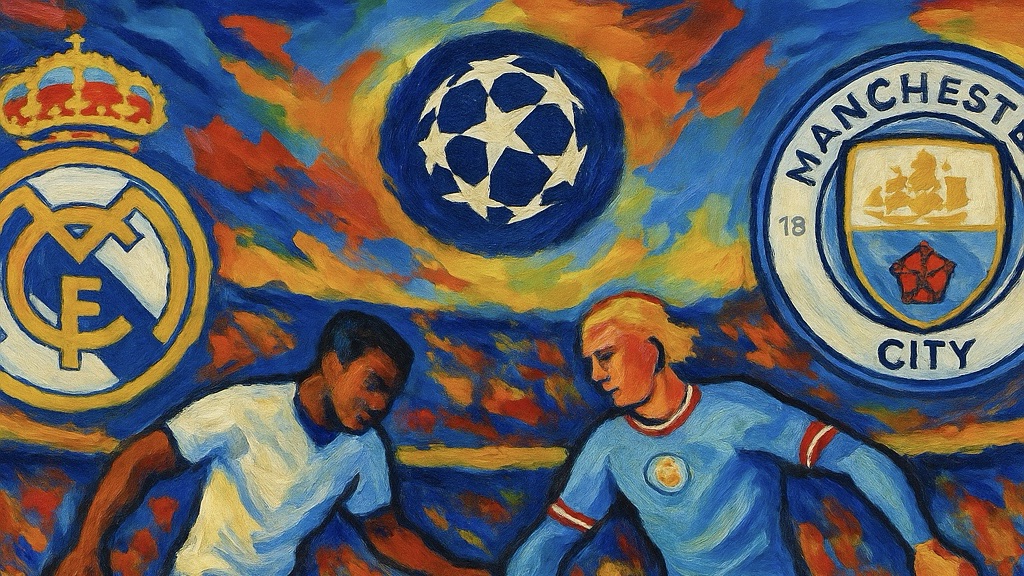
Madrid in December has a particular stillness when things are going wrong. The streets are loud, the bars are full, but the football conversation grows heavy, circular, almost superstitious. On Wednesday night, under the lights of the Santiago Bernabéu, that tension sharpens into something else. This is not just another Real Madrid vs Manchester City Champions League meeting. This is the final European night of 2025, a fixture balanced between qualification maths and emotional reckoning.
Real Madrid sit on twelve points. Manchester City on ten. The margins are thin enough to hurt. A place in the top eight of the Champions League league phase offers safety, rest, and control. Falling outside it invites danger, fatigue, and February chaos. For both clubs, this match is about avoiding complication. For Real Madrid, it may also be about avoiding collapse.
A Club in Crisis Territory
Real Madrid arrive bruised. The domestic defeat to Celta Vigo was not just a loss, but an implosion. Three red cards. A tunnel confrontation involving Dani Carvajal. Whistles from the stands. Empty seats before full time. What stings most is not the scoreline, but the feeling of drift. This is a squad accused by its own manager of only running when forced to. A team that looks reactive rather than prepared.
Xabi Alonso stands on the edge of this storm. Once the quiet conductor of midfield elegance, now a coach fighting noise, impatience, and the uniquely brutal expectations of Madrid. Reports speak of an ultimatum. One convincing night to restore belief. One collapse away from dismissal. The cruel irony is obvious. Across the technical area stands Pep Guardiola, the man who once shaped Alonso’s understanding of space and control.
Student versus master feels too romantic. This is survival versus certainty.
Discipline Lost and a Dressing Room Exposed
The collapse against Celta revealed something deeper than tactical flaws. The red cards were not accidents. They were symptoms. Fran García. Álvaro Carreras. Endrick, unused yet furious. A 39-second stretch of chaos that told a larger story. When the match ended, the anger followed the referee into the tunnel. Carvajal, injured and sidelined, could not hold back. His words were sharp. Recorded. Damaging.
The dressing room is described as noisy. Undisciplined. Heavy with bad habits. In Madrid, these descriptions are unforgivable. Order and authority are currencies here. When they disappear, the atmosphere turns poisonous. The Bernabéu demands domination, not explanation.
A Defence Held Together by Imagination
This match would be difficult under perfect conditions. Instead, Real Madrid arrive with a defensive structure held together by improvisation. Six defenders unavailable. Militao. Alexander-Arnold. Carvajal. Alaba. Mendy. Huijsen. All gone.
What remains is Antonio Rüdiger and Raúl Asencio, the latter thrust into a role barely tested at this level. Federico Valverde is expected to fill in at right back again, sacrificing midfield control for necessity. Each adjustment strips another layer of stability. Against Manchester City, that is dangerous.
Haaland does not need much. He feeds on uncertainty. He presses his presence into centre backs until space opens elsewhere. Foden thrives in those cracks. Cherki drifts into the places left undefended. This is where Madrid’s structural issues could become fatal.
Manchester City and the Art of Control Without Rodri
City arrive calmer, but not complete. Rodri’s absence is profound. A Ballon d’Or winner reduced to watching. Guardiola speaks of sadness. Of identity loss. Of how injury erodes purpose. Without Rodri, City lose their anchor. Possession becomes less secure. Transitions harder to suppress.
Yet City have learned adaptation. Nico González. Reijnders. Rotations that spread the burden. Goals arriving from defenders. Wingers stepping inside. Phil Foden entering this match in ruthless rhythm, scoring freely, floating between roles, already comfortable on this stage.
Guardiola will still demand structure. Simplicity. Positional discipline. His clash with Cherki’s flair is a philosophical one. Freedom must serve control. Risk must earn its place.
Mbappé and the Weight of Dependence
Everything about Real Madrid’s attack bends toward Kylian Mbappé. Twenty five goals this season. Over half of their output. Against City alone, seven career goals. The question is not whether he matters, but whether he can play at all.
A leg injury clouds his availability. If he starts, Madrid gain speed, transition, fear. If he does not, their attack feels blunt, predictable. Vinícius waits for support that may not arrive. Midfield runners hesitate. Without Mbappé, Madrid are honest in a way the Bernabéu rarely forgives.
City will prepare for both scenarios. They always do. But if Mbappé is fit, even at less than full sharpness, one counterattack could redefine the night.
Haaland Versus Fragility
This is not a poetic duel. It is a practical one. Erling Haaland against a defence running out of answers. His record in the Champions League defies explanation. Fifty four goals in fifty three matches. Statistics that feel fictional.
The focus will be on Asencio. How long he holds. How often Rüdiger must cover. How frequently Valverde is dragged out of position. City’s plan will be simple and ruthless. Pin the centre. Stretch the flanks. Let Haaland occupy attention so others can strike.
If Madrid collapse under pressure, the scoreline will reflect it quickly.
The Bernabéu, Still Watching
The stadium will be full. The myth remains. European nights here still carry a belief bordering on delusion. Supporters speak of miracles. Of moments that defy form. They remember nights when doubt became fuel.
But the current mood is brittle. Whistles are never far away. Patience is thin. The sense that this project is running out of time hangs in the air. Headlines scream desperation. Words like vulgar and disastrous circle the club.
And yet, Madrid have always lived between confidence and chaos. That contradiction is their identity.
Tactics, Probability, and an Uncomfortable Forecast

On paper, Manchester City look better balanced. Stronger structure. Fewer absences. Momentum from domestic wins. Predictive models favour them. The forecast leans toward goals. A Madrid defence stretched beyond its limits. A likely City victory.
A 3-1 away win feels plausible. Logical. Almost inevitable.
But logic has always struggled here.
What This Night Truly Decides
This match decides more than qualification. It tests Xabi Alonso’s authority. It challenges Madrid’s self image. It offers City a chance to conquer the psychological weight of the Bernabéu, something they have rarely managed.
For Madrid, it is about reaction. About proving they still understand who they are. For City, it is about control. About confirming superiority without Rodri, without excuses.
By midnight in Madrid, one narrative will harden.
Either this becomes the night Real Madrid reminded Europe that doubt still fuels them, or the evening when Manchester City finally treated the Bernabéu like just another stadium.
Both possibilities feel real. That is why this match matters.
 doragon sports