Introduction: The Underdog We Didn’t Know We Needed
In an era of modern football so often defined by financial powerhouses and super-clubs, the underdog story has become a rare and cherished narrative. It’s a reminder that the sport’s soul isn’t just found on balance sheets, but in the collective will of a team, a town, and a shared dream. This season, the most compelling chapter of that story is being written in the Swiss Alps.
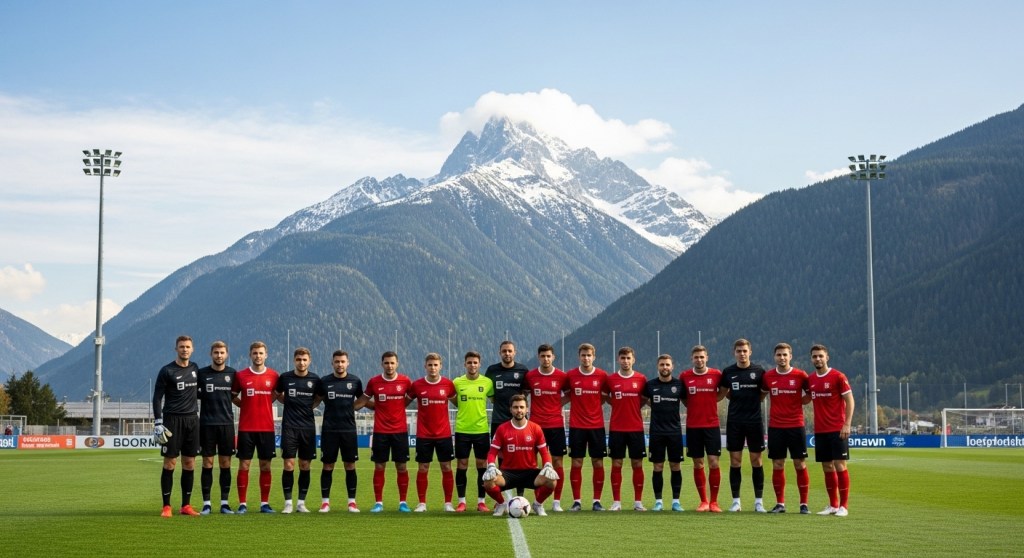
Meet FC Thun, a club from the scenic Bernese Oberland region of Switzerland that has defied all logic to storm to the top of the Swiss Super League. Promoted at the end of the 2024-25 season, their ascent is more than just a string of surprising victories; it’s a testament to a club that stared into the abyss and didn’t blink. After 13 games, they sit atop the table with 31 points, a position built on dramatic off-field survival, a gritty on-field identity, and a unique philosophy that turns setbacks into strengths.
This isn’t just another feel-good story of a small team punching above its weight. It’s a lesson in resilience, community, and tactical intelligence that offers a refreshing counter-narrative to the dominant trends of the global game. Here are four reasons why FC Thun’s remarkable season is the best story in football right now.
——————————————————————————–
1. Their League-Leading Run Was Built on the Brink of Financial Collapse
To understand FC Thun’s current success, you must first understand how close they came to ceasing to exist. The start of 2024 was defined by what the club’s annual report called “erdrückenden Sorgen” (crushing worries). Facing a mountain of debt accumulated over previous years, the club was at very real risk of failing to secure a professional license, a move that would have ended their journey before it truly began.
The club was saved by a “Befreiungsschlag” (a liberating blow) in the form of a crucial capital injection from Beat Fahrni, a regional major shareholder. This investment provided the financial stability needed to secure the license and continue operations. But it came with a harsh realization and a change in philosophy, captured perfectly by President Andres Gerber in the club’s 2024 annual report:
“We are all aware that we cannot continue to accumulate seven-figure debts annually. It had to ‘hurt’.”
This painful but necessary restructuring forced the club to re-evaluate every process and contract. Juxtaposed against their current status as surprise league leaders, this recent brush with financial ruin is staggering. They aren’t just winning; they are thriving just months after facing potential oblivion.
——————————————————————————–
2. They Win With Last-Second Magic and Gritty Teamwork—Not Just Spectacle
FC Thun doesn’t always play beautiful, free-flowing football, but they have perfected the art of winning. Their success is built on tactical versatility and an unwavering belief that a game is never over until the final whistle. Two recent victories perfectly illustrate their dual identity as both patient grinders and efficient insurgents.
First, consider their 1-0 away win against Servette FC on November 8, 2025. It was a match defined by “90 Minuten Langeweile” (90 minutes of boredom). As a local radio report noted, both teams neutralized each other in a tactical stalemate, and for much of the evening, “football hearts beat rather calmly.” Just as a goalless draw seemed inevitable, the game was decided by a single “Sekunde Leidenschaft” (second of passion). Free-kick specialist Leonardo Bertone stepped up in the 90th minute and curled a direct free-kick into the top corner, snatching all three points. It was a classic “sieg des Willens” (a victory of will), proving the team can win ugly by lulling you to sleep before striking with a single moment of brilliance.
In contrast, their 2-1 away victory over then-league leaders St. Gallen was a “rain-soaked coup.” Acting as “insurgents,” Thun dismantled their highly-fancied opponents with a defiant game plan built on efficiency. They took their chances, absorbed pressure, and survived a late scare when a St. Gallen goal was disallowed by VAR for being just “two or three centimeters” offside. It was a win that showcased not only their tactical intelligence but the defiant grit needed to topple a top team on their own turf.
——————————————————————————–
3. They Treat Defeats as “Tuition Fees”
Perhaps the most unique aspect of FC Thun’s mentality is their approach to losing. For a team fresh from promotion, defeats against established giants are inevitable. But instead of letting them crush morale, the club reframes them as essential parts of their development.
This philosophy was on full display following their 3-1 home loss to reigning champions FC Basel. The defeat was significant, ending an incredible eleven-month unbeaten streak at their Stockhorn Arena. Yet, coach Mauro Lustrinelli saw it not as a failure, but as a lesson. He introduced the concept of “Lehrgeld,” or “tuition fee,” to describe the experience. The idea is simple: losses against powerful, experienced opponents are a necessary cost of learning and growing in a top-tier league.
As one article described the coach’s perspective after the match:
“Lustrinelli, ‘bitter’ about the result, called it ‘tuition fee’ (Lehrgeld), a necessary payment in the cruel economy of development.”
This mature, long-term outlook prevents the team from spiraling after a loss and reinforces a culture of continuous learning. It’s a powerful mindset that turns a potential negative into a stepping stone for future success.
——————————————————————————–
4. They Are a Throwback Anomaly in Football’s New Financial Era
European football is increasingly governed by complex financial regulations. As detailed in a 2024 Oxera report, rules like UEFA’s “Financial Sustainability” framework and squad cost ratios are designed to control spending. These regulations have had a massive impact on the sport’s giants, with a club as large as FC Barcelona seeing its “spending budget slashed” for exceeding revenue-based limits.
FC Thun’s story is a stark anachronism in this new reality. Their crisis was a product of a pre-FFP paradigm: they nearly went extinct for the old-fashioned reason of simply running out of money. While super-clubs navigate a web of creative accounting and revenue-based caps, Thun’s brush with death was a more fundamental, almost nostalgic financial crisis. That they have survived this to thrive in the complex post-FFP era makes their rise all the more remarkable. With one of the smallest budgets in the league, they operate on “nerve and necessity.” As Coach Mauro Lustrinelli put it, the team’s ethos is about collective purpose: “We function. We are part of a project.”
FC Thun’s success—built on smart tactics, a resilient mindset, and timely investment from their local community—runs counter to the sport’s dominant narrative. They are a powerful reminder that while money can buy talent, it can’t buy heart, discipline, or a shared sense of identity.
——————————————————————————–
Conclusion: A Story for the Soul of the Sport
FC Thun is more than just a simple underdog. They are a story of financial survival against the odds, of tactical flexibility that wins games in more ways than one, and of a remarkably healthy culture that embraces learning even in defeat. They represent the power of community spirit in an age of globalized brands.
Their journey is a testament to what can be achieved when a club’s identity is forged in crisis and defined by a collective will to not only survive, but to thrive. In a sport increasingly dominated by spreadsheets and corporate interests, FC Thun’s story is one for the soul. It leaves us with a thought-provoking question: in an era where football is increasingly defined by balance sheets and global brands, how far can a team powered by sheer will and a local identity truly go?
 doragon sports