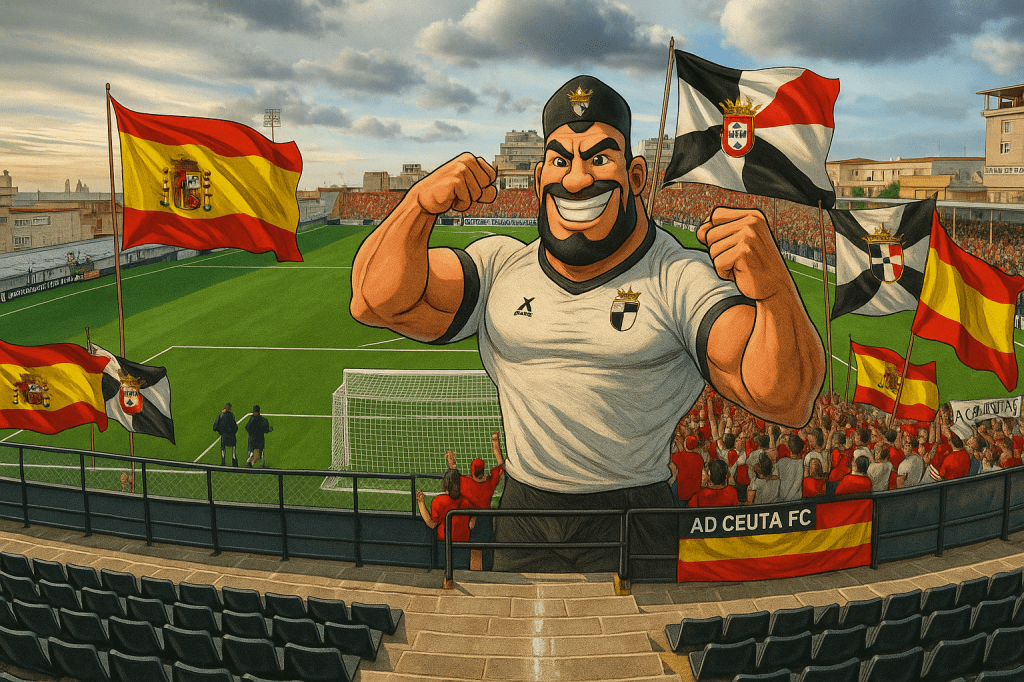
Nestled on the north coast of Africa, where the Mediterranean meets the Atlantic, the Estadio Alfonso Murube is more than just a football ground — it’s a cultural landmark of Agrupación Deportiva Ceuta Fútbol Club (AD Ceuta FC). For visiting fans, the stadium represents both the history of a small but fiercely proud club and the unique atmosphere of Ceuta, a city where Europe and Africa converge.
AD Ceuta FC: Club History and Identity
AD Ceuta FC may not carry the same weight in Spanish football history as some giants, but in the Segunda Federación and beyond, the club has built a reputation for resilience, local pride, and an unmistakable spirit.
Founded: 1956 (with deep roots in earlier football clubs from the city) Colors: White kits with black trim, reflecting the stark clarity of Ceuta’s fortress walls and the contrast of sea and stone.
Nickname: Los Caballas — a nod to the local fishing heritage and the toughness of Ceuta’s people.
The club has spent much of its history oscillating between the third and fourth tiers of Spanish football, with brief pushes into higher levels. While not yet a fixture of LaLiga Hypermotion, AD Ceuta FC has developed a passionate fan base that treats the Estadio Alfonso Murube as a true fortress.
The Estadio Alfonso Murube
Opened: 1932
Capacity: Approximately 6,500
Location: Right in the heart of Ceuta, within walking distance of the port and the iconic Mediterranean coastline.
Atmosphere: Compact, noisy, and intimate — every voice counts, every drumbeat echoes. Fans say you can smell the salt air from the stands, giving the stadium its own character compared to grounds on the Spanish mainland.
Like SD Eibar’s Ipurua or Cádiz CF’s Nuevo Mirandilla, Alfonso Murube is a small but fiercely atmospheric ground. The close-knit seating means that wherever you sit, you feel almost on top of the pitch.
Supporters and Matchday Culture
The supporters of AD Ceuta FC carry the weight of a city that often feels overlooked in wider Spanish football culture. Their chants bounce off the steep stands, and their presence is felt across the partidos de Ceuta Club de Fútbol throughout the season.
Local media such as Diario de Ceuta cover the team closely, and the city rallies around fixtures like Ceuta vs Eibar or clashes with Andalusian rivals. For fans checking posiciones de Ceuta Club de Fútbol or Ceuta CF standings, the fight for promotion always comes with extra pride — it’s about putting Ceuta on the map.
Ticketing and Access
Ticket Prices: Affordable compared to mainland clubs; often ranging between €10–20.
Where to Buy: Tickets can be purchased directly at the stadium gates or through the official website.
Visitor Access: The stadium is central, so most fans arrive on foot. Ferries from Algeciras and nearby Moroccan routes also make matchdays accessible for traveling supporters.
Ceuta: The City Beyond the Stadium
What makes AD Ceuta FC unique is not only the club but its location. A trip to the Estadio Alfonso Murube doubles as a cultural adventure:
Weather: The tiempo en Ceuta or Ceuta weather is generally mild year-round, with hot summers and warm Mediterranean breezes in autumn and spring.
Food & Drink: The fusion of Spanish and Moroccan influences makes Ceuta one of the most intriguing food destinations in Spain. Seafood is highly recommended here.
City Landmarks: After the match, visitors can explore the Royal Walls of Ceuta, the Plaza de África, or simply take in the views from the port where two seas meet.
Sporting Context
AD Ceuta FC are a club that constantly fight to punch above their weight. While checking the clasificación de la Segunda División de Fútbol or the LaLiga2 table often reminds fans of the uphill battle, the sense of belonging and resilience remains strong.
For now, SD Huesca, Eibar, and other historic clubs may dominate headlines in the Segunda División, but the people of Ceuta continue to dream — every season, every match, every chant at Alfonso Murube is another step in the city’s quest for recognition.
The Estadio Alfonso Murube is not the biggest, flashiest, or most modern ground in Spain — but it is one of the most soulful. A trip here is a journey into a city with layered history, fierce pride, and a football club that embodies both. If you’re a football pilgrim, Ceuta should be on your map.
 doragon sports