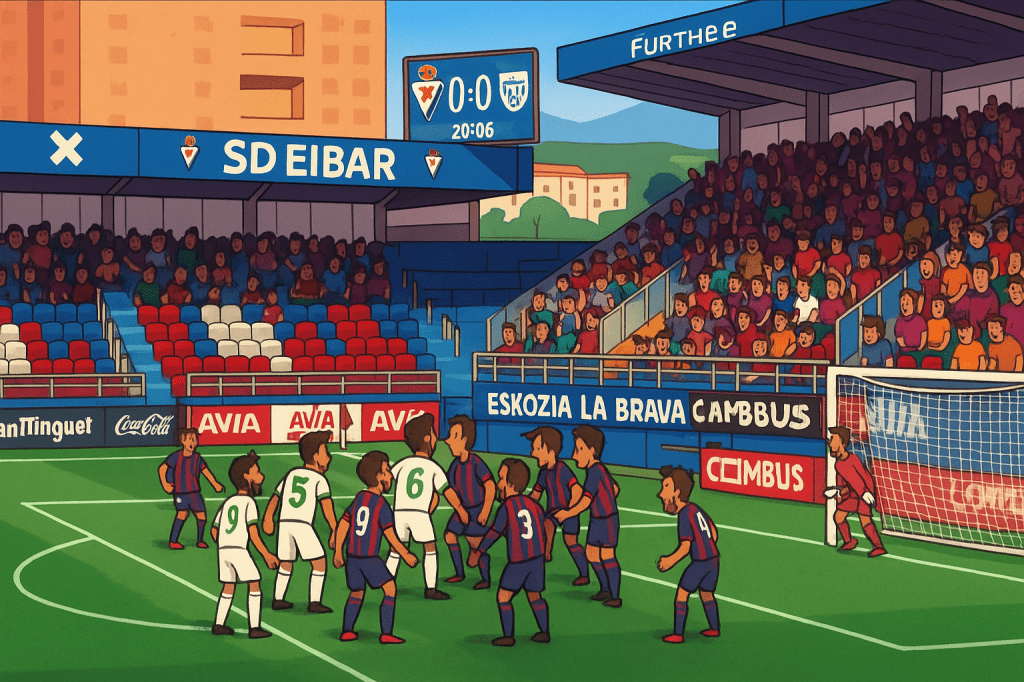
Welcome to Eibar, a hillside town in Gipuzkoa where the industrial clang of steel once rang through the valley, and where the color claret-and-blue is worn with unshakable pride. This is the home of Sociedad Deportiva Eibar, S.A.D., known to locals as Eibar Kirol Elkartea, and of the iconic Estadio Municipal de Ipurua — a compact footballing fortress that has become legendary across Spain.
Part I: The Armeros’ Legacy
Club History & Identity
Founded on November 30, 1940, after the merger of Deportivo Gallo and Unión Deportiva Eibarresa, the club first played under the name Eibar Fútbol Club before adopting the identity of Sociedad Deportiva Eibar.
Nickname: Los Armeros (Armagiñak in Basque, “The Gunsmiths”) — a tribute to Eibar’s long history as a weapons and steel-manufacturing town.
Colours: Inspired by FC Barcelona, the club’s claret-and-blue shirts with blue shorts are now among the most recognizable in Spanish football.
Ownership: Unlike most clubs, Eibar is fan-owned. With over 8,000 shareholders from nearly 50 countries, SD Eibar is an emblem of democratic football.
Smallest Big Dreamers: For decades, Eibar was considered the smallest club to ever play in La Liga — until S. D. Huesca joined them in 2018.
From Valleys to La Liga
Early Climb (1940s–50s): After reorganizing in 1943, the club rose into Segunda División by 1953. Steady Segunda (1988–2009): Nearly two decades of consistent second-tier football defined Eibar as a reliable mid-table presence. Golden Era (2014–2021): In 2014, the miracle happened — promotion to La Liga for the first time. The Defiende al Eibar campaign rallied fans worldwide to raise equity and meet financial requirements. For seven seasons, Ipurua welcomed giants like Barcelona and Real Madrid. Today: SD Eibar now competes in the Segunda División (LaLiga Hypermotion), pushing hard for promotion. Fans follow the posiciones de SD Eibar and the clasificación de la Segunda División de Fútbol weekly, watching the LaLiga2 table with nervous excitement.
Part II: Estadio Municipal de Ipurua
A Stadium in the Valley
Opened on September 14, 1947, the Estadio Municipal de Ipurua is Eibar’s fortress. Tucked at the bottom of a steep valley, its setting is as unique as its story.
Capacity: 8,164 all-seater. Pitch Size: 103m x 65m — compact but regulation. Location: Ipurua Kalea, just a 10-minute walk from the town center. The steep climb to the stadium is part of the pilgrimage. Record Attendance: 7,732 vs Real Oviedo (2024).
Structure & Redevelopment
Ipurua is built in a traditional four-stand style (North, South, East, West) — more “English” than Spanish.
1951: Main stand completed.
1998–2001: First major modernization; capacity 5,250.
2015–2017: North and East Stands rebuilt, capacity raised to 7,083. East Stand added a museum, club shop, and parking.
2018–2022: West Stand completed; today’s capacity stands at 8,164.
What sets Ipurua apart is its intimacy: fans are practically on top of the pitch, making it one of the most intense and atmospheric grounds in Spain.
Part III: Matchday at Ipurua
Atmosphere & Supporters
Eibar’s fanbase may be small, but it’s ferocious.
Eskozia la Brava: The main supporter group, named “Scotland the Brave”, is famed for tireless chanting and colorful tifos. Compact Buzz: Visitors often remark that Ipurua feels like a cauldron — buzzing, vibrating, and deeply personal. Fan Zones: The East and West Stands hold the most vocal groups. Bars in every stand serve snacks, beer, and pintxos.
Part IV: Visiting Eibar & El Tiempo en Eibar
The City of Gunsmiths
Eibar itself is modest in size (around 30,000 residents) but rich in character. Once globally known for its steel and firearm industries, today it blends tradition with Basque hospitality.
Weather: Check el tiempo en Eibar before you go. The valley setting means sudden rain showers are common, even in summer. Landmarks: The Gunsmith Museum, San Andrés Church, and surrounding Basque countryside hikes. Shops: Even Lidl Eibar becomes part of the pilgrimage, as visiting away fans often grab supplies there before climbing to the stadium.
Part V: Current Context — SD Eibar in LaLiga Hypermotion
Managed by Beñat San José, the team is once again a promotion contender.
SD Eibar Standings: At present, Eibar sits near the playoff spots in the LaLiga2 table, fighting alongside clubs like Sporting Gijón, Racing de Santander, and S. D. Huesca. Style of Play: The manager emphasizes intensity, compact defending, and a relentless press at Ipurua — turning the stadium into a fortress. Key Players: Names like Stoichkov, Corpas, and Arbilla continue to define the side, while young Basque talents are being blooded through.
Part VI: Tickets & Essentials
Buying Tickets: Available on the official website or at the East Stand ticket office (taquilla). Opens two hours before kickoff.
Prices: Typically €20–30 (Fondos €25, Central €35, Infantil €10). Away Fans: Seated in the West Stand — 228 spots available, sold only through the visiting club. Season
Tickets: Discounts for high attendance. Digital passes available via the club app.
The Estadio Municipal de Ipurua is more than a football ground; it’s the beating heart of a small town with big dreams. From the days of defending their La Liga place to today’s fight in the clasificación de la Segunda División de fútbol, SD Eibar continues to embody the spirit of the Basque Country: resilient, proud, and fiercely competitive.
Whether you’re checking the posiciones de SD Eibar, looking up el tiempo en Eibar, or climbing the steep streets with fellow Armeros, your journey to Ipurua is a footballing pilgrimage.
Aupa Eibar!
 doragon sports