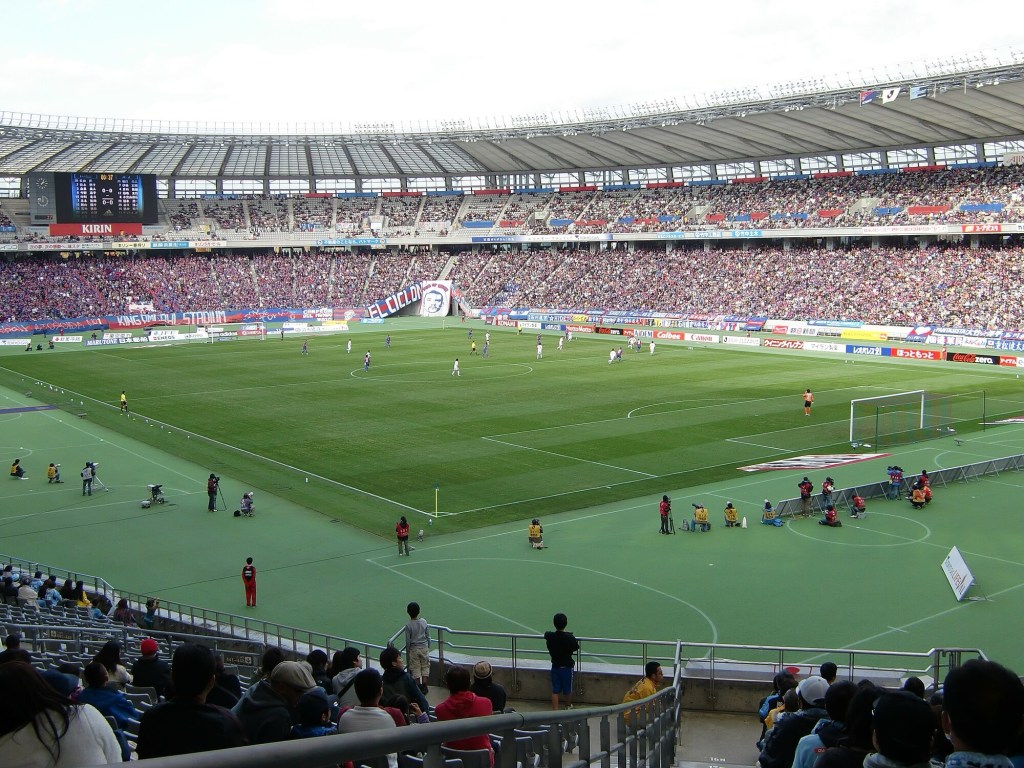
In the sprawling western suburbs of the Japanese capital lies a football cathedral that’s easy to overlook on your first trip to Tokyo — but impossible to forget once you’ve been.
Ajinomoto Stadium, officially known as Tokyo Stadium, is the gleaming home of FC Tokyo and Tokyo Verdy. Opened in 2001 and seating over 48,000 fans, it’s a multi-purpose colossus tucked into Chōfu City.
Whether you intend to cheer on Tokyo Verdy, FC Tokyo or even an away visiting team (Marinos, maybe?)- this guide will help you work out how to enjoy your day.
Locals affectionately call it “Aji-Sta”, after the food seasoning giant Ajinomoto Co., who bought the naming rights back in 2003 — making it Japan’s first-ever public venue with a corporate name. On matchdays, though, it’s all about the football. A Tokyo derby here hits harder than a bowl of miso ramen after a rainy night in Shibuya.
Capacity and Stadium Features
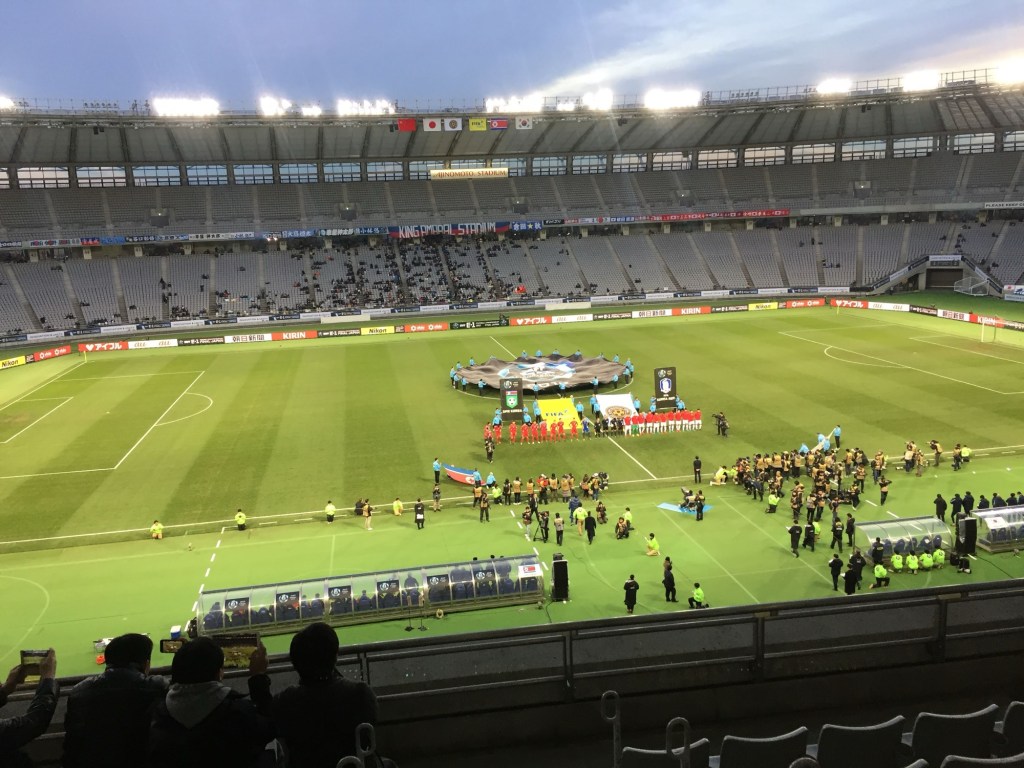
Official Capacity: 48,013 (including 336 wheelchair seats) Stadium Type: Bowl-style, multi-use Roof: All seats are covered by soaring polycarbonate and Teflon rafters Playing Surface: Natural grass (football) with artificial turf cover over an athletics track
Don’t be fooled by the number — Ajinomoto feels massive. With wide seats, sprawling sidelines, and open concourses, fans often remark it feels more like a 65,000-seater. That space makes it perfect for everything from Rugby World Cup quarter-finals to Olympic modern pentathlon events.
And the amenities? Spotless. Heated toilet seats in the restrooms. Barrier-free access throughout. Indoor training pitch. Nursing rooms. A press box so slick it could double as a tech startup HQ.
FC Tokyo & Tokyo Verdy – The Home Sides
Ajinomoto Stadium is Japan’s only J.League stadium to host two home clubs. And you couldn’t ask for more different flavours:
⚽ FC Tokyo
League: J1 Formed: 1935 (as Tokyo Gas FC)
Mascot: Tokyo Dorompa (a raccoon-like tanuki)
Honours: J.League Cup (2004, 2009, 2020), Emperor’s Cup (2011)
Vibe: Urban pride, efficient, businesslike Support: Passionate but family-friendly
🟢 Tokyo Verdy
League: J1 (promoted in 2024)
Formed: 1969 (as Yomiuri FC) Colours: Green and gold (from the Portuguese “verde”)
Honours: Once the juggernaut of Japanese football in the 80s & 90s
Vibe: Retro royalty, cult following, underdog edge
FC Tokyo bring the heat of the capital, while Verdy carry the weight of their past glories like a band you forgot was once huge. When these two meet — especially in a packed stadium — it’s a momentous, tribal event.
How to Get There
🚆 Nearest Station: Tobitakyu Station (Keio Line)
Time from Shinjuku: ~20 mins on the Keio Line (Express or Limited Express) Walk to Stadium: 5–7 minutes Pro Tip: Arrive early. The trains and Tobitakyu Station get rammed on match days.
🚆 Alternative: Tama Station (Seibu Tamagawa Line)
Walk: 20–24 minutes Shuttle Bus: Operates on matchdays from Tama Station (drop-off: “Ajinomoto Stadium Minami-guchi”)
🚌 Buses & Cycling
Keio buses (調33, 飛01, 武91, 境91) serve the area There are designated walking/cycling routes post-match — but no bikes allowed on the main deck for 2 hours after full-time
Top Tip: Don’t drive. Parking is limited, expensive, and a logistical headache. Use Tokyo’s famously punctual public transport.
Matchday Experience
Inside Aji-Sta, you’ll find one of Japan’s most modern matchday setups:
Massive video screens and LED lighting Great acoustics for chants and goal celebrations Plenty of toilets (many with heated seats) Barrier-free access and nursing rooms Spacious concourses and surprisingly quick queues
That said, some seats — especially up high or behind the athletic track — feel a bit distant. This isn’t a tight European-style ground, so expect a slightly different vibe. But when Tokyo fans get going? That roar echoes like a Shinjuku underpass.
Food & Drink
Inside the Stadium
Expect classic stadium fare with a Japanese twist: yakitori, bento boxes, and curry rice alongside hot dogs and fries “American-style” vendors also common Craft beer is rare — but ice-cold lager is widely available Ajinomoto often features “gourmet maps” for each event, showing stall locations and menus
Outside the Stadium
Here’s where Ajinomoto shows its weakness — the surrounding area is a little quiet. Chōfu is essentially a commuter town for those looking for a slightly cheaper house price but still want to be on a decent train line into downtown Tokyo.
That means pre-game pints and meals are limited, but these local gems are worth seeking out:
🍢 Bells TOKYO Tobitakyu
Closest to the station, and loved by locals and fans alike.
A lively little izakaya tucked just behind Tobitakyū Station, Bells is a go-to for pre-match energy and post-match wind-downs. Their yakitori (grilled chicken skewers) are juicy, charcoal-kissed, and ridiculously moreish — especially the negima (chicken & leek) and tsukune (minced chicken meatballs).
Pair that with a frosty Asahi or a highball, and you’ve got the classic Japanese matchday combo. Seating spills out onto the pavement on busier nights, giving it a great open-air buzz — especially when Tokyo Verdy fans start belting out old-school chants.
🍕 Pizza Busters
Italian heart, Japanese soul. Quirky, quick, and surprisingly brilliant.
Less than 10 minutes’ walk from the stadium, Pizza Busters serves up authentic stone-baked pizzas that come out bubbling hot, charred just right, and ready for sharing. The standout? The Margherita Deluxe with fresh basil and a dash of Hokkaido mozzarella.
But here’s the twist: they also serve Korean-style sweet waffles with toppings like custard, matcha cream, or black sesame. Sounds wrong — tastes very right. A solid option for couples, groups, or anyone wanting something familiar with a Tokyo twist.
🍛 Nobu – Earth’s Bounty Soup Curry
A hidden gem offering one of Hokkaido’s best-loved comfort foods — soup curry.
Just north of the stadium lies Nobu, a warm, wooden café-style eatery specialising in soup curry — a rich, spicy, stew-like dish with tender meat and colourful vegetables served in a broth instead of a thick sauce.
The chicken leg soup curry is their masterpiece: slow-cooked for hours, sliding off the bone, bathing in a turmeric-heavy broth with eggplant, bell peppers, lotus root, and pumpkin. For a health-conscious, deeply satisfying pre-match meal, this is the spot.
🍣 Sushitake (in Fuchu)
A short train hop takes you to sushi heaven — thick cuts, fresh fish, no fuss.
If you’re coming in via the Seibu Tamagawa Line or want a bite before heading back, Sushitake in nearby Fuchu is elite-level sushi without Tokyo’s usual price tag.
What sets it apart? The rice-to-fish ratio is perfect, and they don’t skimp on quality. Expect melt-in-your-mouth chūtoro, seasonal uni, and perfectly torched aburi salmon. Grab a seat at the counter, order the omakase (chef’s choice), and you’ll leave wondering why you ever paid triple elsewhere.
🍜 Ōbachi-tei
Ramen done rustic — generous bowls, deep flavour, and a local favourite.
A little off the main drag, but well worth the detour, Ōbachi-tei is a ramen joint with character. It specialises in miso-based broths, served in traditional suribachi bowls — large stone bowls resembling mortar dishes that retain heat for longer.
The Miso Butter Corn Ramen is the star: thick noodles, silky broth, a slice of butter melting into golden miso, and sweet corn that bursts with each bite. Big portions, fair prices, and a queue of regulars at lunch tell you all you need to know.
Stadium Tours
Yes — Ajinomoto offers guided tours (around 1 hour), giving fans a look at VIP areas, pitch-side views, and more. Available on selected dates. You’ll need to book via phone or fax. (Yes, fax still exists in Japan.)
Sustainability Spotlight
Ajinomoto isn’t just massive — it’s green:
🌞 Solar-powered roof (3,845m²) generating 210kW 💨 Wind turbines for outdoor lighting 🌿 Tree-style wall greening cuts ~31 tons of CO₂ annually
As Japan’s sports venues go, this is among the most forward-thinking — and the cleanest.
Nearby Attractions
Got time before or after the match? You’re in a surprisingly lush and historic pocket of Tokyo.
🏞 Jindai Botanical Gardens: Serene greenery just a short bus ride away
🛕 Jindaiji Temple: One of Tokyo’s oldest Buddhist temples — 35 mins away
🏟 Musashino Forest Sports Plaza: Right next door; home to Olympic and Paralympic events
🛩 Chofu Airport: Watch planes glide past the north end of the stadium.
 doragon sports