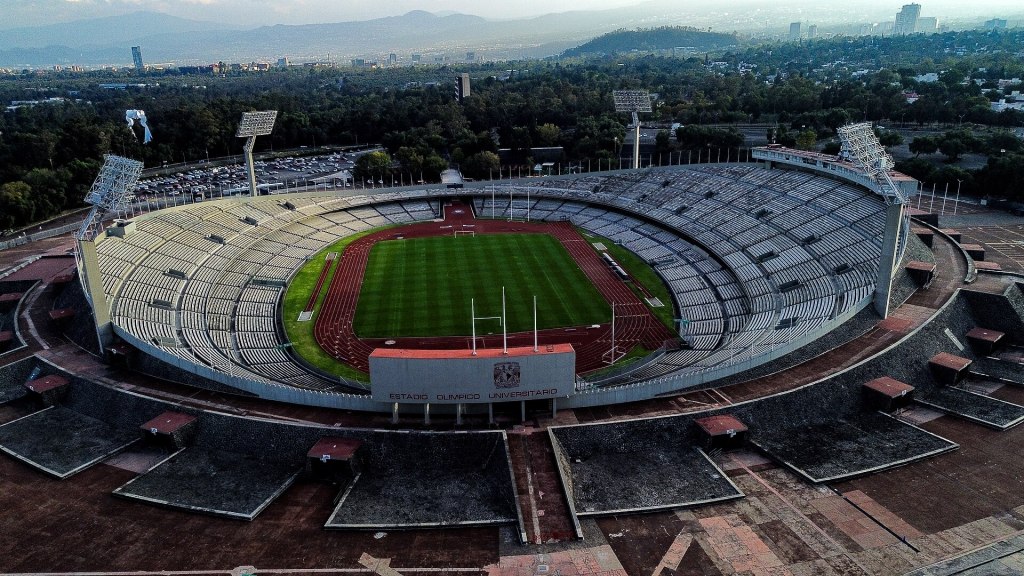
With Cruz Azul set to host Vancouver Whitecaps in the CONCACAF Champions Cup final, all eyes turn to Mexico City’s Estadio Olímpico Universitario—a venue steeped in football lore and Olympic history. While usually the home of Pumas UNAM, the stadium now doubles as Cruz Azul’s temporary ground for the 2025 season. Whether you’re planning to be in the stands for the final or just want to explore one of Mexico’s most iconic arenas, here’s everything you need to know about visiting this historic stadium.
Estadio Olímpico Universitario (“University Olympic Stadium”) in Mexico City sits on UNAM’s Ciudad Universitaria campus in Coyoacán. Built in 1952, it seats roughly 69,000–72,000 spectators. Making it one of Mexico’s largest stadiums. It is home to Pumas UNAM (Liga MX) and, starting 2025, temporarily to Cruz Azul. The stadium’s rich history includes hosting the opening and closing ceremonies, as well as athletics, at the 1968 Summer Olympics, matches in the 1986 FIFA World Cup, and numerous league derbies. Notably, Diego Rivera’s giant exterior mosaic “La Universidad, la familia y el deporte en México” adorns the facade. The Ciudad Universitaria campus is a UNESCO World Heritage site (declared in 2007), so the stadium’s design – built into an old volcanic lava pit – blends modernist architecture with Mexican art (Frank Lloyd Wright called it an “architectural crater”). Fans also enjoy unique touches like bench seating (no assigned seat numbers in general) and the stadium’s legendary “Goya… Goya… Cachún Cachún Ra Ra!” Pumas chant.
First Impressions
On arriving you’ll notice the stadium’s concrete-and-mosaic exterior – especially Rivera’s colorful mosaic of an Olympic celebration on the main facade. The stands form a large bowl with a full athletics track around the pitch. The stadium is open-air (no roof over most seats), so afternoon sun is intense; bring sunscreen or a hat. Inside, the atmosphere depends on the match, but high-profile games (and the rivalry derbies against América or Cruz Azul) see passionate but family-friendly crowds. A SoccerNation visitor notes “families…kids…rocking their Pumas jerseys with pride” at a Liga MX match. The concourse has numerous vendors selling tacos, burritos, snacks – and yes, beer is even available. In short, Estadio Olímpico feels like an old “Olympian” arena: big, concrete-heavy and a bit grey, but steeped in history and energetic on game day.
How to Get to Estadio Olímpico Universitario
Metro: Take Metro Line 3 to Copilco station, then walk ~20–25 minutes north through campus. (Or use Metro Line 3 to Centro Cultural Universitario then walk east.) Metrobús (Bus Rapid Transit): The Insurgentes Metrobus (Line 1) stops at Dr. Gálvez (about a 10-minute walk west to the stadium). Bus: Several city buses run along Avenida Insurgentes Sur. The “Circuito Centro-Sur” (Ruta 9) has a stop at the stadium’s east end. Car/Taxi: From central CDMX it’s about 14 km via Insurgentes Sur. There is decent parking around CU (easier than downtown). Rideshares (Uber/Didi) and radio taxis are widely available; just allow time for traffic on game days.
| Transport Method | Details |
| Metro (Line 3) | Copilco station ~20–25 min walk to stadium. Reliable, avoid peak-hour crush. |
| Metrobus (Insurgentes) | Get off at Dr. Gálvez stop (Line 1); ~10-min walk to stadium. Convenient from city center. |
| Bus (Local routes) | Several buses (including Ruta 9 Centro-Sur) stop at the stadium. Cheaper but slower in traffic. |
| Car (Insurgentes Sur) | 14 km from city center. Parking is ample on campus. Use authorized taxis or rideshare to be safe. |
| Walking/Campus | If staying on or near campus, the stadium is an easy walk/bike ride. Campus is generally safe and patrolled. |
Tickets
Tickets can be purchased via Ticketmaster (Mexico) or through the Pumas club (online or official outlets). Matches seldom sell out, so it’s usually easy to get seats even last-minute. Prices are very reasonable: typical general-admission behind-the-goal seats ~MXN140, mid-tier sideline sections ~MXN230, and top-tier sideline seats (or big-match premium) up to ~MXN290 (about US$7–15). Higher-profile derbies or the CONCACAF final (Cruz Azul vs Vancouver) will be pricier. Ticketmaster Mexico’s website/app handles digital tickets; tourists can buy online with a credit card. There are also box offices at the stadium and local sports shops. Avoid scalpers; it’s safest to stick to official sellers. Tip: For big games buy in advance, but for normal league matches you can often pick up tickets even an hour before kickoff.
Where to Sit in Estadio Olímpico Universitario
Seats are bench-style concrete (no seat numbers except a few VIP palcos). For the best view, aim for central sections on either sideline: these face the entire pitch squarely. However, those seats are slightly farther from the field due to the running track. Sideline seats also fill up faster and cost more. End-zone sections (behind the goals) are cheapest (~MXN140) and lively (home supporters often gather in the south end), but have a narrower perspective. A few upper-tier palco/box seats under the east side roof offer shade and an elevated view, but some fans say the angle is not ideal. In general:
Where to Eat Before the Game at Estadio Olímpico Universitario
Food options range from street eats to sit-down restaurants. Outside the stadium and around CU, vendors sell tacos, quesadillas, tamales, tortas and other snacks at very low prices (think ~MXN 20–50 per item). A travel blogger bought two large tacos de chile relleno (with rice and drink) for just MXN 55 outside the gate.
On campus, the UNAM cafeterias will soon offer a full meal menu at ~MXN45 (a pilot program in 2025). These are basic but filling meals (if you have a student or special permit). For sit-down dining, nearby San Ángel/Plaza Escenaria has many restaurants. For example, Cambalache – Escenaria is a popular Argentine grill (casual-elegant, $$$).
Another mid-range option is Asadores Grill Plaza Loreto (a Mexican grill) or the local food courts in the Plaza Loreto mall. For a quick bite right before kick-off, try the classic street taco stands or the stadium’s own concession stands (many with burgers, hot dogs and nachos).
- Budget: Street tacos/quesadillas (MXN 20–40), street elotes or esquites, UNAM cafe meals (~MXN45).
- Mid-range: Casual grills near campus or the San Ángel area (≈MXN100–200 per dish).
- High-end: Argentine steakhouse Cambalache Escenaria (Av. San Jerónimo 263 – Argentine/International cuisine, full bar), Pujol-adjacent spots (if you’re splurging)
Tip: Street vendors outside fill up early, so arrive 1–2 hours before kickoff if you want tacos there. After eating, continue to the stadium early enough to find your seat – “the walk down the tunnels and into the line of sight with the pitch [gives] goosebumps”.
Best Places to Drink around Estadio Olímpico Universitario
Pre- and post-match bars and beer gardens are more common, a short drive away. On campus itself, the options are limited (the stadium primarily sells beer and soda, but has no large fan bars inside). Many fans meet up in Coyoacán or San Ángel beforehand: these historic neighbourhoods have lively cantinas and pubs (e.g. craft brewery bars and sports bars). Near Plaza Loreto (a mile west), you’ll find sports bars and “cervecerías” (beer bars). On busy match nights, it’s safest to take an Uber/Taxi to and from off-campus bars. If you prefer to drink right at the stadium, note that licensed vendors sell soportes (small plastic cups) of beer inside.
For an upscale sit-down option, the Argentine grill Cambalache Escenaria has a full bar (beer, cocktails, wine). Overall, this isn’t a stadium with a huge tailgate culture – most local fans either eat nearby or wait until after the match to go out.
Inside the Stadium
Concourse vendors are plentiful: you’ll find nachos, hot dogs, hamburgers, tacos and popcorn, plus cold drinks and beer. Prices inside are modest by U.S. standards. There are also a few small snack bars at the central entrance plazas. Facilities are basic – restrooms are concrete-and-tile; expect lines at halftime. The stadium is old but maintained; it even offers accessible entrances and seating for disabled patrons (though nothing fancy). There’s little in the way of entertainment zones or kids’ areas; this is mainly a soccer venue. Cash (MXN) is king at concessions. Security checks bags at entry, and smoking is prohibited. Souvenir stands are selling Pumas jerseys and scarves. Plan to carry minimal belongings and leave valuables at home. After the final whistle, the exit is relatively smooth and nearby drivers come by quickly.
On the Pitch at Estadio Olímpico Universitario
UNAM Pumas are a storied Liga MX club (7 national titles) known for developing young talent and playing skilful football. They often contend for the playoffs and their fans expect an organised, spirited team. Matches feature the famous “Goya” chant and wave-like clapping, and the crowd generally cheers along without aggressive vibes. Pumas’ style is traditional Mexican, characterised by technical passing and patient buildup. Note that Mexico City’s high altitude (~2,240m) can make the ball travel faster and tire visitors; UNAM players are acclimatised to it.
From 2025 the stadium also houses Cruz Azul (9-time champions). Expect intense local derbies: Clásico Capitalino (Pumas vs América, though América has its own stadium now) and Clasico Joven (Cruz Azul vs America) will bring big crowds. In fact, the 2025 CONCACAF Champions Cup Final will be held here, pitting Cruz Azul against Vancouver Whitecaps FC – a historic first final for a Canadian club. So you might witness passionate international-level play.
In summary, you can expect a professional Liga MX match atmosphere: chanting crowds, halftime music, and a few wave-your-arms family cheers. It’s less about high-budget fanfairs and more about genuine local football culture. Even on an average game night, the stadium gives you a taste of Mexico City’s football tradition under the glow of floodlights.
Nearby Attractions close to Estadio Olímpico Universitario
Since you’re at UNAM’s campus, explore it as a cultural landmark. The Central Library (just east of the stadium) features a famous 4,000 m² mosaic façade by Juan O’Gorman. The entire Ciudad Universitaria is UNESCO-protected, so architectural gems abound. On campus, visit the Biblioteca Central (with its O’Gorman mural), the Museo Universitario Arte Contemporáneo (MUAC) for modern art, and Sala Nezahualcóyotl – a concert hall known for its acoustics. The Filmoteca UNAM has Mexico’s largest film archive. If you have time, the UNAM botanical garden and sculpture-lined walkways are lovely.
A short taxi or Metrobus ride east brings you to Coyoacán: a cobblestone neighbourhood with plazas, museums, and cafés. Here you can tour Frida Kahlo’s Blue House, relax at Jardín Centenario, or eat at the famed Mercado Coyoacán. South of the stadium is San Ángel, another artsy district (Saturdays host an art market at Plaza San Jacinto). For a big afternoon, the neighbouring Anillo Periférico highway leads to Chapultepec Park and the Museum of Anthropology. The Estadio Azteca (Puebla Blvd.), home of Cruz Azul and América, is about 15 km north. Though far, many tourists combine both Azteca and Olímpico tours to compare Mexico City’s iconic venues.
Final Verdict on Estadio Olímpico Universitario
Visiting Estadio Olímpico Universitario is highly recommended for fans of culture and football alike. It’s not a glitzy new arena, but a living piece of Mexican sports history – the only Olympic stadium inside a World Heritage campus. Tourists will enjoy the architecture and the friendly, authentic Mexican crowd (especially if you time it with an exciting match). The venue is best suited for visitors who appreciate cultural context (don’t miss the Rivera mosaic on the wall) and are comfortable with basic amenities. It’s a perfect matchday experience if you have time to explore the UNAM campus before/after.
In short, tourists shouldn’t skip it if they’re in Mexico City, especially on a game day – the energy is genuine and the price is low compared to elsewhere. The stadium is ideal for families, university visitors, and anyone seeking a unique local experience.
Standout tip: Wear sunscreen and a hat – most seats are unshaded. Consider arriving early to enjoy affordable street tacos and soak in the campus vibe before kickoff. Whether it’s the CONCACAF final or a regular league game, Estadio Olímpico Universitario offers a memorable, authentically Mexican football experience.
ProtoplasmaKid / Wikimedia Commons / CC-BY-SA 4.0
“Stadium Photo” by ProtoplasmaKid is licensed under CC BY-SA 4.0
 doragon sports