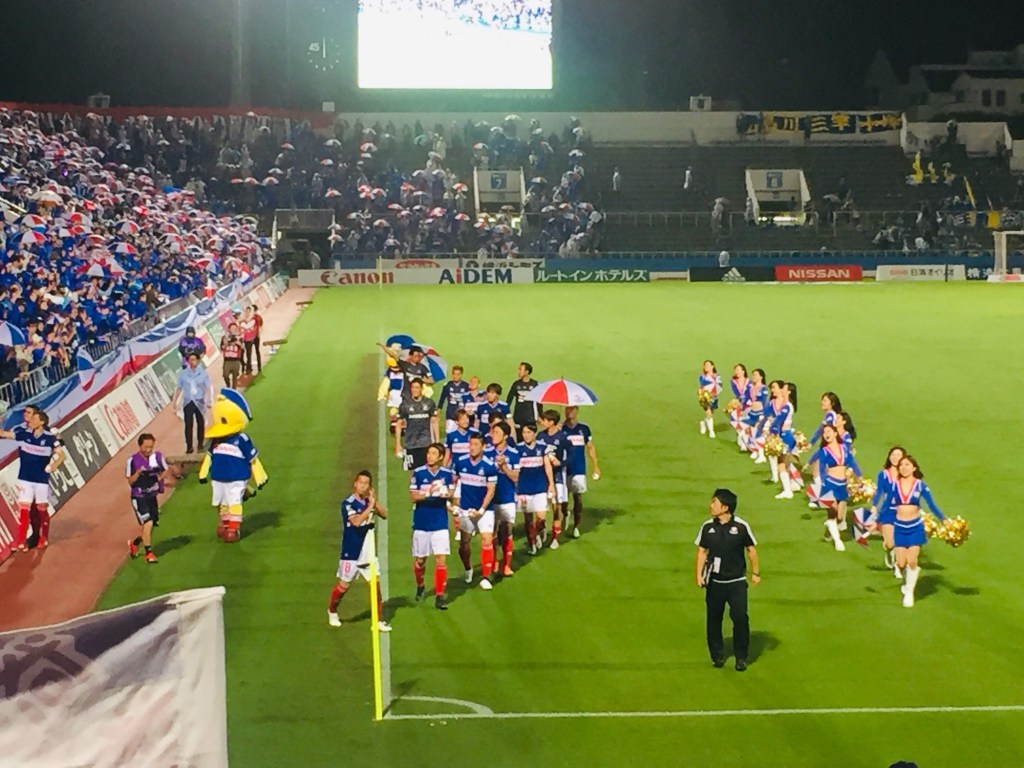
In a dramatic turn of events, Yokohama F. Marinos find themselves in the throes of an unprecedented losing streak, casting a shadow over what was once a promising season. Their recent 0-2 defeat against Kashiwa Reysol at Nissan Stadium not only marked their fifth consecutive loss but also underscored the growing threat of relegation. Once a powerhouse in the J1 League, Marinos now languish at the bottom of the table with a meager 8 points, a staggering 5 points adrift from safety. As the specter of relegation looms larger, both players and supporters grapple with the emotional toll of watching their beloved team teeter on the brink. In this piece, we delve into the factors behind their decline and the implications it holds for the club’s future. For more details on Marinos’ recent struggles, check out this in-depth analysis.
Final Score Breakdown
The final whistle blew with a resounding 0-2 victory for Kashiwa Reysol, leaving Yokohama F. Marinos fans in disbelief. This scoreline tells only part of the story, however.
Yokohama’s inability to find the back of the net continued a worrying trend of offensive impotence. Their forwards seemed out of sync, failing to capitalize on the few chances they created.
Defensively, Marinos showed glimpses of their former solidity but ultimately crumbled under Kashiwa’s relentless pressure. The two goals conceded were as much a result of defensive lapses as they were of Kashiwa’s clinical finishing.
This result further solidified Kashiwa’s position near the top of the table while pushing Yokohama deeper into the relegation quagmire.
Key Goals and Scorers
Kashiwa Reysol’s victory was sealed by two crucial goals, each highlighting different aspects of their tactical superiority on the day.
The opening goal came from Yoshio Koizumi, a midfielder known for his impeccable timing and positioning. Koizumi’s strike in the 37th minute was a masterclass in opportunism, pouncing on a loose ball in the box following a corner kick.
Kosuke Kinoshita doubled Kashiwa’s lead in the 68th minute with a goal that epitomized their counter-attacking prowess. Breaking at pace from a Yokohama attack, Kinoshita finished a flowing team move with a clinical strike that left the goalkeeper rooted to the spot.
These goals not only secured the win for Kashiwa but also exposed the vulnerabilities in Yokohama’s defensive setup, providing a stark reminder of the work ahead for manager Patrick Kisnorbo.
Match Highlights and Key Moments
The match was punctuated by several pivotal moments that shaped its outcome and highlighted the contrasting fortunes of both teams.
In the 15th minute, Yokohama squandered a golden opportunity when their star striker fired wide from close range, setting the tone for their frustrating evening. This miss seemed to deflate the team and the home crowd.
Kashiwa’s first goal in the 37th minute came against the run of play, showcasing their efficiency and ability to capitalize on set-pieces. This goal visibly shook Yokohama’s confidence.
The turning point came early in the second half when Yokohama hit the crossbar, missing a chance to equalize. Kashiwa’s second goal soon after effectively ended the contest, demonstrating the fine margins in football.
These key moments, captured in match highlights, tell the story of a Yokohama side struggling to find their form and a Kashiwa team riding the wave of confidence and tactical acumen.
Yokohama’s Losing Streak Unpacked
Yokohama F. Marinos’ current predicament is not just a result of one bad game, but a culmination of a prolonged period of poor form. This section delves into the historical context, recent performances, and the impact on team dynamics.
Historical Context of Current Form
Yokohama F. Marinos’ current losing streak is unprecedented in recent club history, marking a stark departure from their usually competitive form.
This run of five consecutive losses is their worst in 17 years, a statistic that underscores the severity of their current crisis. It’s a far cry from the team that has consistently challenged for top honors in the J1 League.
The broader context is even more alarming, with the team now winless in nine matches. This extended period of poor form has seen them plummet from mid-table mediocrity to the very bottom of the league.
Such a dramatic fall from grace is particularly shocking for a club of Yokohama’s stature and resources. It raises questions about deeper systemic issues within the club structure and strategy.
This historical low point serves as a stark reminder of the cyclical nature of football and the fine margins between success and failure at the highest level.
Detailed Analysis of Recent Matches
A closer look at Yokohama F. Marinos’ recent matches reveals a pattern of struggles across all areas of the pitch.
Defensively, the team has been porous, conceding an average of two goals per game during their losing streak. This is a significant departure from their usually solid backline, suggesting issues with organization and individual form.
In midfield, Yokohama has struggled to control games as they once did. Possession statistics have dropped, and the team’s ability to create chances has diminished significantly.
The attack has been particularly blunt, with the team failing to score in three of their last five matches. This goal drought is uncharacteristic for a side known for its attacking flair.
Set-pieces, both offensively and defensively, have been a notable weakness. The team has conceded several goals from corners and free-kicks while failing to capitalize on their own opportunities.
These issues paint a picture of a team lacking in confidence and struggling to implement their usual game plan effectively. As noted in recent analysis, the team’s struggles seem to be as much mental as they are tactical.
Impact on Team Morale and Strategy
The prolonged losing streak has had a visible impact on Yokohama F. Marinos’ team morale and overall strategy.
On the pitch, players appear hesitant and lacking in confidence. Simple mistakes are creeping into their play, suggesting a team under immense psychological pressure.
Tactically, the team seems caught between sticking to their traditional playing style and adapting to arrest their slide. This indecision is reflected in inconsistent formations and player selections from match to match.
The body language of players during matches and in post-game interviews indicates a team struggling to maintain unity and positivity in the face of adversity. The usual swagger and confidence that characterized Yokohama’s play have been notably absent.
Leadership within the squad is being tested, with senior players and the coaching staff facing the challenge of rallying a demoralized group. The ability to navigate this crisis will be crucial in determining whether Yokohama can turn their season around.
These factors combine to create a challenging environment for implementing effective strategies and rebuilding team confidence. The coming weeks will be critical in determining whether Yokohama can break this negative cycle and rediscover their winning formula.
League Position and Relegation Threat
Yokohama F. Marinos’ current league position is a cause for serious concern, placing them in real danger of relegation. This section examines their standings, the points gap to safety, and the potential consequences of dropping out of the J1 League.
Current Standings and Implications
Yokohama F. Marinos’ current position at the bottom of the J1 League table is a stark reality check for the club and its supporters.
With just 8 points from their opening fixtures, Marinos find themselves in 20th place, a position unfamiliar to a club of their stature. This placing is not just a temporary blip but a reflection of their sustained poor form throughout the season.
The implications of this position are severe. It places immense pressure on every upcoming match, with each game now taking on the weight of a potential relegation decider.
Financially, this position threatens sponsorship deals and could impact the club’s ability to retain key players or attract new talent. The psychological impact on the team and fans cannot be understated, with the specter of relegation looming large over every aspect of club operations.
This precarious standing is a far cry from the title race discussions that typically involve Yokohama F. Marinos, highlighting the dramatic turn their season has taken.
Points Gap to Safety
The points gap between Yokohama F. Marinos and safety in the J1 League is a critical metric that underscores the severity of their situation.
Currently, Marinos are 5 points adrift from the safety zone. This gap, while not insurmountable, is significant given the team’s current form and the dwindling number of matches left in the season.
To put this in perspective:
- Marinos need to win at least two matches just to potentially draw level with teams above them.
- They are reliant not only on their own results improving but also on teams above them dropping points.
- The psychological barrier of overcoming this points deficit adds another layer of difficulty to their survival bid.
This gap is particularly concerning given Marinos’ inability to secure wins in recent matches. Each game that passes without closing this gap increases the pressure and reduces the margin for error in the remaining fixtures.
The challenge for Yokohama is not just to win games, but to do so at a rate that outpaces the teams immediately above them in the table. This requires a significant turnaround in form and fortune in the coming weeks.
Potential Consequences for Relegation
The potential relegation of Yokohama F. Marinos from the J1 League would have far-reaching consequences for the club, its players, and the league itself.
Financially, relegation would be a severe blow. J2 League revenues are significantly lower, impacting the club’s budget for player salaries, transfers, and overall operations. This could lead to a talent exodus, with key players potentially seeking moves to remain in top-flight football.
The club’s prestigious reputation would take a hit, potentially affecting sponsorship deals and international partnerships. This could have long-term implications for the club’s ability to compete at the highest level even if they secure an immediate return to J1.
For the fans, relegation would be emotionally devastating. The prospect of facing lower-tier opposition instead of traditional rivals would be a difficult pill to swallow for a fanbase accustomed to competing for honors.
From a league perspective, losing a club of Yokohama’s stature would impact the overall competitiveness and marketability of the J1 League. As noted in league previews, the presence of big clubs is crucial for the league’s appeal.
The challenge of bouncing back from J2 should not be underestimated. Many clubs have found the journey back to J1 more difficult than anticipated, risking a prolonged period away from the top flight.
Managerial Challenges and Supporter Sentiment
The current crisis at Yokohama F. Marinos has put significant pressure on manager Patrick Kisnorbo and has deeply affected the club’s passionate fanbase. Despite him being the second appointment this season. Steve Holland was a deplorable decision, by all accounts considering the damage done to the club. This section explores the challenges faced by the management and the emotional impact on supporters.
Patrick Kisnorbo’s Role and Challenges
Patrick Kisnorbo’s tenure as Yokohama F. Marinos manager has been marked by unprecedented challenges and scrutiny.
Initially appointed as head coach before being formally named manager, Kisnorbo has struggled to arrest the team’s decline. His tactical decisions and team selections have come under intense scrutiny as the losing streak has extended.
Kisnorbo faces the difficult task of balancing short-term results with long-term strategic planning. The pressure to avoid relegation may conflict with efforts to implement a new playing style or integrate younger players into the squad.
Communication has been a key challenge for Kisnorbo. His post-match comments, such as noting the team had “prepared well” despite poor results, have sometimes been met with skepticism from fans and media alike.
The manager’s ability to motivate and unite a struggling squad will be crucial in the coming weeks. Kisnorbo must find a way to instill confidence and belief in a team that appears to be low on both, as highlighted in recent match analyses.
Contrast with Kashiwa Reysol’s Success
While Yokohama F. Marinos grapple with their crisis, Kashiwa Reysol’s recent success provides a stark contrast. This section examines Kashiwa’s winning formula, compares the two teams’ forms, and explores potential lessons for Yokohama.
Kashiwa’s Winning Formula
Kashiwa Reysol’s recent success in the J1 League has been built on a foundation of tactical discipline and team cohesion.
Their consistent performance is reflected in their impressive run of four consecutive victories, including the recent win against Yokohama F. Marinos. This streak has propelled them to second place in the league, just one point behind leaders Kashima Antlers.
Key to Kashiwa’s success has been their balanced approach:
- A solid defensive unit that has conceded few goals
- A midfield that controls the tempo of matches effectively
- An attack that combines efficiency with flair
The team’s ability to adapt their tactics to different opponents while maintaining their core playing philosophy has been crucial. This flexibility allows them to navigate the challenges of a competitive league season.
Kashiwa’s success also stems from effective player management and squad rotation, ensuring key players remain fresh and motivated throughout the campaign. This approach has fostered a strong team spirit and healthy competition for places within the squad.
 doragon sports