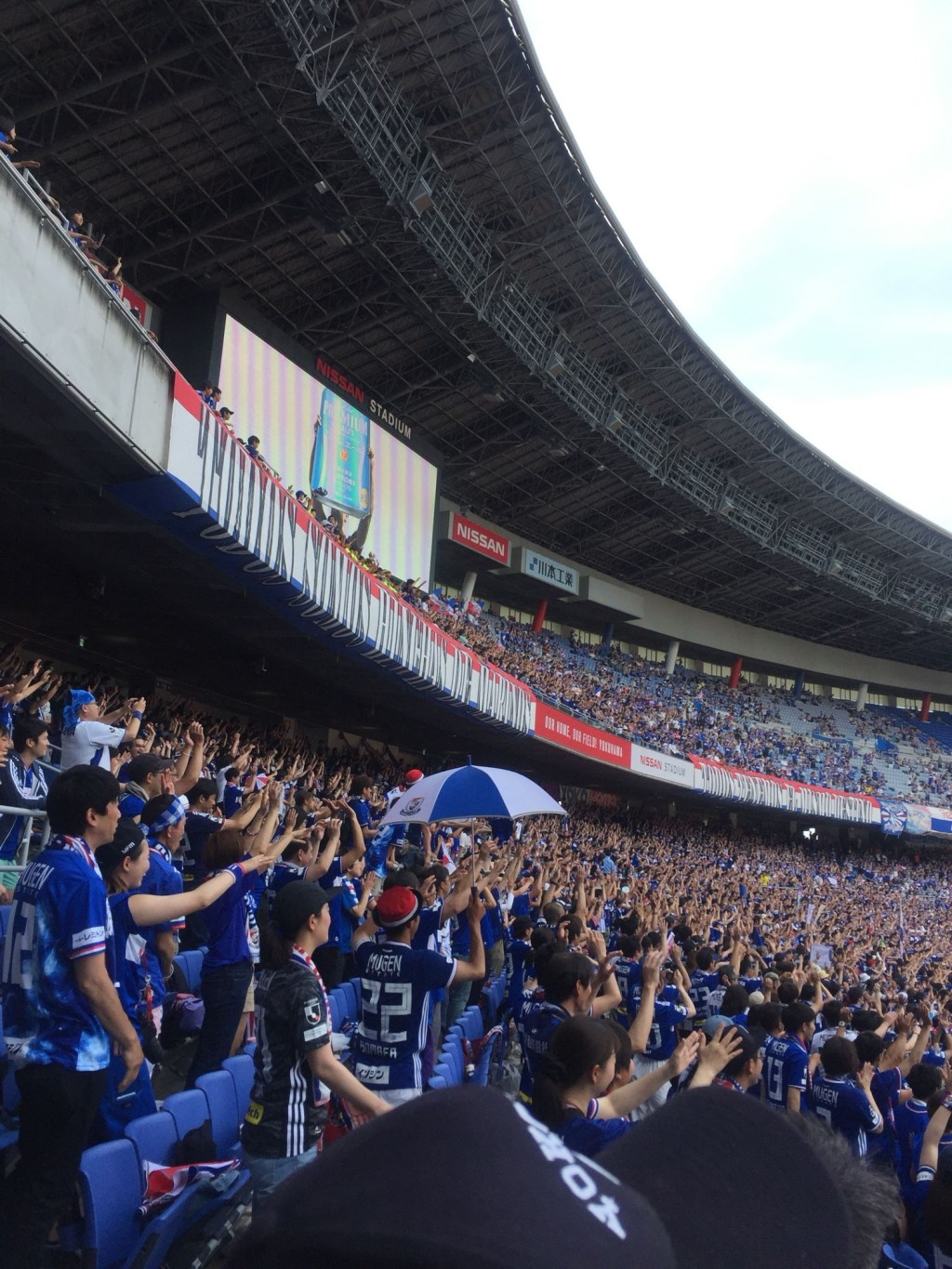
It’s mid-March, and at long last, we’re celebrating Yokohama F Marinos’ first victory of the league season. A great week for the club and corporate sponsor, Nissan, as they successfully showcased self-driving cars in the Minatomirai area of Yokohama.
This isn’t just a long-overdue three points—it’s a statement. A team like Marinos shouldn’t be languishing near the foot of the J League table, and yet, that’s exactly where we found ourselves before this 2-0 win over Gamba Osaka. But now, like a finely tuned Nissan GT-R revving into life after a sluggish start, we’re finally showing signs of competing.
Precision Over Reckless Firepower
So far this season, Marinos’ shooting has been nothing short of gyromancy—an erratic exercise in randomness. We’ve been firing off shots like a malfunctioning digital soccer simulation, where players aimlessly hammer the ball into Row Z with no regard for precision. But against Gamba, something clicked. Seven shots. Six on target. That’s the kind of laser-guided precision we need if we’re serious about climbing the table.
By contrast, Gamba Osaka embodied everything wrong with inefficient attacking play. Despite having 23 shots, only 10 were on target, and many were tame, straight at Park Il-gyu. Gamba’s finishing resembled a Nissan Micra attempting to drag race against a Nissan Skyline—plenty of energy but utterly lacking the cutting edge.
Daiya Tono Steps Up
At the 19-minute mark, Gamba looked the better team. They dominated possession, moved the ball well, and seemed primed to open the scoring. Then, out of nowhere, Daiya Tono struck. A low, thunderous drive into the bottom right corner—clean, ruthless, unstoppable. It wasn’t just a goal; it was an exorcism of the mediocrity that plagued his time at Kawasaki Frontale.
Tono had been little more than an afterthought last season. Used all over the pitch by Kawasaki, he was neither here nor there, a footballing vagabond without purpose. One goal in 34 games last season. Now, just three matches into his Marinos career, he’s already equalled that tally. Perhaps all he needed was to board the Meguro Line, switch from light blue to dark, and finally feel at home.
Marinos’ Defence: Holding the Line
Football, much like Nissan’s autonomous driving technology, relies on anticipation, rapid response, and resilience under pressure. A defensive unit needs to read the game as smoothly as an AI-driven vehicle navigating a busy intersection—quickly assessing threats, reacting instinctively, and ensuring safety.
For large stretches of the match, Gamba Osaka pressed hard, probing for weaknesses, suffocating us with possession. There were moments—particularly around the 50th and 63rd minute—where it felt inevitable that Gamba would find a breakthrough. But Marinos held firm. Park Il-gyu, much like the new Nissan QTR’s advanced sensors, was constantly aware, reacting with split-second reflexes to deny every incoming threat.
A Special Strike from Uenaka
Then came the defining moment. The 74th minute. A sudden counter-attack. Marinos, having spent much of the game absorbing pressure like a fortress under siege, suddenly surged forward. Asahi Uenaka, with space to run, latched onto the ball. He took a moment—a fraction of a second to set himself—before unleashing a strike that could have been scripted in digital soccer folklore.
The ball rocketed past Jun Ichimori (poetically, a man who spent time on loan with Marinos). A lightning bolt, a raguly-edged tear in Gamba’s defensive fabric. That was goal number 38 in Uenaka’s career, and it might just be his most satisfying.
Where Do Marinos Stand Now?
This win doesn’t erase the struggles of the season so far. We’re still a work in progress, a Nissan prototype still in development rather than a fully road-tested Nissan Z.
This win was a successful trial. We got the win. It wasn’t a pretty three-point turn by an automated system, it was scraggly manoeuvre which just about got going, without going into fourth gear.
But it’s a turning point. Three points before the international break gives us something tangible to build on.
Of course, cynicism dictates that this win might have come at the worst possible time—we won’t have the chance to immediately build momentum. By the time we face Okayama on March 29th, this triumph might feel like a distant memory. But what we’ve learned here—our newfound clinical edge, our defensive resilience—needs to be the blueprint moving forward.
Okayama shouldn’t pose the same level of threat as Gamba. If Steve Holland drills the squad with the same emphasis on shooting precision and defensive organisation, we should be able to dispatch them with minimal fuss. But should and will are two different beasts.
This is the moment for Marinos to stop hesitating, to drive forward with intent. Much like Nissan’s grand vision for self-driving mobility, Marinos must now trust in their system, embrace their technology, and accelerate towards a season that once seemed destined for wreckage.
 doragon sports